Poging GOUD - Vrij
INSIDE THE SKY AT NIGHT
BBC Sky at Night Magazine
|October 2025
September's Sky at Night episode tackled the Hubble constant. George Dransfield considers how some of the cornerstones of science aren't as rock-solid as we thought
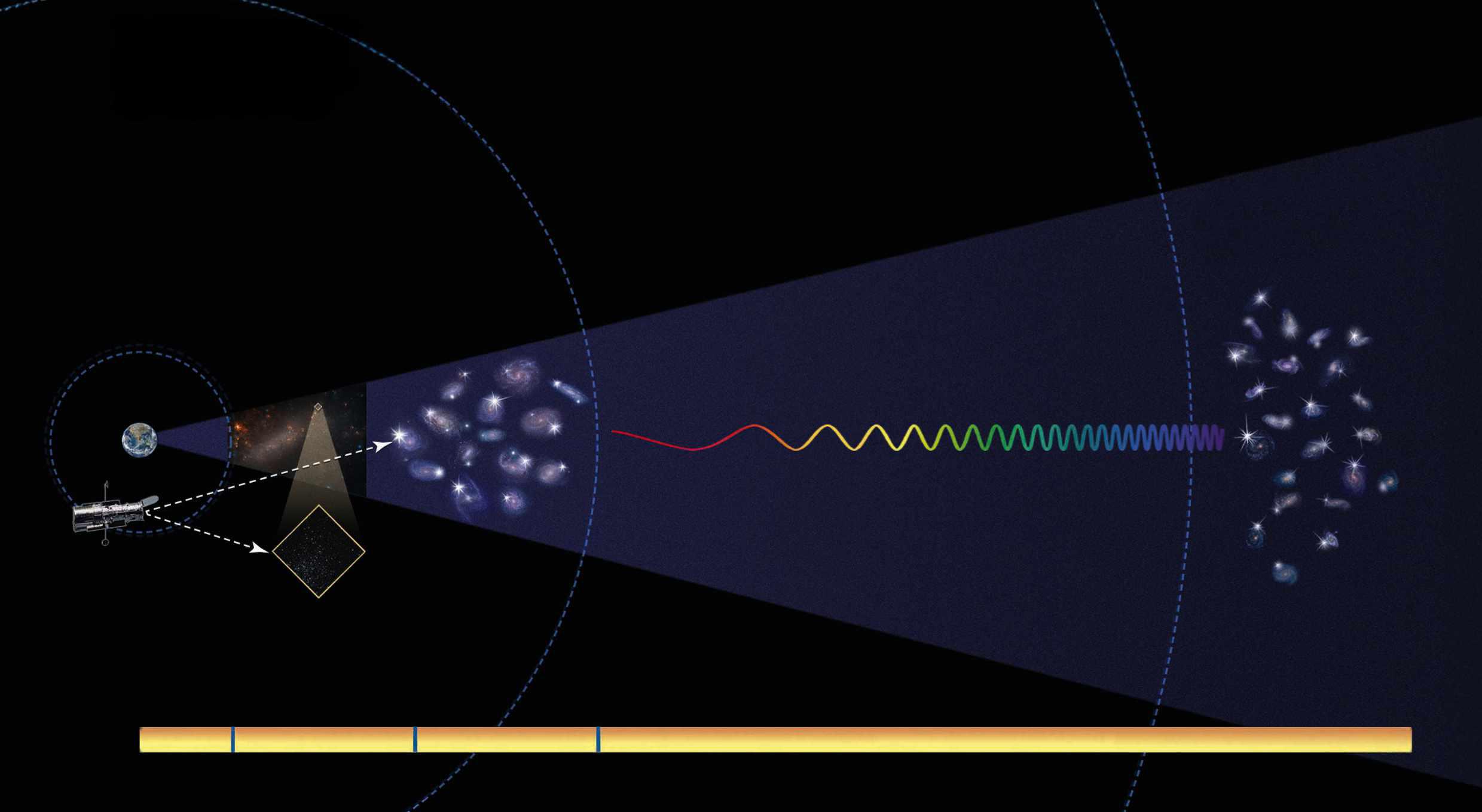
If there's one thing I love, it's a misnomer. Shooting stars, planetary nebulae, guinea pigs... none of them does what it says on the tin. Another great example is the term 'physical constant'. These are quantities that are so fundamental that they have the same value throughout the Universe, and have done since the dawn of time. Or so we think! Buckle up, readers: for one night only, I'm activating my long-dormant Physics Teacher Mode.
I have tremendously fond memories of my teaching days, and one particularly endearing thing my A-Level students did was show off to one another (and to me) how many physical constants they had memorised. I often pointed out that this was a legitimately pointless skill; after all, professional physicists have access to the internet. But still, they delighted in reciting the value of elementary charge, for instance, and groaned whenever I introduced yet another constant to add to the list.
Now, elementary charge - that is, the amount of charge on a proton - is a fundamental constant of nature. As in, every single proton in existence in the Universe, throughout all of time and space, has the exact same amount of charge. Forgive me if I nerd out about this point for a moment, but isn't it wild that we know this? I think so, at least.
September's episode of

Dit verhaal komt uit de October 2025-editie van BBC Sky at Night Magazine.
Abonneer u op Magzter GOLD voor toegang tot duizenden zorgvuldig samengestelde premiumverhalen en meer dan 9000 tijdschriften en kranten.
Bent u al abonnee? Aanmelden
MEER VERHALEN VAN BBC Sky at Night Magazine

BBC Sky at Night Magazine
Capture NLCs with a smartphone
Make this the summer that you nail a shot of beautiful night-shining clouds

3 mins
July 2026

BBC Sky at Night Magazine
ZWO Seestar S30 Pro smart telescope
ZWO Seestar S30 Pro smart telescope
4 mins
July 2026
BBC Sky at Night Magazine
The speed of light
The Universe has a speed limit - and it underpins everything we know about it. We explain the speed of light and its far-reaching implications for astronomy
2 mins
July 2026
BBC Sky at Night Magazine
COMETS AND ASTEROIDS
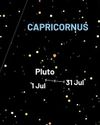
Can you spot dim, barely moving Pluto?
1 min
July 2026

BBC Sky at Night Magazine
THE SKY GUIDE CHALLENGE
What's the youngest Moon you can photograph? Try our ‘impossible’ challenge
2 mins
July 2026

BBC Sky at Night Magazine
Q&A WITH A SCIENCE COMMUNICATOR
As we find more planets in the habitable zones around other suns, we ask Neil deGrasse Tyson what would happen if we did meet intelligent alien life
3 mins
July 2026
BBC Sky at Night Magazine
Make an all-sky camera
How to set up an always-watching system to catch fleeting sky events
3 mins
July 2026
BBC Sky at Night Magazine
The Universe doesn't need a multiverse
The Universe doesn't need a multiverse The idea that there are many universes seems to solve our most stubborn cosmic mysteries. But, argues Brian Clegg, it's no substitute for hard evidence
2 mins
July 2026
BBC Sky at Night Magazine
Planets of mystery
Uranus and Neptune – visited just once, 40 years ago – are the least-known planets in our Solar System. Now 21st-century science has revealed they may not even be the ‘ice giants’ we thought. Joseph Phelan investigates
6 mins
July 2026
BBC Sky at Night Magazine
THE BIG THREE
The top sights to observe or image this month
4 mins
July 2026
Listen
Translate
Change font size