
Ga onbeperkt met Magzter GOLD
Krijg onbeperkte toegang tot meer dan 9000 tijdschriften, kranten en Premium-verhalen voor slechts
Poging GOUD - Vrij
How to photograph the Geminids
BBC Sky at Night Magazine
|December 2025
Dramatic meteor photos aren't just down to luck. We show you how to bag one
-
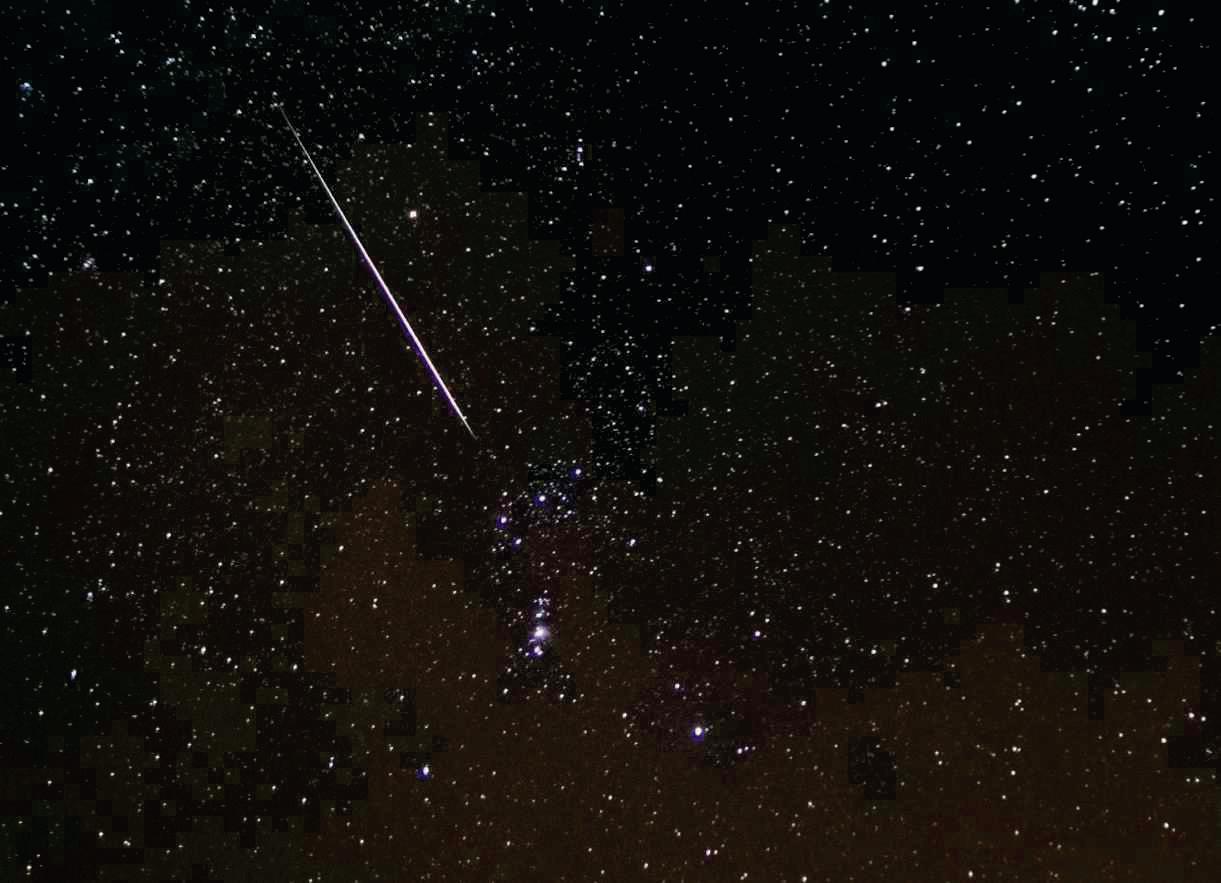
It's December, which means it's time for the best meteor shower of the year - the Geminids. Perseids fans may disagree, but long, dark nights and a broader activity peak give the Geminids the edge. True, December nights are much colder, so perhaps the Perseids in August win the popularity contest!
Whichever's your favourite, neither wins if the Moon is around. This year's Perseids were ruined by a bright Moon, but 2025's Geminids will fare better. With the Moon just past last quarter as the Geminids peak, its glare should be easy to contain.
Photographing meteors isn’t too hard; the tricky part is maximising your chances of capturing a trail. That's why showers like the Perseids and Geminids are so good to try to photograph. If the weather is kind and the Moon out of the way, you'd be very unlucky not to capture anything - though it can still happen!
Pick the right lens
So how can you maximise your chances? A fish-eye lens gives you total sky coverage, so any bright meteor will be recorded. The problem is that fish-eye trails tend to be rather puny and difficult to see. In contrast, something like a 200mm lens would give you excellent meteor trails, but covers so little sky that you'd need to be extremely fortunate to bag one. Somewhere in between is best - typically around the 20mm mark.

Dit verhaal komt uit de December 2025-editie van BBC Sky at Night Magazine.
Abonneer u op Magzter GOLD voor toegang tot duizenden zorgvuldig samengestelde premiumverhalen en meer dan 9000 tijdschriften en kranten.
Bent u al abonnee? Aanmelden
MEER VERHALEN VAN BBC Sky at Night Magazine

BBC Sky at Night Magazine
Crush: Close Encounters with Gravity
Gravity is something that we're all innately familiar with. It keeps our feet on the ground, fights against a rocket trying to leave Earth and governs the movement of the planets and stars.

1 mins
April 2026

BBC Sky at Night Magazine
Exploring the Universe
There's no shortage of children's books about astronomy.
2 mins
April 2026
BBC Sky at Night Magazine
Make your Milky Way images pop
Simple, free processing techniques using FastStone Image Viewer
3 mins
April 2026
BBC Sky at Night Magazine
Nightfaring: In Search of the Disappearing Darkness
This book is a manifesto for dark skies, written as a travel memoir.
1 mins
April 2026
BBC Sky at Night Magazine
Flying saucers- The making of a modern myth
Our obsession with UFOs goes back further than you might think. Robert Pateman traces how early science fiction, dubious sightings and an alien-mad media led to the 1950s saucer fever
9 mins
April 2026
BBC Sky at Night Magazine
STAR OF THE MONTH
Alphecca, the brightest jewel in the Crown
1 min
April 2026
BBC Sky at Night Magazine
How to use a planisphere
Navigate the sky with the original stargazer's tool. No batteries, apps or Wi-Fi required!
3 mins
April 2026
BBC Sky at Night Magazine
Why rockets don't launch straight up
For a rocket to get its payload into space, it has to follow a curved path. But what would happen if it didn't?
2 mins
April 2026
BBC Sky at Night Magazine
Q&A WITH A DARK MATTER SPECIALIST
Dark matter makes up 27 per cent of all matter in the Universe. So why is it so hard to find? Meet one of the people making a map that leads us to it
3 mins
April 2026

BBC Sky at Night Magazine
Why I want to put a hotel on the Moon
Bored of the beach? Sick of city breaks? Step this way. Space entrepreneur Skyler Chan explains how he'll build a holiday destination on the Moon by 2030
2 mins
April 2026
Listen
Translate
Change font size