
Ga onbeperkt met Magzter GOLD
Krijg onbeperkte toegang tot meer dan 9000 tijdschriften, kranten en Premium-verhalen voor slechts
Poging GOUD - Vrij
A year with JWST
BBC Sky at Night Magazine
|July 2023
To celebrate JWST’s first year of operation, Jenny Winder takes a look at some of the landmark scientific discoveries it has made over the last 12 months

With a primary mirror measuring 6.6m across made from 18 gold-coated segments, the James Webb Space Telescope (JWST) is a beautiful instrument in its own right. But stunning as this technological marvel might be, it's nothing compared to the remarkable data it has unearthed over the last year.
JWST launched on 25 December 2021, reaching its operational orbit at the second Lagrange point, 1.5 million kilometres from Earth, a month later. After a few more months calibrating its instruments, it was finally ready to turn its gaze on the Universe.
JWST has been tasked with investigating four main science goals: the early Universe and the first galaxies; the growth and evolution of galaxies over time; the lifecycle of stars; and the study of other worlds.
The new telescope is uniquely suited to investigating these goals as it observes infrared wavelengths. This light can pass through clouds of dust and gas, and reveal warm objects that do not shine in visible wavelengths, meaning it can peer into corners of the Universe previously hidden from view.
JWST began returning its first remarkable scientific findings in July 2022. Here we look back at some of the milestones it has achieved during its first year.
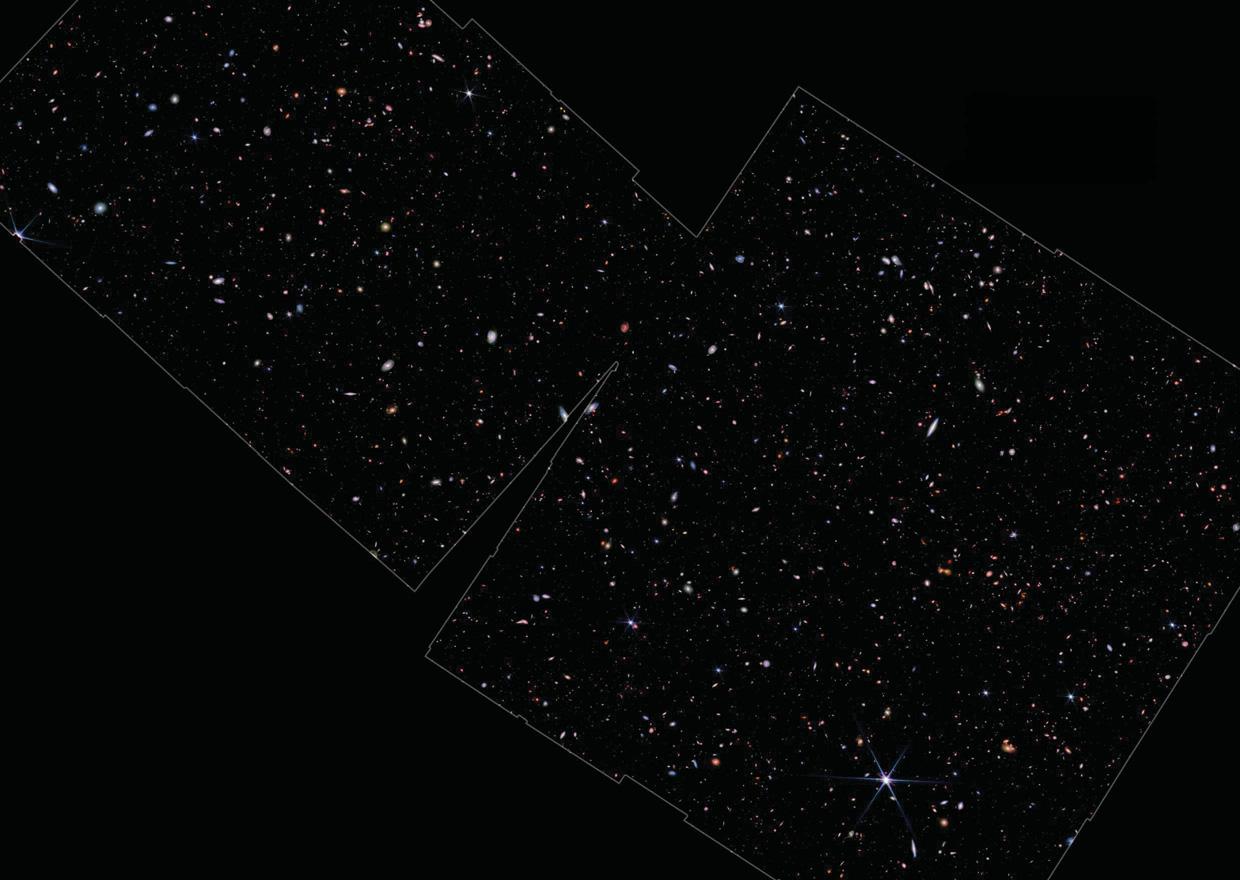
The first galaxies in the Universe
JWST’s Advanced Deep Extragalactic Survey spies on galaxies in their infancy
One key part of JWST's mission will be to use its infrared eyes to peer through the dust and gas to the earliest eras of the Universe. Here it will help discover how the first stars and galaxies formed, as well as uncover fresh evidence for dark matter.


Dit verhaal komt uit de July 2023-editie van BBC Sky at Night Magazine.
Abonneer u op Magzter GOLD voor toegang tot duizenden zorgvuldig samengestelde premiumverhalen en meer dan 9000 tijdschriften en kranten.
Bent u al abonnee? Aanmelden
MEER VERHALEN VAN BBC Sky at Night Magazine
BBC Sky at Night Magazine
MOONWATCH
January's top lunar feature to observe

2 mins
January 2026
BBC Sky at Night Magazine
Speed up your processing workflow
How to use Photoshop's Actions tool to drastically cut your processing time
3 mins
January 2026
BBC Sky at Night Magazine
Chasing Canada's polar lights
With solar maximum peaking and a new Moon promising dark skies, Jamie Carter travels to Churchill, Manitoba to hunt the Northern Lights - and dodge polar bears – in Canada's far north
7 mins
January 2026
BBC Sky at Night Magazine
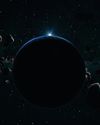
Beyond Pluto: The search for the hidden planets
Could one – or even two - undiscovered planets lurk at the edges of our Solar System? Nicky Jenner explores how close we are to finding the elusive 'Planet 9'
6 mins
January 2026
BBC Sky at Night Magazine
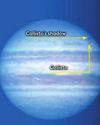
Jupiter moon events
Jupiter is a magnificent planet to observe.
2 mins
January 2026

BBC Sky at Night Magazine
What samples from space have taught us
Alastair Gunn explains what scientists have learnt in the 20 years since the first unmanned mission brought materials back from alien worlds
3 mins
January 2026
BBC Sky at Night Magazine
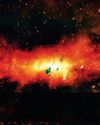
The Milky Way as you've never seen it before
This is the largest low-frequency radio colour image of our Galaxy ever assembled
1 min
January 2026

BBC Sky at Night Magazine
Merger of ‘impossibly' massive black holes explained
Scientists discover how enormous, fast-spinning black holes can exist after all
1 mins
January 2026
BBC Sky at Night Magazine
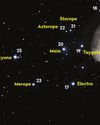
Lunar occultation of the Pleiades
BEST TIME TO SEE: 27 January from 20:30 UT
1 min
January 2026
BBC Sky at Night Magazine
The Universe's expansion may be slowing down
New study suggests current theories of dark energy could be wrong
1 mins
January 2026
Translate
Change font size