Poging GOUD - Vrij
YOU ARE FEELING VERY...HEALTHY
BBC Science Focus
|May 2025
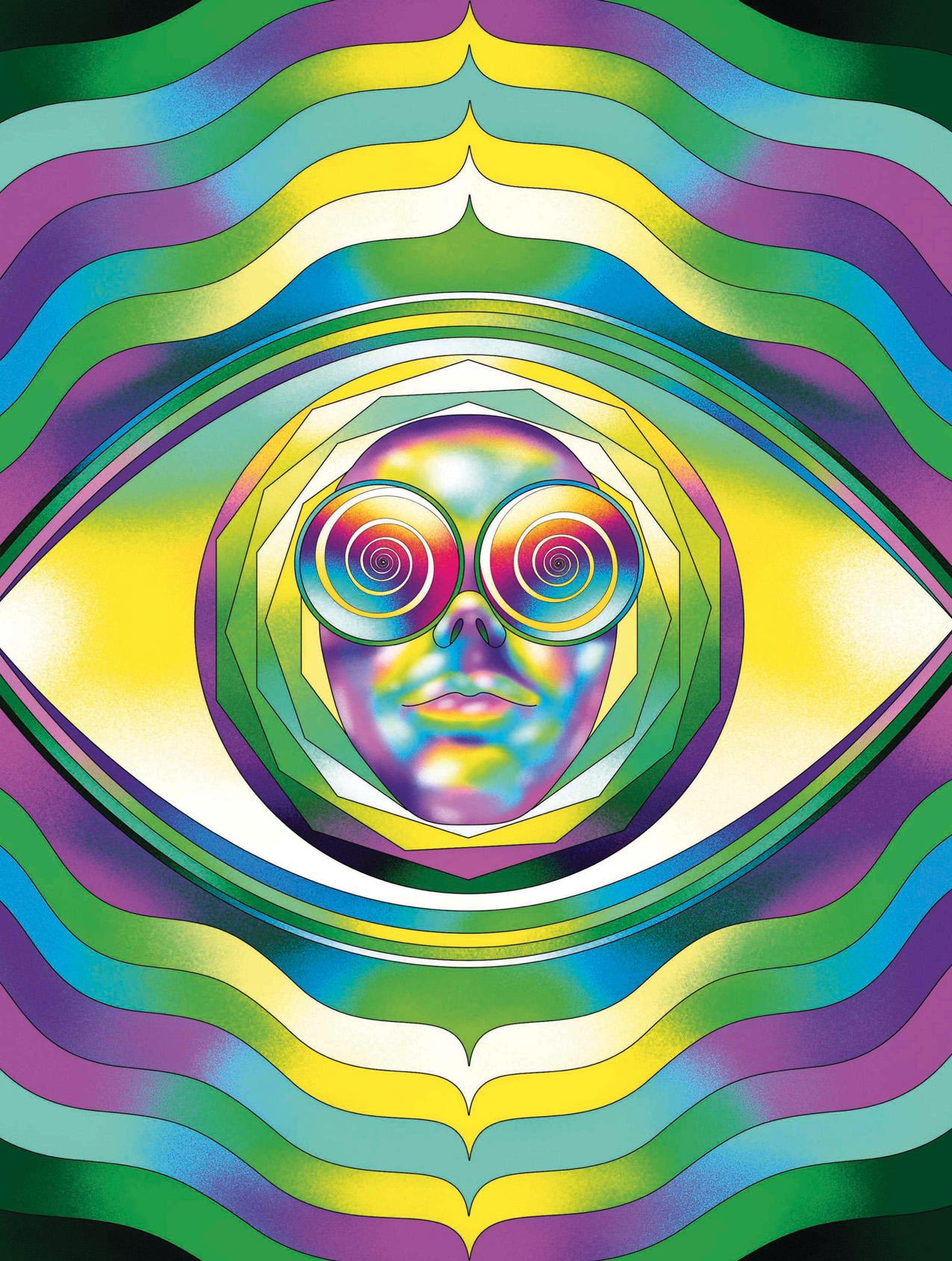
Forget the swinging pocket watches, scientists are now praising hypnotherapy as a powerful tool to fight mental and physical pain. Count back from five and we'll begin...
I'm sitting with my back straight, my eyes closed and my iPad resting on my lap.
“Let one hand float up in the air as if it were a balloon,” a soothing voice tells me from the speakers, and I do as it commands. Soon I feel as if my whole body is weightless.
Next, I have to visualise the goal that I want to achieve – I choose the writing of this article. Over the next few minutes, I'm instructed to picture the elements of the creative challenge as if they’re puzzle pieces slotting together. “Think just about the problem and not its implications or consequences.”
A while later, the voice tells me to count from three to one, open my eyes and lower my arm. My hypnosis session is over.
I tried this exercise to silence the inner critic that typically plagues my mind as I work, creating anxiety and stress. It’s just one of many options offered by Reveri (reveri.com), an app designed by Dr David Spiegel, a psychiatrist and professor at Stanford University School of Medicine.
Over the past two decades, increasing evidence has shown that hypnosis can ease pain, anxiety and insomnia with effects that are often comparable to standard medicinal treatments. Contrary to its mystical image, scientists like Spiegel argue that hypnosis arises from well-accepted neurological and psychological mechanisms. It’s perhaps better seen as a mindset that can be learned.
“When I hypnotise someone, I’m just showing them how to use their own ability,” Spiegel says. And with a few simple instructions, you could begin to acquire those skills too.
If the idea of hypnosis makes you feel uneasy, you're not alone. The practice is surrounded by myth and mysticism, including the popular trope that a person can fall into a trance and relinquish their free will.

Dit verhaal komt uit de May 2025-editie van BBC Science Focus.
Abonneer u op Magzter GOLD voor toegang tot duizenden zorgvuldig samengestelde premiumverhalen en meer dan 9000 tijdschriften en kranten.
Bent u al abonnee? Aanmelden
MEER VERHALEN VAN BBC Science Focus

BBC Science Focus
ASTRONOMY FOR BEGINNERS
RETURN OF THE EVENING STAR (VENUS)

1 mins
March 2026

BBC Science Focus
CAN YOU STOP YOUR SENSE OF TASTE DULLING AS YOU AGE?
Sometimes I hear people say that food just doesn't taste the same as they get older. It's tempting to blame this on age, but there are other factors at play, too.
1 mins
March 2026
BBC Science Focus
MICROBIOMES OF THE SUPERAGERS
BY STUDYING THE INCREASING NUMBER OF PEOPLE WHO ARE LIVING BEYOND THEIR 100TH BIRTHDAYS, SCIENTISTS ARE DISCOVERING THAT THE SECRET TO REACHING A RIPE OLD AGE IN RUDE HEALTH MIGHT LIE IN OUR GUTS
8 mins
March 2026

BBC Science Focus
HOW BIG WERE MEDIEVAL WAR HORSES?
You might picture knights charging into battle on towering steeds, but medieval horses were typically no bigger than modern-day ponies.
1 min
March 2026

BBC Science Focus
FORCES OF HABIT
Could new research on setting up healthy habits resuscitate those stuttering New Year resolutions?
3 mins
March 2026

BBC Science Focus
5 DANGERS HIDING IN YOUR PROCESSED FOOD
We all know that ultra-processed foods are bad for us, but what ingredients should we particularly try to avoid? And what are they doing to our bodies?
9 mins
March 2026

BBC Science Focus
Mosquitoes are becoming thirstier for human blood
Habitat loss may be pushing mosquitoes towards human hosts with deadly consequences
1 mins
March 2026

BBC Science Focus
HOW CAN I GET OVER MY EX?
Relationship breakups can be brutal, just look at the popularity of songs like 'Someone Like You' by Adele, or all the covers of 'Cry Me a River' by Julie London.
1 mins
March 2026
BBC Science Focus
The ancient baths of Pompeii were outrageously filthy
The pre-Roman baths of Pompeii would've been seriously grotty, according to an analysis of mineral deposits
1 mins
March 2026

BBC Science Focus
DOES MY DOG HAVE ADHD?
Officially, Attention-Deficit Hyperactivity Disorder (ADHD) is a human condition. People are diagnosed with it. Dogs are not. Yet many of its core features, including hyperactivity, impulsivity and distractibility, can be found in dogs.
1 mins
March 2026
Listen
Translate
Change font size