
Ga onbeperkt met Magzter GOLD
Krijg onbeperkte toegang tot meer dan 9000 tijdschriften, kranten en Premium-verhalen voor slechts
Poging GOUD - Vrij
THE PLANETS THAT SHOULDN'T EXIST
BBC Science Focus
|Summer 2025
With sapphire waterfalls, lava rain and orbits around dead stars, these distant worlds push the limits of what's possible
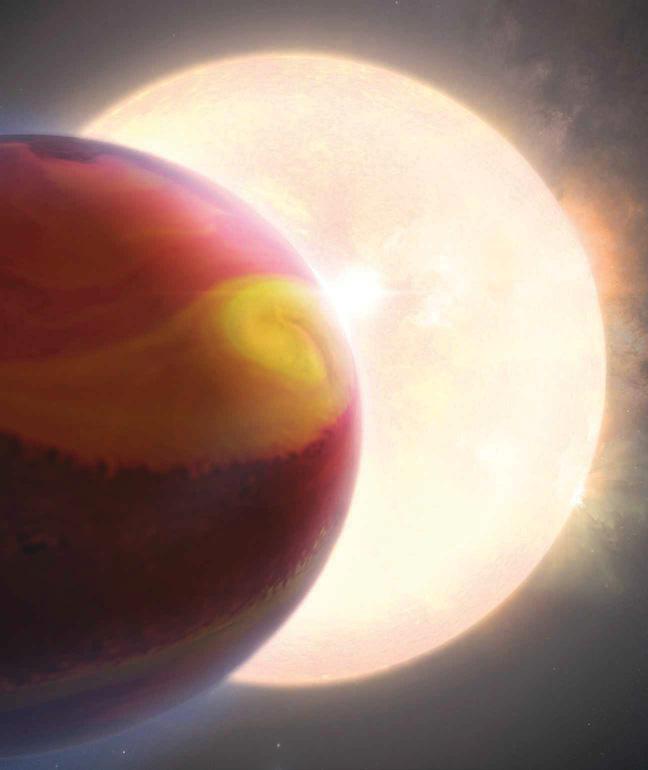
Isn’t it amazing that astronomy – humanity's oldest science – continues to generate such a delightful amount of new knowledge? Seeing as we've been studying the motion of the stars for a good long while, you'd be forgiven for thinking that, by now, we would be long past the point of saying “Astronomy? Completed it, mate.”
Fortunately, the Universe is vast and unknowable. However big our telescope mirrors and however sensitive our detectors, there will always be some light that's too faint to see and signals that are too weak to detect. This is good; for one thing, it means I still have a job; more importantly, however, it means the sky is still full of wonder.
Planets are one such wonder. The word 'planet' comes from the Greek 'planētēs', meaning 'wanderer'. They were so named because our closest planetary siblings in the Solar System appeared to wander across the night sky. Alas, detecting our distant planetary cousins – the exoplanets that lie beyond the Solar System – takes far more effort than glancing skyward once the Sun has set. It requires enormous telescopes, long observing campaigns and a lot of computing. But believe me when I tell you, it's worth the effort.
Exoplanet detection is booming. At the time of writing, astronomers have discovered almost 6,000 of them and we think that most stars have them. But of course, in a field characterised by so many discoveries, occasionally truly extraordinary things turn up. There have been planets that flirt with the line separating science and science fiction; planets that force us to revisit our theories of how they form; and planets that, in all fairness, feel like they shouldn't exist. Planets like the 10 that follow…
THE PLANET TOO BIG FOR ITS STAR

Dit verhaal komt uit de Summer 2025-editie van BBC Science Focus.
Abonneer u op Magzter GOLD voor toegang tot duizenden zorgvuldig samengestelde premiumverhalen en meer dan 9000 tijdschriften en kranten.
Bent u al abonnee? Aanmelden
MEER VERHALEN VAN BBC Science Focus

BBC Science Focus
DOES MY DOG HAVE ADHD?
Officially, Attention-Deficit Hyperactivity Disorder (ADHD) is a human condition. People are diagnosed with it. Dogs are not. Yet many of its core features, including hyperactivity, impulsivity and distractibility, can be found in dogs.

1 min
March 2026
BBC Science Focus
DOES MY BRAIN LIVE A LITTLE IN THE PAST?
Yes, your brain does live a little in the past. It can't help it. The information it receives via your senses is always a little out of date. Whether it's light entering the retinas in your eyes, or sounds vibrating the hairs in your ears, it not only takes time for the data to arrive, but your brain then has to process it.
2 mins
March 2026
BBC Science Focus
ASTRONOMY FOR BEGINNERS
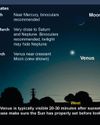
RETURN OF THE EVENING STAR (VENUS)
1 mins
March 2026

BBC Science Focus
CAN YOU STOP YOUR SENSE OF TASTE DULLING AS YOU AGE?
Sometimes I hear people say that food just doesn't taste the same as they get older. It's tempting to blame this on age, but there are other factors at play, too.
1 mins
March 2026
BBC Science Focus
MICROBIOMES OF THE SUPERAGERS
BY STUDYING THE INCREASING NUMBER OF PEOPLE WHO ARE LIVING BEYOND THEIR 100TH BIRTHDAYS, SCIENTISTS ARE DISCOVERING THAT THE SECRET TO REACHING A RIPE OLD AGE IN RUDE HEALTH MIGHT LIE IN OUR GUTS
8 mins
March 2026

BBC Science Focus
HOW BIG WERE MEDIEVAL WAR HORSES?
You might picture knights charging into battle on towering steeds, but medieval horses were typically no bigger than modern-day ponies.
1 min
March 2026
BBC Science Focus
FORCES OF HABIT
Could new research on setting up healthy habits resuscitate those stuttering New Year resolutions?
3 mins
March 2026

BBC Science Focus
5 DANGERS HIDING IN YOUR PROCESSED FOOD
We all know that ultra-processed foods are bad for us, but what ingredients should we particularly try to avoid? And what are they doing to our bodies?
9 mins
March 2026
BBC Science Focus
Mosquitoes are becoming thirstier for human blood
Habitat loss may be pushing mosquitoes towards human hosts with deadly consequences
1 mins
March 2026

BBC Science Focus
HOW CAN I GET OVER MY EX?
Relationship breakups can be brutal, just look at the popularity of songs like 'Someone Like You' by Adele, or all the covers of 'Cry Me a River' by Julie London.
1 mins
March 2026
Listen
Translate
Change font size