
Ga onbeperkt met Magzter GOLD
Krijg onbeperkte toegang tot meer dan 9000 tijdschriften, kranten en Premium-verhalen voor slechts
Poging GOUD - Vrij
THE INTERNET OF ANIMALS
BBC Science Focus
|November 2024
SCIENTISTS ARE USING ELECTRONIC TAGS AND SATELLITES TO TRACK WILD ANIMALS AND CREATE A DATA NETWORK THAT COULD HELP US ADDRESS THE BIODIVERSITY CRISIS

Wildlife populations around the world are in crisis. Recent analysis by the World Wide Fund For Nature estimated that over the past 50 years, wildlife populations have reduced by 73 per cent. In the face of these unprecedented declines, it's more important than ever that scientists understand the challenges animals face and how they're responding to a changing planet. This requires data collection on a scale never attempted before - tracking the lives of animals at a global level and scientists are turning to technology to make this mammoth task possible.
The development of radio-tracking technology has already opened many new research avenues for scientists interested in animal behaviour, but these studies have been limited by the large size of the tracking devices and the need to follow the animals with receivers, or retrieve the tags later, to access the data.
In industry, new technological advances such as miniaturised sensors and communication devices have enabled the development of large-scale wireless digital networks that track the location and status of objects, from shipping containers to factory equipment - known as the 'Internet of Things' or IoT.
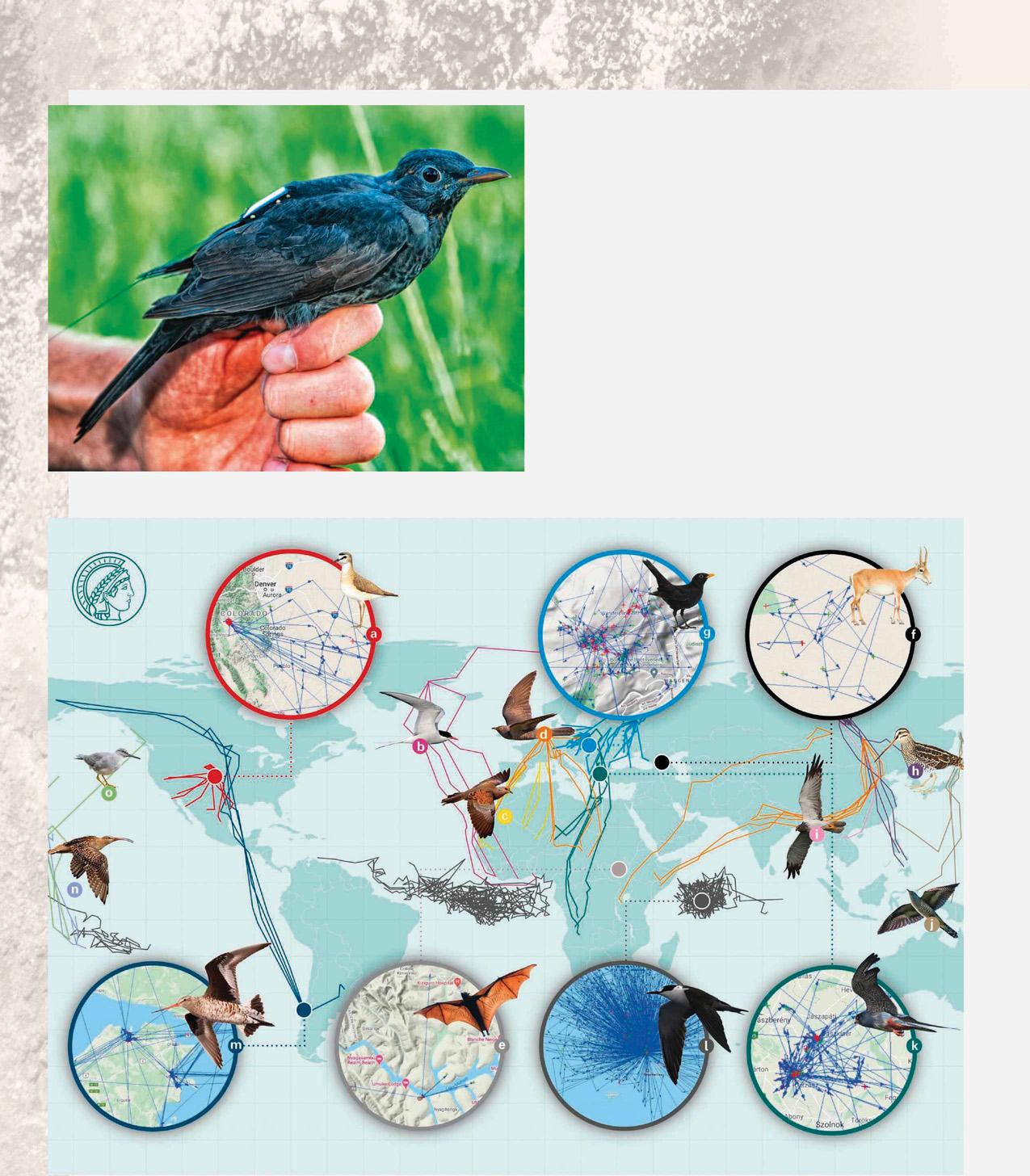 ICARUS the International Cooperation for Animal Research Using Space - aims to leverage this technology to create a global animal observation network to track and monitor wildlife on an unparalleled scale. The system uses state-of-the-art miniature transmitters to relay data about animals' movements, activity and even health, to receiver antennae in space, allowing scientists to tap into a wealth of research data through their computers.
"We're about to have an internet of animals and that's super exciting," says Prof Martin Wikelski, Director of the Department of Migration at the Max Planck Institute of Animal Behavior and ICARUS Initiative founder.
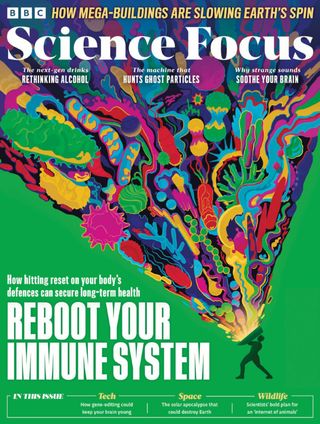

Dit verhaal komt uit de November 2024-editie van BBC Science Focus.
Abonneer u op Magzter GOLD voor toegang tot duizenden zorgvuldig samengestelde premiumverhalen en meer dan 9000 tijdschriften en kranten.
Bent u al abonnee? Aanmelden
MEER VERHALEN VAN BBC Science Focus
BBC Science Focus
World's biggest cobweb is home to 100,000 spiders
Spiders don't normally create such large colonies, so there's no need to worry about finding one in your basement

1 min
February 2026

BBC Science Focus
A dementia vaccine could be gamechanging – and available already
Getting vaccinated against shingles could protect you from getting dementia, or slow the progression of the disease
1 mins
February 2026

BBC Science Focus
DATA IN SPACE
An unusual spacecraft reached orbit in November 2025, one that might herald the dawn of a new era.
7 mins
February 2026
BBC Science Focus
Climate change is already shrinking your salary
No matter where you live, a new study has found warmer temperatures are picking your pocket
4 mins
February 2026

BBC Science Focus
A MENTAL HEALTH GLOW-UP
Forget fine lines. Could Botox give you an unexpected mental health tweakment?
3 mins
February 2026
BBC Science Focus
Most people with high cholesterol gene don't know they have it
Standard testing struggles to detect the condition
1 mins
February 2026

BBC Science Focus
HOW CAN I BOOST MY IQ?
If you're serious about getting smarter, it's time to ditch the brain-training apps
4 mins
February 2026

BBC Science Focus
Humans are absolutely terrible at reading dogs' emotions
Think you can tell how our furry friends are feeling? Think again
1 mins
February 2026

BBC Science Focus
HOW TO TEACH AI RIGHT FROM WRONG
If we want to get good responses from AI, we may need to see what it does when we ask it to be evil
3 mins
February 2026

BBC Science Focus
What Australia's social media ban could really mean for under-16s
Many people think social media is bad for our kids. Australia is trying to prove it
5 mins
February 2026
Listen
Translate
Change font size