Poging GOUD - Vrij
Is creating a 'woolly mammoth mouse' a step too far for biotechnology?
BBC Science Focus
|March 2025
Are scientists so preoccupied with whether or not they could bring back mammoths, that they're not concerned with whether they should?
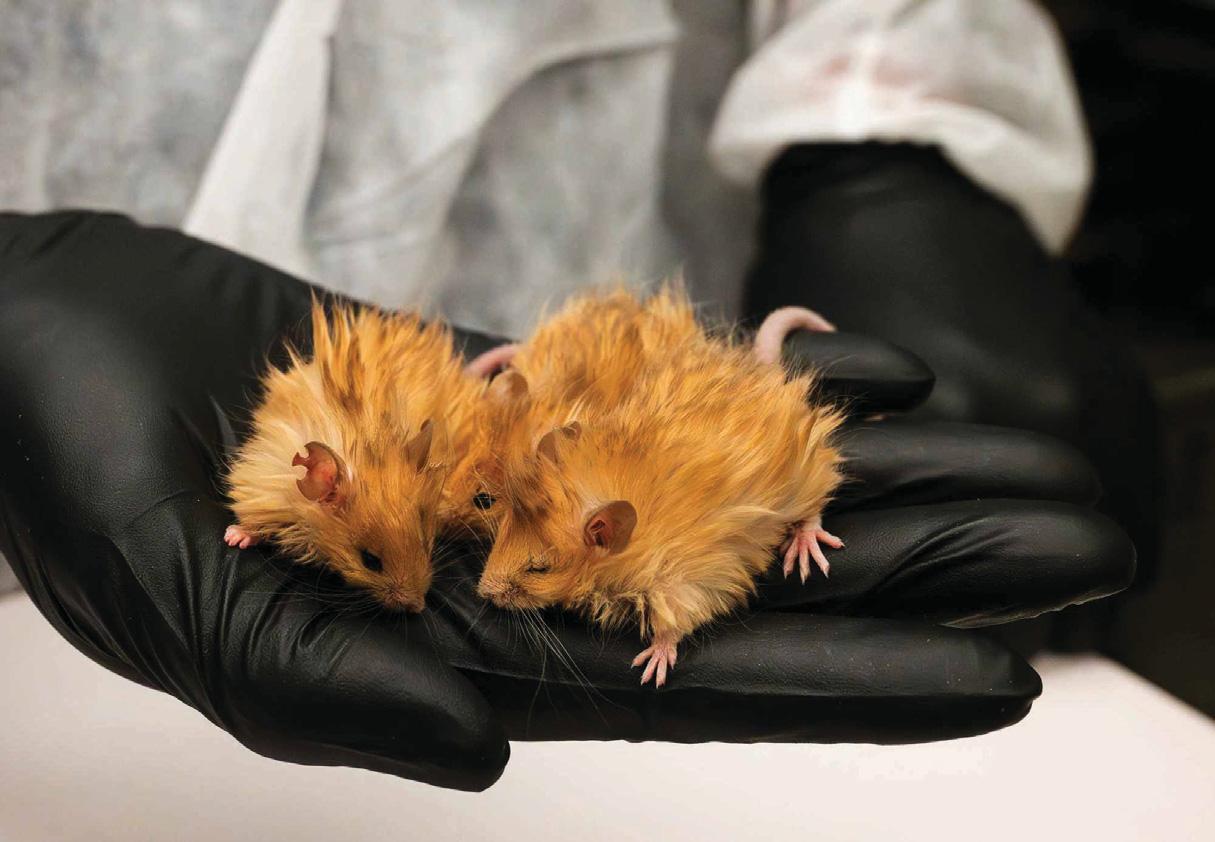
Colossal Biosciences, a US biotech start-up, has announced the birth of what it calls a “woolly mouse” – the world’s first animal genetically altered to express key genes from a woolly mammoth. The company says the luxuriously haired rodents are living proof that it’s making progress in its mission to resurrect the woolly mammoth from extinction within a matter of years.
To make the mice, scientists used the latest genetic technologies to introduce eight simultaneous edits to the genomes of laboratory mice. These include the addition of genes that cause its fur to grow up to three times longer than normal, and others that make the hairs wavy and golden. Other edits targeted genes associated with fat metabolism that are thought to have helped mammoths increase in size.
The mice are the result of years of painstaking work by scientists to reconstruct key parts of the mammoth genome. The last woolly mammoths are thought to have died around 3,000 years ago, and scientists have been piecing together bits of degraded mammoth DNA from remains between 3,500 and 1.2 million years old. This is the first time that some of the key genes identified through that work have been expressed in a living animal.
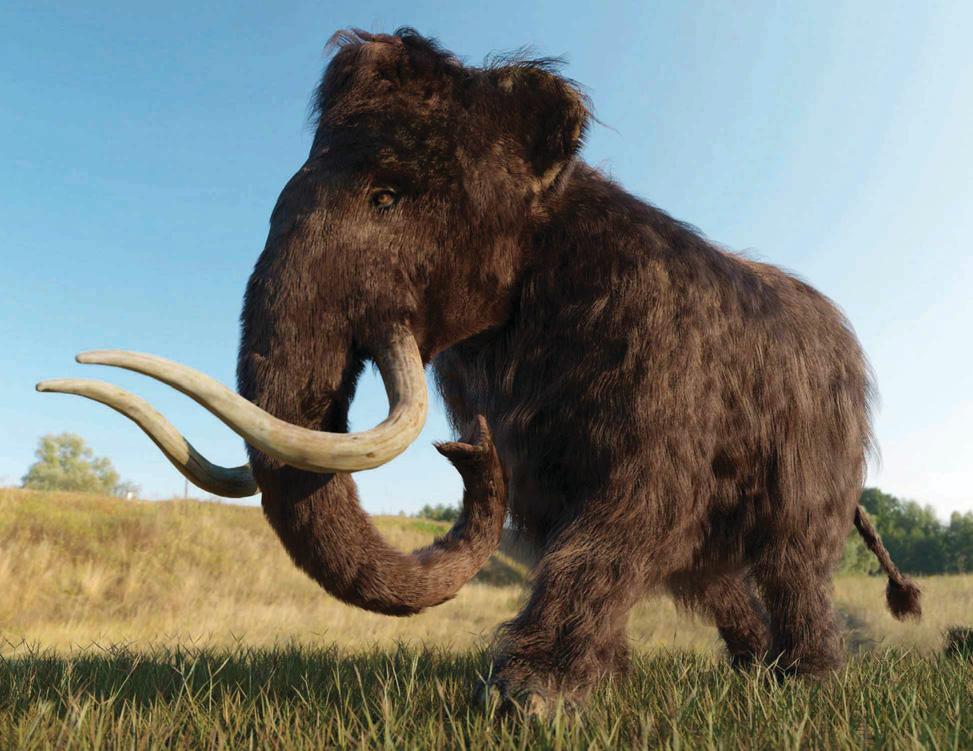 MAMMOTH 2.0
Colossal’s ambitious long-term plan is to add lots of these mammoth genes to embryos of modern-day elephants to create mammoth-like hybrids.
Despite its claims to be resurrecting the woolly mammoth, the original Mammuthus primigenius, with all its original genetic complexity and population diversity, isn’t being brought back to life. The creatures are more accurately described as “cold-resistant elephants”.

Dit verhaal komt uit de March 2025-editie van BBC Science Focus.
Abonneer u op Magzter GOLD voor toegang tot duizenden zorgvuldig samengestelde premiumverhalen en meer dan 9000 tijdschriften en kranten.
Bent u al abonnee? Aanmelden
MEER VERHALEN VAN BBC Science Focus

BBC Science Focus
HEALTH: Eating oats could lower your cholesterol in just two days
The health benefits of a two-day porridge diet lasted for weeks afterwards

1 mins
April 2026

BBC Science Focus
Most people are too sure they can identify fake human faces
Even 'super recognisers' struggle with the challenge. Can you do better?
1 min
April 2026

BBC Science Focus
WHAT'S THE WORST THING YOU CAN DO FOR THE PLANET ONLINE?
Human beings can barely move a muscle without some kind of deleterious effect on the environment around us.
2 mins
April 2026

BBC Science Focus
A bug in the system
The complex arrangement of equipment you see here is part of a particle accelerator.
1 min
April 2026
BBC Science Focus
Snug as a bug in a rug
At first glance, you might feel envious of this little leafhopper, swaddled beneath the folds of what appears to be a luxurious fur blanket.
1 min
April 2026

BBC Science Focus
WHY DO WE ROOT FOR THE VILLAIN IN MOVIES?
Whether it's Darth Vader or Cruella de Vil, we all have a favourite movie villain.
1 mins
April 2026

BBC Science Focus
A TURN TO DISPERSE
Why a fart walk after dinner does more than release your gas
3 mins
April 2026

BBC Science Focus
Hatching a nebula
Welcome to the Egg Nebula, an enigmatic structure formed by ejected stardust in the Cygnus constellation around 1,000 light-years from Earth.
1 min
April 2026

BBC Science Focus
7 TIMES AI GOT IT SPECTACULARLY WRONG
For the past four years, AI has been reshaping how we work and live. But its failures are proving just as transformative as its triumphs
8 mins
April 2026

BBC Science Focus
CHARLES ADCOCK, VIA EMAIL: COULD DARK MATTER BE ALL AROUND PLANET EARTH BUT UNDETECTABLE?
Astronomers have gathered overwhelming evidence that 80 per cent of all matter in the Universe is invisible.
1 min
April 2026
Listen
Translate
Change font size