
Ga onbeperkt met Magzter GOLD
Krijg onbeperkte toegang tot meer dan 9000 tijdschriften, kranten en Premium-verhalen voor slechts
Poging GOUD - Vrij
TIME 100/AI: THINKERS
Time
|October 09, 2023
THE 100 MOST INFLUENTIAL PEOPLE IN ARTIFICIAL INTELLIGENCE
-

Geoffrey Hinton
EMERITUS PROFESSOR | UNIVERSITY OF TORONTO
EVER THE COURSE OF February, Geoffrey Hinton, one of the most influential AI researchers of the past 50 years, had a "slow eureka moment."
Hinton, 76, has spent his career trying to build AI systems that model the human brain, mostly in academia before joining Google in 2013. He had always believed that the brain was better than the machines that he and others were building, and that by making them more like the brain, they would improve. But in February, he realized "the digital intelligence we've got now may be better than the brain already. It's just not scaled up quite as big."
Developers around the world are currently racing to build the biggest AI systems that they can. At the current rate these models are growing, it could be less than five years until AI systems have 100 trillion connections-roughly as many as there are between neurons in the human brain.
Alarmed, Hinton left his post as VP and engineering fellow in May and gave a flurry of interviews in which he explained that he had left so he could speak freely on the dangers of AI-and on his regrets over helping bring that technology into existence. He worries about what could happen once AI systems are scaled up to the size of human brains and the prospect of humanity being wiped out by the technology. "This stuff will get smarter than us and take over," says Hinton. "And if you want to know what that feels like, ask a chicken."
THE HUMAN BRAIN always fascinated Hinton, who was born and raised in England. As a Cambridge University undergraduate, he tried a range of subjects-physiology, physics, philosophy-before graduating with a degree in experimental psychology in 1970. Two years later he started a Ph.D. in AI at the University of Edinburgh.
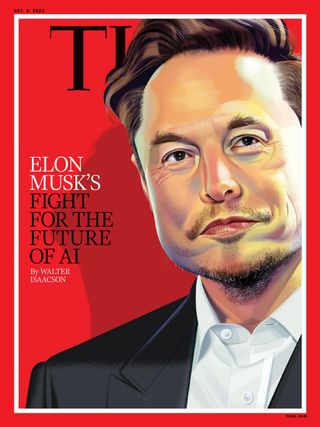

Dit verhaal komt uit de October 09, 2023-editie van Time.
Abonneer u op Magzter GOLD voor toegang tot duizenden zorgvuldig samengestelde premiumverhalen en meer dan 9000 tijdschriften en kranten.
Bent u al abonnee? Aanmelden
MEER VERHALEN VAN Time
Time
James Van Der Beek
James Van Der Beek, best known for playing Dawson Leery in the '90s teen drama Dawson's Creek, \"passed peacefully,\" his family said, on Feb. 11 at age 48, after a battle with colorectal cancer.

1 min
March 09, 2026
Time
Robert Duvall
Actor of distinction
1 min
March 09, 2026
Time
Jesse Jackson
JESSE JACKSON WAS ENROLLED AT THE Chicago Theological Seminary in 1965 when he decided to join other like-minded students in traveling to Selma, Ala., where Martin Luther King Jr. was leading a march to the state Capitol in Montgomery.
1 min
March 09, 2026

Time
Sentencing of Hong Kong publisher raises fears in Taiwan
WHEN A HONG KONG COURT HANDED media tycoon and pro-democracy leader Jimmy Lai a 20-year jail term on national-security grounds on Feb. 9, his son called it a “death sentence” given Lai’s age, 78, and deteriorating health. Others saw the same bleak implications for freedoms in Hong Kong—and a glimpse into what could be in store for others Beijing views as troublesome.
1 min
March 09, 2026

Time
LONE STAR PREVIEW
A wild Texas primary illuminates the dilemma facing both parties
3 mins
March 09, 2026

Time
How will we take the news of alien life?
LOOKING FORWARD TO THE DISCOVERY of life in space? Maybe you should think twice.
2 mins
March 09, 2026

Time
Thierry Diagana
A NEW TREATMENT FOR MALARIA
2 mins
February 23, 2026

Time
Mike Doustdar
MULTIPLYING WEIGHT-LOSS MEDS
2 mins
February 23, 2026

Time
THIS ISN'T OVER
TODAY, THE ISLAMIC REPUBLIC OF Iran resembles a half-lifeless body collapsed on the ground, but holding a gun.
3 mins
February 23, 2026
Time
OUR AGE OF DISTRUST
In 1624, the English poet John Donne wrote, “No man is an island entire of itself.” And yet in 2026, the Edelman Trust Barometer finds that 7 out of 10 people across 28 nations are hesitant or unwilling to trust people who have different values, approaches to societal problems, or backgrounds than they do. For most people, distrust is now the default instinct. Only one-third tell us most people can be trusted.
3 mins
February 23, 2026
Translate
Change font size