
Ga onbeperkt met Magzter GOLD
Krijg onbeperkte toegang tot meer dan 9000 tijdschriften, kranten en Premium-verhalen voor slechts
Poging GOUD - Vrij
HOW AMERICA GOT SO SICK
The Atlantic
|March 2026
The health of a nation reflects the health of a democracy.
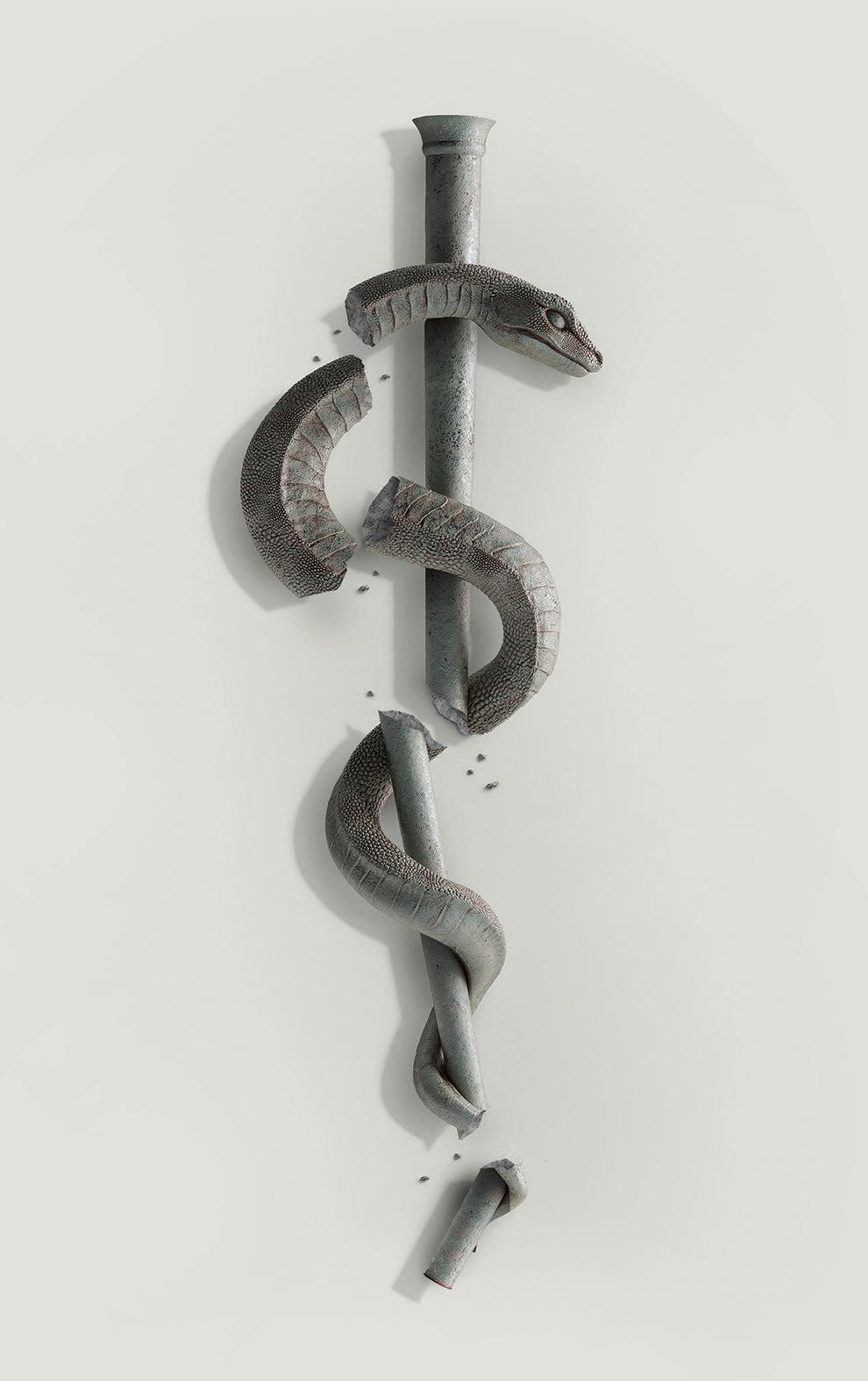
In the winter of 168 C.E., the famed Greek physician Galen arrived in Aquileia, an Italian city on the northern edge of the Adriatic. The city had grown large since its founding as a Roman colony, but during the 200-year Pax Romana, its fortifications had been allowed to deteriorate. After an armed group of migrating Germanic peoples had crossed the Danube a year earlier, the Roman co-emperors, Marcus Aurelius and Lucius Verus, had rushed to the city, raising two legions and rebuilding its defenses; they planned to use it as a base of operations against the invaders.
Galen had been summoned, however, to help fight a different kind of invader. A plague, likely an early variant of smallpox, had traveled to Aquileia with the troops, and held the city in its grip. The emperors fled, but Verus succumbed to the disease on the road to Rome. Galen tried to slow the wave of illness, but most of the people in Aquileia perished.
They represented just a sliver of the eventual victims of the Antonine Plague, also known as Galen's Plague, which killed at least 1 million people throughout the Roman empire. It was possibly the world's first true pandemic, and haunted the empire for the rest of the Pax Romana, which ended in 180 with Aurelius's death. The details of the pandemic—the exact pathogen, the true number of victims—are subjects of debate, and might never be fully settled. But some research has cited the Antonine Plague as part of a vicious cycle that hastened Rome's long fall. Food shortages, internal migrations, and overcrowding had already signaled a slippage in imperial power, and created a fertile environment for disease. The pandemic, in turn, spread panic and left behind mistrust, weakening faith in civic and religious authorities.

Dit verhaal komt uit de March 2026-editie van The Atlantic.
Abonneer u op Magzter GOLD voor toegang tot duizenden zorgvuldig samengestelde premiumverhalen en meer dan 9000 tijdschriften en kranten.
Bent u al abonnee? Aanmelden
MEER VERHALEN VAN The Atlantic

The Atlantic
The Eighth Deadly Sin
Humankind has devised a new form of debasement.

5 mins
May 2026

The Atlantic
The Art of the (New) Deal
What the murals of the Wilbur J. Cohen Federal Building can teach us about patriotism, propaganda, and beauty
12 mins
May 2026

The Atlantic
New Chairs
Collaboration, for Robert Rauschenberg and Merce Cunningham, began with the arrangement of chairs.
1 mins
May 2026

The Atlantic
HISTORY IS RUNNING BACKWARDS
Why reactionaries are taking over the world
21 mins
May 2026

The Atlantic
SOMEDAY IN TEHRAN
Like Donald Trump, I, too, once underestimated the Islamic Republic of Iran.
16 mins
May 2026

The Atlantic
On Losing a Daughter
The people we were died at the exact moment our child did.
19 mins
May 2026

The Atlantic
I Found It: The Best Free Restaurant Bread in America
Thirteen thousand miles. Infinite contenders. One beautiful loaf.
15 mins
May 2026

The Atlantic
EVERYTHING IS FREE AND NOTHING MATTERS
What I saw at Jeff Bezos's Campfire retreat
9 mins
May 2026

The Atlantic
Who Is Black Comedy For?
A new book is nostalgic for the '90s. But the era of crossover success was not necessarily the pinnacle of Black comedic achievement.
8 mins
May 2026

The Atlantic
The Feeling of Becoming Less and Less of a Person
In Ben Lerner's new novel, technology divides us further from one another, and ourselves.
9 mins
May 2026
Listen
Translate
Change font size