
Ga onbeperkt met Magzter GOLD
Krijg onbeperkte toegang tot meer dan 9000 tijdschriften, kranten en Premium-verhalen voor slechts
Poging GOUD - Vrij
How 'National Security' Came Unmoored From Americans' Actual Security
Reason magazine
|November 2025
THE IDEA OF “national security” is so ubiquitous that it is hard to imagine an American political culture without it.
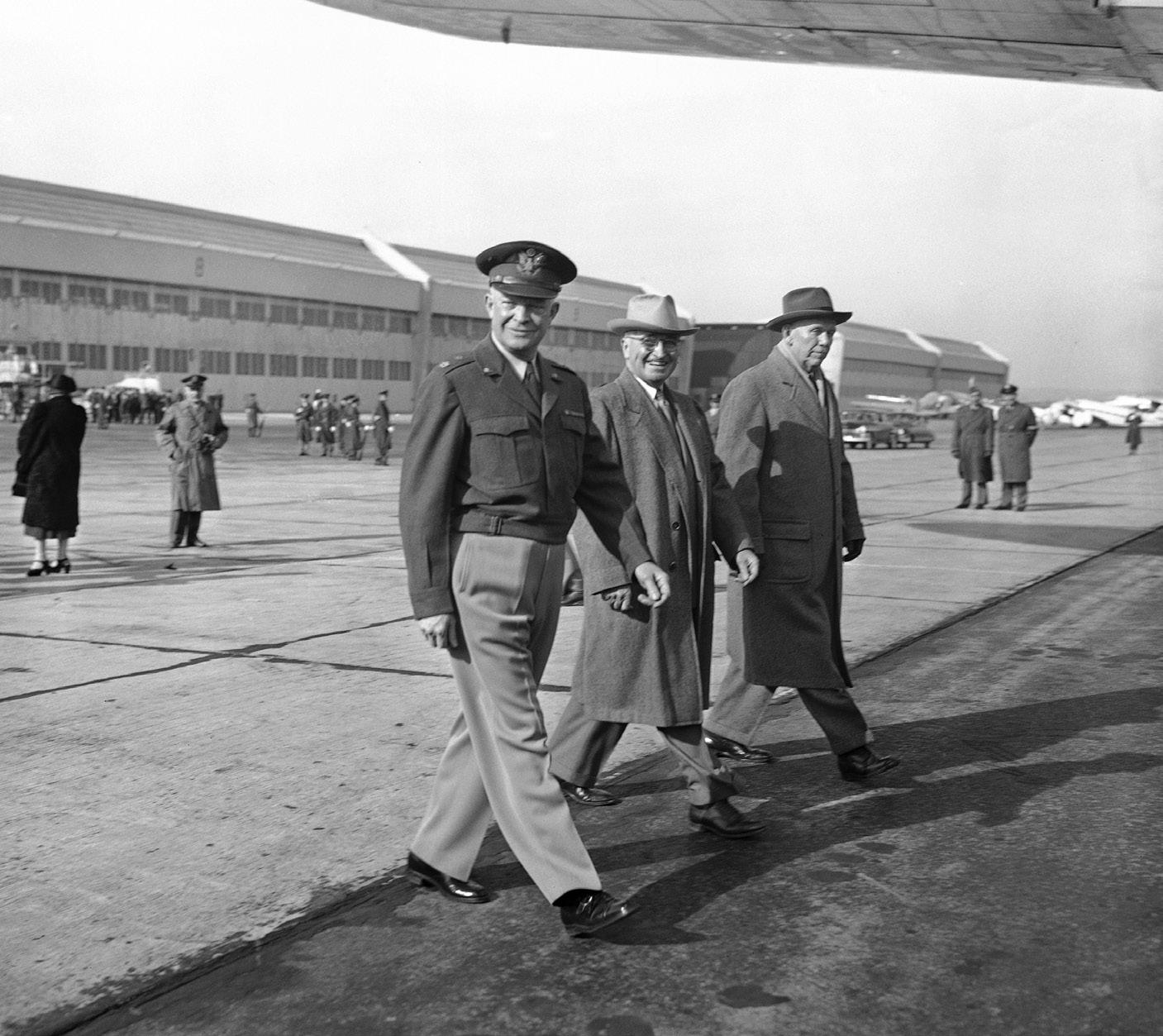
But as the Cambridge historian Andrew Preston shows in Total Defense: The New Deal and the Invention of National Security, the concept and its universal usage have not always been with us. They have a history firmly rooted in New Deal liberalism, its anxieties about economic insecurity at home, and its fears of illiberal forces abroad.
Despite the framing suggested by the subtitle, this well-argued and often provocative book stretches from the 19th century through the early Cold War. Preston’s purpose, he writes, is “to find the source of the idea, now axiomatic, that the security of the United States often had little to do with the immediate safety of the continental United States itself.” He argues that the modern ideology of national security, one where security is unmoored from strict dictates of Americans’ physical safety from immediate danger, was primarily an elite project. That elite pushed, cajoled, and scared a nation that once prided itself on having the luxury of distance into seeing its interests as global. America, the new thinking held, belongs at the center of a “horizonless world.”
Early in the life of the republic, the American foreign policy consciousness had an ever-moving but nevertheless discernible westward horizon. After the War of 1812, Preston argues, the young nation enjoyed what was retroactively known as “free security”—an unrivaled combination of fortunate geography and fortunate geopolitics. He acknowledges that the U.S. had its share of security concerns that emanated from abroad, such as war scares with Peru in 1852 or Chile in 1891, but those fears never rose to the level of the existential competitions of Europe. Free from major outside threats, Americans came to envision self-defense as nothing more than fending off attacks against the country itself. And that could be accomplished with a comparatively small military establishment and a minor tax base.

Dit verhaal komt uit de November 2025-editie van Reason magazine.
Abonneer u op Magzter GOLD voor toegang tot duizenden zorgvuldig samengestelde premiumverhalen en meer dan 9000 tijdschriften en kranten.
Bent u al abonnee? Aanmelden
MEER VERHALEN VAN Reason magazine

Reason magazine
Does AI Know How You Will Die?
HOW HIGH IS your risk of developing pancreatic cancer or suffering a heart attack in the next 20 years? A new generative artificial intelligence system called Delphi-2M aims to answer that question and offer personalized forecasts of your long-term health trajectory.

1 mins
February/March 2026
Reason magazine
SOUTH PARK
The animated TV comedy South Park continues to do the impossible: stay punchy and relevant after decades on the air. The latest five-episode season, streaming on Paramount+, once again follows the fourth-graders of South Park Elementary as they navigate a world increasingly obsessed with technology and everything political.
1 min
February/March 2026

Reason magazine
WILL MAMDANI DEFUND THE POLICE?
THE NEW MAYOR IS KEEPING POLICE COMMISSIONER JESSICA TISCH ON THE JOB, BUT THEY MIGHT HAVE A CONTENTIOUS RELATIONSHIP.
3 mins
February/March 2026

Reason magazine
MAMDANI'S EDUCATION AGENDA FOR LESS LEARNING
NEW YORK SCHOOLS NEED MORE CHOICE AND BETTER CURRICULA, BUT THE CITY'S NEW MAYOR WANTS TO TAKE CHOICES AWAY.
8 mins
February/March 2026
Reason magazine
THE TWO FACES OF ZOHRAN MAMDANI
MAMDANI ACTUALLY WANTS MORE HOUSING TO BE BUILT.
3 mins
February/March 2026

Reason magazine
The Long Road Home
The Wounded Generation examines the aftermath of the “good war.”
5 mins
February/March 2026

Reason magazine
How the FCC Became the Speech Police
THE CONSTITUTIONALLY ANOMALOUS STATUS OF BROADCASTING INVITES GOVERNMENT MEDDLING.
21 mins
February/March 2026

Reason magazine
MAMDANI CAN'T RAISE YOUR KIDS
THE MORE THE GOVERNMENT INTERVENES IN THE MARKET, THE MORE NEW YORK PARENTS PAY FOR CHILD CARE.
10 mins
February/March 2026

Reason magazine
Ayn Rand, the Video Game
\"WHAT DOES COMPLETELY, COMPLETELY UNREGULATED COMMERCE LOOK LIKE?\" KEN LEVINE'S BIOSHOCK WILL TELL YOU.
14 mins
February/March 2026
Reason magazine
DEATH BY LIGHTNING
Mike Makowsky opens Death by Lightning, a four-part miniseries he wrote and produced, with a chilling line: “This is a true story about two men the world forgot. One was the 20th president of the United States. The other shot him.” Yet this drama about President James Garfield and assassin Charles Guiteau reminds us that we should wish for more forgettable presidents.
1 min
February/March 2026
Listen
Translate
Change font size