
Ga onbeperkt met Magzter GOLD
Krijg onbeperkte toegang tot meer dan 9000 tijdschriften, kranten en Premium-verhalen voor slechts
Poging GOUD - Vrij
Slicing the Pie
Outlook
|September 21, 2024
Distinct from quick technical solutions offered by the judiciary the Dalit-Bahujan movements have suggested new momentum and reforms in the agenda of social justice

A seven-judge constitution bench of the Supreme Court recently suggested that states can now “sub-classify the Scheduled Castes (SCs) and Scheduled Tribes (STs)” in order to help the worst-off sections within these categories.
A longstanding constitutional directive that earlier identified the uniformity of these groups— based on socio-cultural history, like the clause of untouchability for the SCs and geographical alienation for the STs—has thus been radically altered.
The judges remarked that both categories are heterogeneous as certain sections within them have achieved class mobility by utilising the benefits of the reservation policy. It initiated a heated debate over the idea of social justice, the mandate of the reservation policy and its political fallouts.
The Constitutional Mandate
The modern Constitution makers had sincerely acknowledged that the Brahmanical caste system is the most oppressive order against the untouchable castes. The untouchables and Adivasis were denied basic human entitlements and were forced to survive away from the modern developmental processes. Babasaheb Ambedkar provided the needed mantle to their plight and made them a crucial subject in the nationalist deliberation. He utilised modern political ideas and constitutional identities (like the Depressed Classes earlier and later the SCs) to organise the diverse untouchable castes as a unified national bloc, demanding their participation in the modern institutions as crucial partners. He further proposed Buddhist religious conversion to escape the blot of untouchability, inviting them to join the democratic processes as dignified individuals.
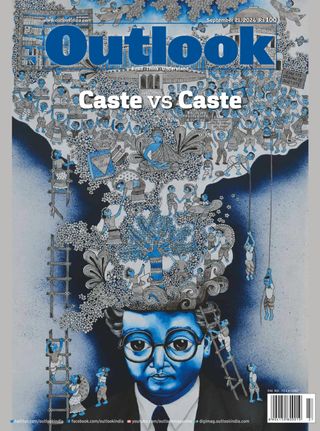

Dit verhaal komt uit de September 21, 2024-editie van Outlook.
Abonneer u op Magzter GOLD voor toegang tot duizenden zorgvuldig samengestelde premiumverhalen en meer dan 9000 tijdschriften en kranten.
Bent u al abonnee? Aanmelden
MEER VERHALEN VAN Outlook

Outlook
Joy Words Club
Lit fests are defined by their audience. Organisers, speakers, curators are all replaceable but not the readers, not the audience

4 mins
February 01, 2026

Outlook
The Sting of the Bar
India today has more than 4.3 lakh undertrial prisoners. A significant number of them are linked to political cases
8 mins
February 01, 2026
Outlook
The Dispossessed
The systematic creation of criminal and security legislations view Adivasis as an inherently suspect class of criminals and terrorists
8 mins
February 01, 2026

Outlook
The Hypocrisy of Liberals
Favour of the self-proclaimed 'liberals' is lost the minute religion intervenes
5 mins
February 01, 2026
Outlook
Inside the Phansi Yard
Death row intensifies the structured brutalities of the penal system and reminds us why the struggle against the death penalty must also include the fact of prison violence
9 mins
February 01, 2026
Outlook
The Detention Legacy
Since Independence, a number of laws have been enacted that allow preventive detention which have been widely used by all regimes against their political opponents
7 mins
February 01, 2026
Outlook
“This Could Happen to You
The Bhima Koregaon case is not only about those who were imprisoned. It is also about the fate of democracy itself
8 mins
February 01, 2026

Outlook
"I Remember Swinging Between Hope and Despair"
HOPE and despair are basic human emotions and I believe that all human beings, now and then, swing between these two ends of the spectrum in life.
2 mins
February 01, 2026

Outlook
Think Ink
In 2026-the 'year of analog'-how will our relationship with literary festivals evolve?
6 mins
February 01, 2026

Outlook
Who Stole My Youth?
A Delhi district court granted Mohammad Iqbal bail in the riots case within three months. On March 18, 2025, he was discharged in the Babbu murder case, even as the riots trial continues
6 mins
February 01, 2026
Listen
Translate
Change font size