
Ga onbeperkt met Magzter GOLD
Krijg onbeperkte toegang tot meer dan 9000 tijdschriften, kranten en Premium-verhalen voor slechts
Price of a Life
Outlook
|August 11, 2025
The acquittal in the Mumbai blasts case shows that no amount of compensation can make up for the losses incurred. But courts must award compensation for wrongful prosecution
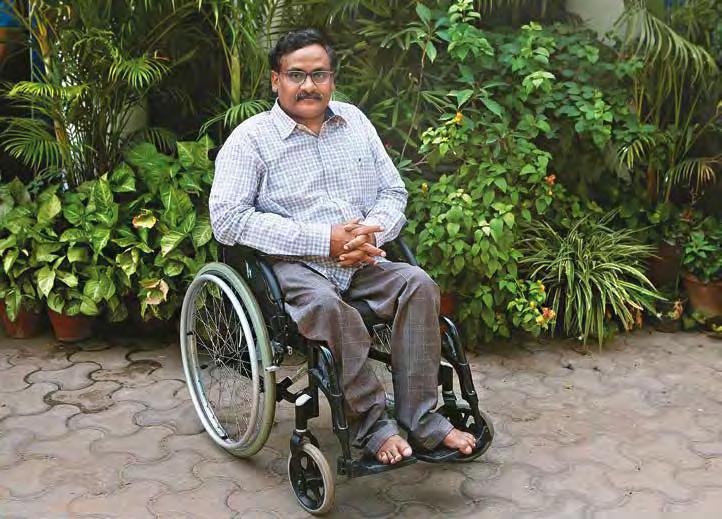
THE presumption of innocence is one of the fundamental principles of criminal law.
However, in reality, the system functions in a reverse manner. Rather than a presumption of innocence, our criminal justice system is premised on a presumption of guilt, unfortunately, a lifelong one. Once named as an accused in a criminal case, the presumption is that one is guilty. Though as per law, the burden of proof is on the prosecution, invariably, it is the accused who have to prove themselves innocent. Wrongful conviction only reinforces the belief in that guilt. Acquittal ought to serve as a vindication of innocence, but instead has the public thinking that the guilty escaped punishment!
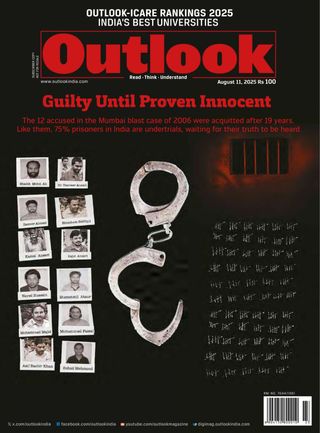
Most judges prefer to err on the side of caution. There is, after all, so much at stake: promotions, assignments, transfers, and post-retirement appointments. Bold judges are usually sidelined. Therefore, I cannot help but admire the courage of the Bombay High Court judges who acquitted the 12 convicted accused in the Mumbai train blasts case last Monday, after about 19 years of wrongful incarceration, taking the prosecution evidence apart threadbare. They've given new vigour to the term justice, and reinforced my own rapidly diminishing faith in the frail criminal justice system. The reaction from the government was predictable. Instead of an apology for this miscarriage of justice, in a move which could only be aimed at self-preservation and optics, a petition was immediately filed and moved before the Supreme Court, which has stayed the judgement to prevent it from being used as a precedent.

Dit verhaal komt uit de August 11, 2025-editie van Outlook.
Abonneer u op Magzter GOLD voor toegang tot duizenden zorgvuldig samengestelde premiumverhalen en meer dan 9000 tijdschriften en kranten.
Bent u al abonnee? Aanmelden
MEER VERHALEN VAN Outlook

Outlook
The Big Blind Spot
Caste boundaries still shape social relations in Tamil Nadu-a state long rooted in self-respect politics

8 mins
December 11, 2025

Outlook
Jat Yamla Pagla Deewana
Dharmendra's tenderness revealed itself without any threats to his masculinity. He adapted himself throughout his 65-year-long career as both a product and creature of the times he lived through
5 mins
December 11, 2025

Outlook
Fairytale of a Fallow Land
Hope Bihar can once again be that impossibly noisy village in Phanishwar Nath Renu's Parti Parikatha-divided, yes, but still capable of insisting that rights are not favours and development is more than a slogan shouted from a stage
14 mins
December 11, 2025

Outlook
The Lesser Daughters of the Goddess
The Dravidian movement waged an ideological war against the devadasi system. As former devadasis lead a new wave of resistance, the practice is quietly sustained by caste, poverty, superstition and inherited ritual
2 mins
December 11, 2025

Outlook
The Meaning of Mariadhai
After a hundred years, what has happened to the idea of self-respect in contemporary Tamil society?
5 mins
December 11, 2025

Outlook
When the State is the Killer
The war on drugs continues to be a war on the poor
5 mins
December 11, 2025

Outlook
We Are Intellectuals
A senior law officer argued in the Supreme Court that \"intellectuals\" could be more dangerous than \"ground-level terrorists\"
5 mins
December 11, 2025

Outlook
An Equal Stage
The Dravidian Movement used novels, plays, films and even politics to spread its ideology
12 mins
December 11, 2025
Outlook
The Dignity in Self-Respect
How Periyar and the Self-Respect Movement took shape in Tamil Nadu and why the state has done better than the rest of the country on many social, civil and public parameters
5 mins
December 11, 2025

Outlook
When Sukumaar Met Elakkiya
Self-respect marriage remains a force of socio-political change even a century later
7 mins
December 11, 2025
Listen
Translate
Change font size