Poging GOUD - Vrij
Past Continuum
Outlook
|February 11, 2025
Archaeological evidence is essential for reconstructing history but history and truth are not static
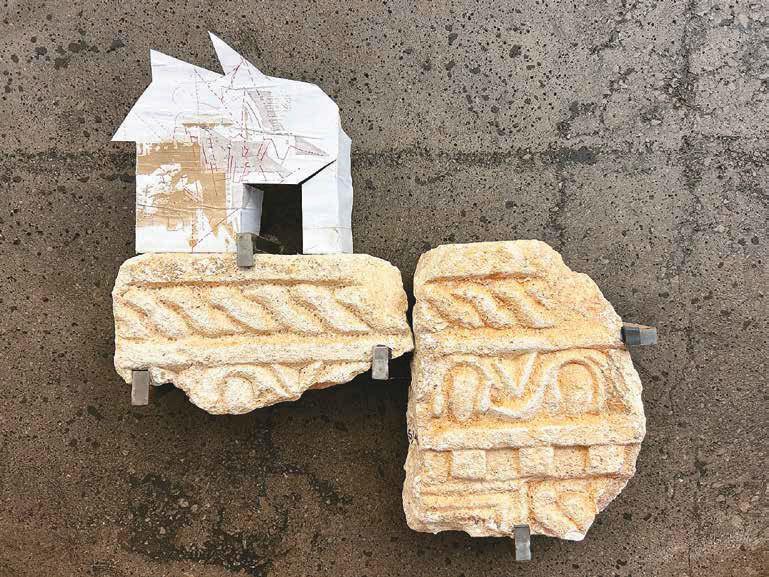
ARCHAEOLOGICAL pieces of evidence are primary resources because they provide direct, tangible links to past human activities even amidst the challenges of destruction and transformation over time.
While the soil layers reflect complex processes such as erosion, sedimentation and human activity, archaeologists interpret these transformations and establish relative chronologies using stratigraphy. Scientific techniques such as radiocarbon dating, soil analysis and material studies help refine interpretations and provide temporal accuracy.
Though complicated, the destruction of civilisations often leaves resilient artifacts, architectural remnants, or bioarchaeological traces that serve as windows into past lives.
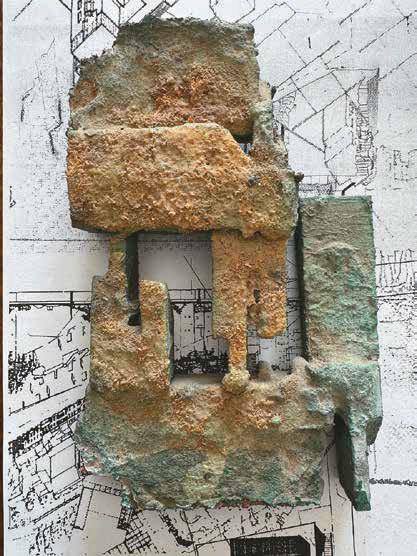 These remnants carry first-hand information about historical communities' technology, economy, social structure and cultural practices. While transformations may obscure some aspects, they also offer insights into environmental changes and human adaptability, making archaeological evidence indispensable for reconstructing history and understanding the continuity and rupture of human civilisations.
The politics of archaeological evidence often remains unsettled as government policies, national agendas and socio-political contexts frequently influence archaeological excavations. What remains on the ground and what has disappeared are critical in shaping historical narratives.
Still, the interpretation and prioritisation of archaeological evidence are often subject to political motivations.
Governments often control access to excavation sites and fund projects, making them key players in deciding which aspects of history are highlighted or suppressed.
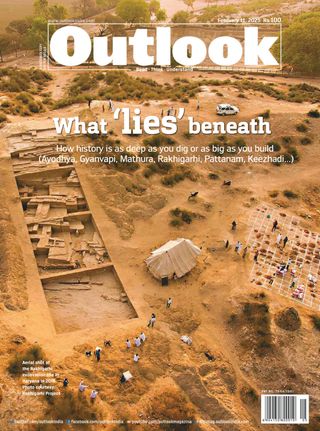

Dit verhaal komt uit de February 11, 2025-editie van Outlook.
Abonneer u op Magzter GOLD voor toegang tot duizenden zorgvuldig samengestelde premiumverhalen en meer dan 9000 tijdschriften en kranten.
Bent u al abonnee? Aanmelden
MEER VERHALEN VAN Outlook

Outlook
Get the Right Partner
The broking industry is now in a price-war phase, but cost is no longer the key differentiator. The choice will depend on how you plan to use a broking platform

4 mins
July 06, 2026

Outlook
Balanced Fertilizer Push for India
As India faces fertilizer import shocks; Deepak Shah, Chairman of CCFI calls for shift to high NUE solutions for food security and growth.
2 mins
July 06, 2026

Outlook
India’s Anaemia Paradox
From disputed estimates to hidden causes, India’s anaemia story is entering a new phase, one that could reshape how the country understands and addresses a condition affecting millions
5 mins
July 06, 2026

Outlook
Record Placements Anchor PIMR Legacy
Prestige Institute of Management and Research, Indore (Deemed to be University): Anchoring Three Decades of Academic Vanguard and Frontier Leadership
3 mins
July 06, 2026

Outlook
Clinical Excellence in High precision Radiation Therapy
Driven by the conviction that healing begins with humanity, radiation oncologist Dr. Amit Jain has impacted countless lives
2 mins
July 06, 2026

Outlook
A Paradise Worth Protecting
Ancient rainforests, endemic and rare mammals, birds and reptiles, exotic species of trees, breathtaking corals and indigenous tribes... Great Nicobar is home to all this and a lot more
5 mins
July 06, 2026

Outlook
Your Future Starts Here
Adichunchanagiri University (ACU), nurturing visionary thinkers, global leaders, and bold entrepreneurs who are ready to drive impact in a fast-evolving digital economy
3 mins
July 06, 2026

Outlook
Building a Sustainable Airport Ecosystem in Bengaluru
At Kempegowda International Airport Bengaluru (BLR Airport), sustainability is a guiding philosophy shaping infrastructure, operations, growth, resilience and workplace culture.
4 mins
July 06, 2026

Outlook
Intelligent Imaging for Smarter Healthcare
Dilip Bhosale, shares with Outlook, how Agfa Radiology Solutions is leveraging advanced digital technologies, workflow automation and global expertise to shape the future of diagnostic imaging in India in conversation with Aditi Chakraborty
2 mins
July 06, 2026

Outlook
Advancing the Future of Oncology in Eastern India
A champion of accessible and patient-centred cancer care, Dr Soma Mukhopadhyay is leading NCRI Hospital towards new standards of excellence in oncology
2 mins
July 06, 2026
Listen
Translate
Change font size