Poging GOUD - Vrij
Lopsided Language
Outlook
|December 21, 2023
Coverage of the Israel-Palestine war raises the larger question of bias in media representations

IN the past month, journalists from media powerhouses like the BBC, The Washington Post, Reuters, and the LA Times have raised their voices against the “dehumanising rhetoric” used in media against Palestinians and the bias in reporting of the ongoing Israel-Palestine war. One characteristic that has defined the approach of many western media outlets covering the war has been a complete lack of context. Most do not mention the sustained Israeli occupation of Palestinian lands, Israel’s violation of multiple international laws, and the everyday violence and subjugation of Palestinian people that have been ongoing for the past 70 years. This points to a larger question of bias in media representations and its inextricable connection with the politics of language.
Linguistic bias is an often-ignored way in which such biases become evident. It refers to the asymmetrical use of words or phrases to describe one community in a way that reveals conscious or unconscious prejudice. For instance, across multiple media outlets, words like “atrocity”, “brutal murder” or “massacre” are reserved for referring to Israeli deaths—an observation that a study of BBC articles affirmed back in 2011. Israeli victims are described as “brutally killed by Hamas” whereas Palestinian victims “die” as “collateral damage” in “zones of conflict”. Headlines refer to buildings “collapsing” in Gaza without any mention of the Israeli airstrikes that have destroyed them. Such euphemisms misrepresent the state of the war and hide the extent of damage that Israel has caused in Gaza.


Dit verhaal komt uit de December 21, 2023-editie van Outlook.
Abonneer u op Magzter GOLD voor toegang tot duizenden zorgvuldig samengestelde premiumverhalen en meer dan 9000 tijdschriften en kranten.
Bent u al abonnee? Aanmelden
MEER VERHALEN VAN Outlook
Outlook
'Why GDP Growth Doesn't Always Translate Into Votes'
The recent election results have once again shown that economic growth alone does not guarantee electoral victory.

3 mins
June 06, 2026
Outlook
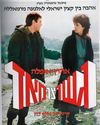
Lights, Camera, Othering
The establishment of Israel has been accompanied by a national cinema devoted to negating and erasing the Palestinian Other
5 mins
June 06, 2026

Outlook
Goodbye to All That
Booker-winning British author Julian Barnes' Departure(s) is a unique hybrid work: playful, philosophical, whimsical
4 mins
June 06, 2026
Outlook
Collapse of Trust
As the NEET-UG 2026 paper leak forced the cancellation of India’s biggest medical entrance exam, more than 22 lakh aspirants find themselves trapped in uncertainty
11 mins
June 06, 2026
Outlook
NO LONGER A TWELFTH MAN
Bihar cricket, which has languished in the shadows for long, is all set to improve its strike rate, thanks to Vaibhav Sooryavanshi, the new Bihari kid on the block
5 mins
June 06, 2026
Outlook
BLAZE OF GLORY
The challenges of being a celebrity cricketer at a young age can be tough to handle
5 mins
June 06, 2026
Outlook
THE SWASHBUCKLERS
A new generation of fearless stars is emerging and finding its feet at the very top of an extremely competitive cricketing environment
5 mins
June 06, 2026

Outlook
THE TEEN TORNAD
At the age of 15, Vaibhav Sooryavanshi is already a cricketing legend
10 mins
June 06, 2026
Outlook
A Journey to Remember
The prerecorded message crackled over the din in the compartment: ‘Welcome to the Shatabdi Express.
4 mins
June 06, 2026

Outlook
Crossing Borders
Ruth Martin is the translator of German-Iranian author Shida Bazyar’s novel The Nights are Quiet in Tehran (originally written in German), which has been shortlisted for the 2026 International Booker Prize.
4 mins
June 06, 2026
Listen
Translate
Change font size