Poging GOUD - Vrij
Right & Wrong About Right & Wrong
Philosophy Now
|June/July 2023
Paul Stearns argues against moral relativism and moral presentism.

“Whatever we may say about the merits of torturing children for pleasure, and no doubt there is much to be said on both sides, I am sure we all agree it should be done with sterilized instruments.” – G.K. Chesterton
“Man is the measure of all things.”
– Protagoras
One of the most common beliefs that people have about morality is the idea that different times and cultures have radically different moral standards. This assumption fuels moral relativism. Moral relativists believe cultures, individuals, and times do differ in their basic moral values, and that relativism is the best explanation for these differences. Moral relativists also hold that all moral views are equally valid because each culture (or person) invents their own morality.
The assumption that different times have radically different moral standards can also be seen in a position called moral presentism, which maintains that we should not judge the past using our present moral standards. For example, the American comedian Bill Maher recently said that Columbus committed atrocities, “but people back then were generally atrocious.” He argued that our judging Columbus or Washington is like “getting mad at yourself for not knowing what you know now when you were ten”, like saying, “stupid me for wanting to be a breakdancer and ghostbuster.” His point is that it is unfair to judge the past (or his ten-year-old self) from the current more mature perspective.
While there are differences between relativism and presentism, they both make this popular yet questionable assumption that different cultures have different moral standards. In this article, I want to critique this assumption by arguing that fundamental moral values do
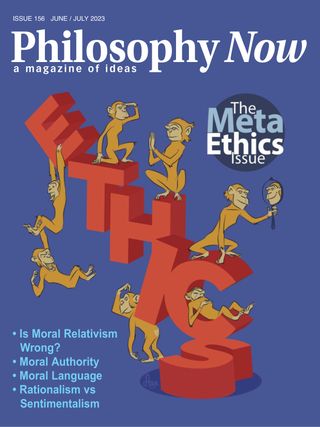

Dit verhaal komt uit de June/July 2023-editie van Philosophy Now.
Abonneer u op Magzter GOLD voor toegang tot duizenden zorgvuldig samengestelde premiumverhalen en meer dan 9000 tijdschriften en kranten.
Bent u al abonnee? Aanmelden
MEER VERHALEN VAN Philosophy Now

Philosophy Now
The Possibility- Bearing Animal
Raymond Tallis explores a twilight zone.

7 mins
February/March 2026

Philosophy Now
Amazing Times at the Pub Agora
John Douglas Mullen is a philosophical bar fly on the wall.
8 mins
February/March 2026

Philosophy Now
Friedrich Nietzsche (1844-1900)
Hilarius Bogbinder considers the all too human life of the notorious iconoclast.
11 mins
February/March 2026

Philosophy Now
Heisenberg's Philosophy of Quantum Mechanics
Kanan Purkayastha explains how Werner Heisenberg's 1925 paper turned the quantum theory of the early 1900s into the quantum mechanics of today.
10 mins
February/March 2026

Philosophy Now
Cicero & the Ideal of Virtue
Abdullah Shaikh explores Cicero's ideas about the core Roman principle of virtus.
13 mins
February/March 2026

Philosophy Now
ROPE
Les Jones has a Nietzschean take on a Hitchcock thriller.
6 mins
February/March 2026
Philosophy Now
What Have the Romans Ever Done For Us?
Salve! This issue's theme is Roman Philosophy. But as the rebels in Monty Python's Life of Brian asked, what have the Romans ever done for us? The question seems relevant here; we are philosophers, not archaeologists.
2 mins
February/March 2026

Philosophy Now
Paul Guyer
Paul Guyer is an American philosopher and a leading scholar of both Immanuel Kant and aesthetics. AmirAli Maleki interviews him about Kant's political and moral vision.
9 mins
February/March 2026

Philosophy Now
Identity in the Age of Connectivity
Sara Asran explores the dynamics of identity online.
6 mins
February/March 2026

Philosophy Now
A Very Short History of Critical Thinking
Luc de Brabandere summarises a long history through key figures of thought.
7 mins
February/March 2026
Translate
Change font size