
Ga onbeperkt met Magzter GOLD
Krijg onbeperkte toegang tot meer dan 9000 tijdschriften, kranten en Premium-verhalen voor slechts
Poging GOUD - Vrij
Excusing God
Philosophy Now
|June/July 2025
Raymond Tallis highlights the problem of evil.

This is the third time in this column I have written about - or more specifically, criticised Philip Goff's ideas. In Issue 135, I demonstrated (at least to my own satisfaction) that panpsychism, as set out in Professor Goff's 2019 book Galileo's Error: Foundations for a New Science of Consciousness, did not make sense. Then in Issue 162, I argued against the claim advanced in his Why? The Purpose of the Universe (2023) that the intrinsic improbability of a planet able to support life was evidence for a cosmic purpose. Now I am at it again. You may think that this amounts to literary stalking, or even persecution. That may be the case. But it is also a tribute to the intrinsic interest of Goff's ideas, the lucidity with which they are expressed, and their power to widen the horizon of the thinking even of those who, like me, ultimately reject them.
This time my focus is on something more specific claimed by Goff, in a recent article in this magazine, 'A God of Limited Power' (Philosophy Now 164). Here he addresses the difficulty often invoked by infidels such as myself "of reconciling a loving all powerful God with the terrible suffering we see in the world." The argument is that if God truly is both omnibenevolent and omnipotent – ideas central to Judeo-Christian belief – then he would not wish, nor indeed allow, that there should be suffering in the universe. So why is there so much suffering?

Dit verhaal komt uit de June/July 2025-editie van Philosophy Now.
Abonneer u op Magzter GOLD voor toegang tot duizenden zorgvuldig samengestelde premiumverhalen en meer dan 9000 tijdschriften en kranten.
Bent u al abonnee? Aanmelden
MEER VERHALEN VAN Philosophy Now

Philosophy Now
Nosferatu
Stefan Bolea considers two very different artistic approaches to love and death.

6 mins
April/May 2025

Philosophy Now
Heidegger's Ghost
Raymond Tallis wonders where Heidegger's body went when he was philosophising.
7 mins
April/May 2025

Philosophy Now
Is Comedy Good For Us?
Damaris Stock has a laugh with Plato and friends.
10 mins
April/May 2025

Philosophy Now
In Defense of Idleness
Wendell O'Brien says, 'Just Don't Do It'.
10 mins
April/May 2025

Philosophy Now
Leaving Nothing to Chance by Carl Knight
LEAVING NOTHING TO Chance (2025) by Carl Knight, is an informed, proficient and lucid defence of luck egalitarianism.
3 mins
April/May 2025

Philosophy Now
Star Maker by Olaf Stapledon
THE 1937 SCIENCE FICTION novel Star Maker was written by philosophy professor Olaf Stapledon in the dark days as Europe awaited the onslaught of Nazi Germany. This casts a shadow over the whole book.
6 mins
April/May 2025
Philosophy Now
Love & Emptiness in the Sufi Tradition
Medha Ninad Tambe meditates on Rumi, love and self-negation.
7 mins
April/May 2025

Philosophy Now
The Hedgehog's Dilemma: A Metaphor About the Challenges of Human Intimacy
Krishna Chaubey explains Arthur Schopenhauer's poignant thought experiment.
4 mins
April/May 2025

Philosophy Now
The Mirror & the Flame
Rebwar Fatah imagines Attar's & Hegel's shared path.
4 mins
April/May 2025
Philosophy Now
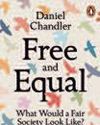
Free and Equal by Daniel Chandler
DANIEL CHANDLER, AN economist and philosopher based at the London School of Economics, begins Free and Equal: What Would a Fair Society Look Like? (2023) by asking an intriguing question. How is it, he wonders, that the most influential political philosopher of the last century has had almost no practical impact on politics or policy? The philosopher in question is John Rawls, whose magnum opus was A Theory of Justice (1971).
5 mins
April/May 2025
Listen
Translate
Change font size