
Ga onbeperkt met Magzter GOLD
Krijg onbeperkte toegang tot meer dan 9000 tijdschriften, kranten en Premium-verhalen voor slechts
Happiness found
WellBeing
|Issue 216
Happiness is a goal we all strive towards, but have you stopped to think about exactly what “happiness” is to you? Is it being in love? Is it buying a new car? Is it living in your dream town? Or is it engaging in your Favourite hobby? Let’s dig a little deeper beyond the top-of-mind imagery to discover the true nature of happiness.
Happiness: that thing we all want. You want it. Yet what is it? The easiest thing to begin with is to dispense with some of the popular misconceptions. For a start, happiness is not shopping. Despite everything that advertising tries to make you believe, you will not “become” happy by purchasing something. In fact, the evidence is that advertising is a major cause of unhappiness because it seeks to make people feel a sense of lack in their life. Of course, advertising agencies only have that power if you put any credence at all in any of their spruiking. Sling away slogans (there's one for your T-shirt) and you won't be open to the depredations that advertising can wreak in your psyche.
If you ask a politician, they will tell you that happiness for individuals lies in economic growth, a perpetually burgeoning gross domestic product (GDP). For mainstream politicians of all sides, the accepted mantra is to deliver the best possible quality of life for us all by concentrating on a growing economy. Growth, growth and growth are the underpinnings of all government planning. There is plenty of evidence to confirm that economic growth and wealth do not equate to happiness. That leaves us with the question of what happiness is, and many researchers and philosophers have tried to come up with an answer.
Reasons to be happy
Marci Shimoff is the author of Happy for No Reason, a book that resulted from her interviews with scores of scientists and 100 people that she identified as “unconditionally happy”. As a result of all her research, Shimoff concluded that there is a continuum of happiness. At one end are people who are “unhappy”, then there are those who are “happy for a bad reason”, those who are “happy for a good reason” and those who are “happy for no reason”.

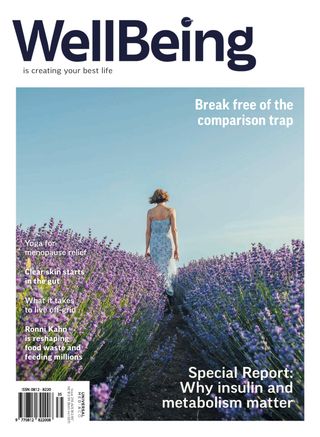

Dit verhaal komt uit de Issue 216-editie van WellBeing.
Abonneer u op Magzter GOLD voor toegang tot duizenden zorgvuldig samengestelde premiumverhalen en meer dan 9000 tijdschriften en kranten.
Bent u al abonnee? Aanmelden
MEER VERHALEN VAN WellBeing

WellBeing
In Season
These are the fruit and vegetables that are currently in season and so will be the freshest.

1 min
Issue 218

WellBeing
Navigating complementary medicines
For practitioners, quality and evidence matter more than ever. SFI Health is raising the bar with gold-standard formulations that don't compromise on clinical integrity.
5 mins
Issue 218
WellBeing
Too much of a good thing
Even well- intentioned health choices can sometimes contribute to unexpected problems.
3 mins
Issue 218

WellBeing
What we've been up to
WellBeing's editor Dana has been soaking up slow moments of warmth this winter.
1 min
Issue 218

WellBeing
Could creatine have a dark side?
Creatine is a multitalented wonder potion we all need to protect us against the ravages of ageing.
3 mins
Issue 218

WellBeing
ACS Distance Education
The secret to a successful career.
3 mins
Issue 218

WellBeing
Yoga for Energy Vampires
In yoga, prana is our life force and acts as a bridge between universal consciousness and matter.
8 mins
Issue 218
WellBeing
Chinese medicine dietary therapy
Food therapy may augment TCM herbal therapy or sustain improvements after herbal treatments have ceased. It may also be used in prevention, to nourish health and prolong life.
3 mins
Issue 218
WellBeing
AcuEnergetics®
AcuEnergetics received widespread attention in the media when founder Kevin Niv Farrow treated the captain of the NSW State of Origin team Boyd Cordner for a calf injury. Since then, the unique treatment modality has continued to capture the attention of other high-profile sports stars.
1 mins
Issue 218
WellBeing
Honouring a legacy in aromatherapy
Our oils are extracted with precision and care to ensure the active plant compounds remain intact, preserving the therapeutic benefits from field to bottle.
3 mins
Issue 218
Listen
Translate
Change font size