Poging GOUD - Vrij
Designing Analog Electronics
Circuit Cellar
|November 2025
Part 1: Error and Uncertainty
Designing analog electronics hardware is less orderly and predictable than digital electronics design. In this article series, Andrew describes the tools and techniques for producing high quality, reliable analog circuits. In Part 1, he looks at the key factor that differentiate analog and digital electronics— managing errors and uncertainty.
In the last 10 years or so, we have seen a real resurgence of interest in designing and building electronics hardware, driven by the accessibility of platforms such as Arduino and Raspberry Pi. Many of those people have come to hardware design from a software or firmware background, and have acquired the necessary skills by getting their hands dirty and building stuff.
One of the most challenging parts of hardware design (at least in my opinion) is analog design. This is an area of electronics which, while relatively straightforward to get started with, is really quite difficult to master. Unlike the order and predictability of digital electronics, analog electronics can be messy, noisy and uncertain. I firmly believe that there is no magic to good analog design. Armed with a little knowledge and a handful of tools and techniques, anyone can produce high-quality, reliable and reproducible analog circuits.
I hope to demonstrate some of these tools and techniques in this series of articles. They are aimed at readers who are comfortable with the basics of electronics, but want to strengthen their knowledge of analog circuit design. It is not meant to be a rigorous exposition of analog design theory, but rather to offer some tools, tips, and techniques that might help you avoid some of the traps and produce effective and functional analog circuits. I am going to keep things very practical, using a minimum of mathematics and lots of real-world examples.
A DESIGN EXAMPLE


Dit verhaal komt uit de November 2025-editie van Circuit Cellar.
Abonneer u op Magzter GOLD voor toegang tot duizenden zorgvuldig samengestelde premiumverhalen en meer dan 9000 tijdschriften en kranten.
Bent u al abonnee? Aanmelden
MEER VERHALEN VAN Circuit Cellar

Circuit Cellar
Bosch Sensortec Launches BMI423 Inertial Measurement Unit
Smart wearables are always on the move-and so is their sensing technology. Bosch Sensortec introduced the BMI423, a new-generation Inertial Measurement Unit (IMU) that combines extended measurement range with low power consumption.

1 mins
February 2026

Circuit Cellar
Renesas Releases its First Wi-Fi 6 and Wi-Fi/Bluetooth LE Combo MCUs for IoT and Connected Home Applications
Renesas Electronics Corp., a premier supplier of advanced semiconductor solutions, has introduced the RA6W1 dual-band Wi-Fi 6 wireless microcontroller (MCU), along with the RA6W2 MCU that integrates both Wi-Fi 6 and Bluetooth Low Energy (LE) technologies.
1 mins
February 2026

Circuit Cellar
Airborne Embedded Software: Simplifying Safety and Security
With modern airborne systems no longer isolated computing environments, any vulnerabilities introduced into these increasingly connected devices can quickly become much more than just a cybersecurity issue, but a safety risk no one can afford.
4 mins
February 2026

Circuit Cellar
Wearable LIDAR Spatial Audio Navigator for Visually-Impaired Individuals
Built with a Raspberry Pi Pico, a TF-Luna LiDAR Sensor, and a Hand-Held Potentiometer
13 mins
February 2026

Circuit Cellar
ADRs: The Missing Memory in Embedded Projects
Remembering and communicating why design decisions were made and the reasons behind their particular implementations can be critical when it comes to developing software as a team and maintaing that software in the future. This time Jacob shares his thoughts on and experience with one of the most valuable tools to extend the reach of software development memories.
9 mins
February 2026

Circuit Cellar
Sensors: From Canned Tuna to Caviar
In the first installment of a new Circuit Cellar column on sensors, Brian Chee looks at how sensors figure into larger application packages and when \"just enough sensors\" can be the perfect solution.
10 mins
February 2026
Circuit Cellar
Embedded DSP with the RT1010 MCU
Part 2: Delay, Flanger, IIR, and Overdrive
15 mins
February 2026
Circuit Cellar
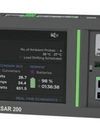
Omnion Power Provides Modular, Scalable DC Power System Monitoring and Control with New Pulsar 200 Controller
Omnion Power is helping to redefine the role of the DC power system controller with its next-generation Pulsar 200 platform.
1 mins
February 2026

Circuit Cellar
Robot Operating System 2 (ROS 2): Core Concepts, Architecture, and Real-World Capabilities
The Robot Operating System 2 (ROS 2) is an open-source, middleware framework that addresses the communication and coordination challenges inherent in modern, distributed robotic systems. In this article, Pedro details how ROS 2's architectural foundations successfully address the core limitations of its predecessor, ROS 1, using real-world scenarios, and steps for setting up the ROS 2 Foxy environment on Ubuntu Linux distro, and cross-platform communication between a host PC and a Raspberry Pi module.
14 mins
February 2026

Circuit Cellar
Ambiq Unveils Atomiq, the World's First Ultra-Low Power NPU SoC Built on SPOT
Ambiq Micro, Inc., a recognized leader in ultra-low-power semiconductor solutions for edge AI, announced Atomiq, the highly anticipated system-on-chip (SoC) integrating a Neural Processing Unit (NPU) designed to enable real-time, always-on artificial intelligence at the edge.
1 mins
February 2026
Listen
Translate
Change font size