
Ga onbeperkt met Magzter GOLD
Krijg onbeperkte toegang tot meer dan 9000 tijdschriften, kranten en Premium-verhalen voor slechts
Poging GOUD - Vrij
Britain's war on the slave ships
BBC History UK
|July 2024
In the early 19th century, a Royal Navy squadron was sent to west Africa to hunt down ships carrying enslaved people to the Americas. The operation was hailed as an act of "pure unselfish philanthropy". Yet, writes Mary Wills, the reality was far more tangled

In March 1821, the Royal Navy vessel Tartar exchanged fire with a Spanish ship, Anna Maria. Such a tussle was not unusual in this period of British naval supremacy, fewer than 20 years after victory at the battle of Trafalgar. Yet this was an intervention in a very different kind of war, unlike anything British naval personnel had previously encountered. For Anna Maria was a slave vessel, with more than 400 enslaved African men, women and children crowded on board.
The Anna Maria had just embarked from the river Bonny in what is now Nigeria; its human cargo intended for forcible transportation to the Americas’ plantations. In a report to the Admiralty, the Tartar’s captain, Commodore Sir George Ralph Collier, a veteran of the French Revolutionary and Napoleonic Wars, struggled to put into words the human suffering he had witnessed on boarding such slave vessels. “No description I could give would convey a true picture of its baseness and atrocity,” he reported.
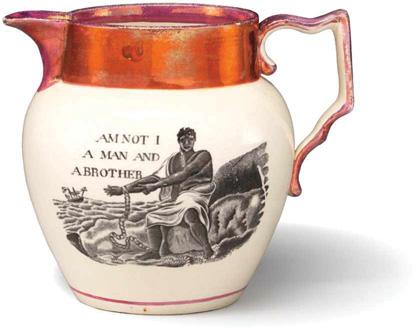 This was neither the first nor the last time that Collier would witness such horrors, for he belonged to the West Africa Squadron, a detachment of Royal Navy vessels formed to enforce the Act for the Abolition of the Slave Trade, passed by Britain’s parliament in 1807. From its formal establishment in 1818 to its disbandment in the 1860s, the squadron pursued and captured around 1,500 slaving ships along 2,000 miles of west African coastline – all with the aim of suppressing the prolific trade in human lives prosecuted by other nations.
 It was an endeavour that set London at loggerheads with a number of rival powers and saw its sailors engaged in a series of cat-and-mouse battles with the slavers. What’s more, it’s an episode that shines a light on Britain’s view of its place in the world in the first half of the 19th century.

Dit verhaal komt uit de July 2024-editie van BBC History UK.
Abonneer u op Magzter GOLD voor toegang tot duizenden zorgvuldig samengestelde premiumverhalen en meer dan 9000 tijdschriften en kranten.
Bent u al abonnee? Aanmelden
MEER VERHALEN VAN BBC History UK
BBC History UK
End times
Why do civilisations that dominated their epoch fail? In an era of autocracy, climate change, the rise of Al and a first-hand understanding of how deadly pandemics can be, it's a question that seems pertinent.

1 min
Christmas 2025

BBC History UK
Small pleasures
Memory is imperfect, but what if you could get a professional model maker to recreate a moment from the past?
1 min
Christmas 2025
BBC History UK
What are the origins of the Yule Lads?
To learn about the Jólasveinar (Yule Lads), we must start with their mother, the terrifying ogress Grýla. Her name appeared in Icelandic texts as early as the 13th century, although it wasn’t until later that those 13 mischievous lads became associated with her. Folk tales and poems tell how she descends from the mountains with an empty sack to stuff full of children. Grýla owns the monstrous Jólaköttur (Yule Cat), which roams the countryside on Christmas Eve, searching for children to gobble up if they're not wearing new clothes.
1 mins
Christmas 2025

BBC History UK
Santa Claus v Father Christmas
The true identity of the white-bearded, red-robed figure who fills children's stockings at Christmas has long been debated. Thomas Ruys Smith sizes up the merry contenders
8 mins
Christmas 2025

BBC History UK
Frontier friction
Set in Washington Territory in 1854, The Abandons is a Western that's unusual for having two matriarchs, women whose lives become entangled, at its centre.
1 min
Christmas 2025

BBC History UK
The Last Days of Pompeii: The Immersive Experience
Delve into the culture of daily Roman life, witness the momentous eruption of Mount Vesuvius, and follow its fallout in Immerse LDN's new exhibition. In a blend of cutting-edge technology and vivid storytelling, this exhibition launches visitors into Pompeii's rich history with recreations of the ancient city's beautiful pre-eruption landscape, a 360-degree virtual reality Roman amphitheatre experience, and a digital metaverse recreating Pompeii's 'Villa of Mysteries'.
1 min
Christmas 2025

BBC History UK
Bath in five places
In the Georgian era, Bath became arguably Britain's most fashionable destination. KIRSTEN ELLIOTT promenades five historic highlights
3 mins
Christmas 2025

BBC History UK
Elizabeth Marsh The corsair's captive
Taken hostage by a Barbary ship's captain in the 18th century, a young Englishwoman found herself fighting for her freedom in Marrakech. ADAM NICHOLS introduces a brave captive who later wrote a book about her dramatic experiences
6 mins
Christmas 2025

BBC History UK
29 DECEMBER 1170: Thomas Becket is murdered in Canterbury
Knights loyal to Henry II rid him of the “low-born cleric”
2 mins
Christmas 2025
BBC History UK
Murder most female
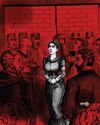
Women accused of violent murders have often faced assumptions about their motives and disbelief that the 'gentle sex' could commit such bloody crimes. Rosalind Crone investigates four cases from the 19th century
9 mins
Christmas 2025
Listen
Translate
Change font size