
Ga onbeperkt met Magzter GOLD
Krijg onbeperkte toegang tot meer dan 9000 tijdschriften, kranten en Premium-verhalen voor slechts
Poging GOUD - Vrij
THE BIG ICE IS SICK
The New Yorker
|December 01, 2025
One of the greatest polar-bear hunters in Arctic history confronts a vanishing world.
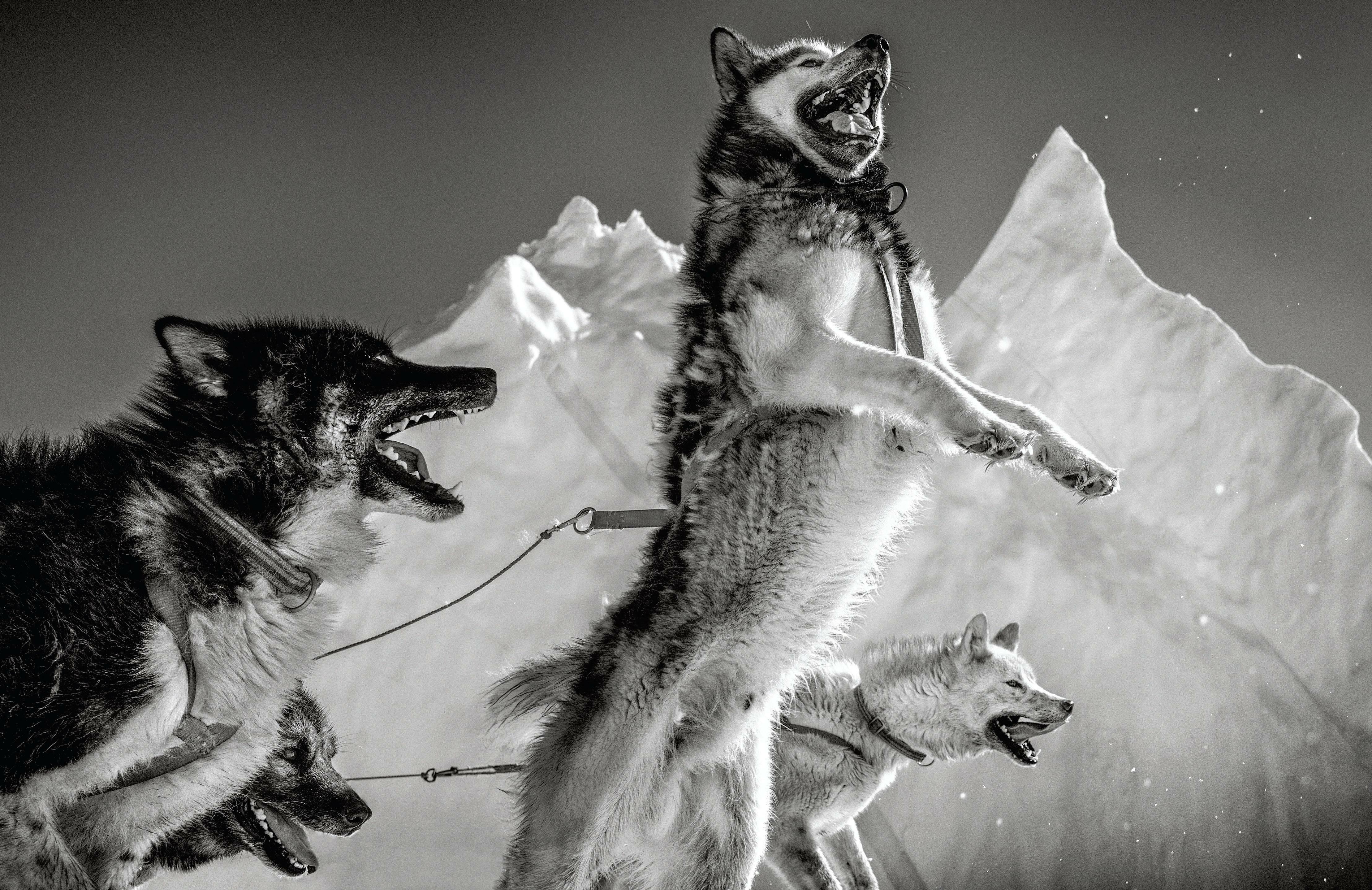
In early 1993, the Icelandic photographer Ragnar Axelsson arrived at the most remote settlement in Greenland, a lonely town in the east that is tucked away in the world's largest fjord system, which is usually locked in by ice. The temperature was minus forty degrees, in both Fahrenheit and Celsius—right where the scales converge. Sled dogs howled through the night, a warning against polar bears. The dogs smelled the bears. The bears smelled the children.
The only other humans who had settled on that side of Greenland were five hundred miles to the south, separated by impassable mountains and glaciers. To the north was nine hundred miles of frozen wilderness, inhabited only by animals and a dozen or so Danish soldiers who were doing two-year shifts on the world's most arduous patrol. To the west was the Greenlandic ice sheet—up to two miles thick and filled with perilous crevasses. The town was supplied by a ship from Denmark, fourteen hundred miles to the east: once in late summer and once in early autumn, before the pack ice reformed, rendering passage impossible. Amid this isolation, the town's name rang out as a riddle: Ittoqqortoormiit, the “place of the large houses.” Large houses? Compared with what?
Growing up in Reykjavik, Axelsson had always wondered what it would be like to experience genuine Arctic extremity. Now, at thirty-five, he flew to a small gravel airfield, built by an oil-prospecting company, about forty kilometres northwest of Ittoqqortoormiit. From there, he boarded a helicopter and flew over the fjord and the mountains to a small heliport above the town—its only access point in or out for most of the year. He had been told about an Inuit hunter, Hjelmer Hammeken, and hoped to accompany him far onto the sea ice, to photograph, as he later put it, “people who live way beyond the edge of what we might consider the habitable world.”


Dit verhaal komt uit de December 01, 2025-editie van The New Yorker.
Abonneer u op Magzter GOLD voor toegang tot duizenden zorgvuldig samengestelde premiumverhalen en meer dan 9000 tijdschriften en kranten.
Bent u al abonnee? Aanmelden
MEER VERHALEN VAN The New Yorker

The New Yorker
A WOMAN SCORNED
Mary Todd Lincoln has long been derided. Is her reputation salvageable?

14 mins
May 25, 2026

The New Yorker
REALISTIC HIGH-SCHOOL YEARBOOK INSCRIPTIONS
Abby! I can't believe we did it! Four years went by like that! Will you promise to keep in touch?! Let’s see each other once or twice this summer and then not again for about fifteen years, when we're both staying at a serviceable two-star resort that’s just fine with allowing small children fighting a horrible stomach bug to play in the pool. —Missy
3 mins
May 25, 2026

The New Yorker
MAJORITY RULES
Can Hakeem Jeffries lead a Democratic takeover of the House?
30 mins
May 25, 2026

The New Yorker
SPIRITED AWAY
The age of “intentional” drinking.
7 mins
May 25, 2026

The New Yorker
ROBOT LIT
The prehistory of A.I. slop.
14 mins
May 25, 2026

The New Yorker
CRISIS MODE
At a German festival, Chaya Czernowin gives voice to a wounded world.
5 mins
May 25, 2026

The New Yorker
GETTING LOST
Rostam Batmanglij wanders to the edges of American sound.
5 mins
May 25, 2026

The New Yorker
THE DREAMDRIVE
The night it began, he'd had an unremarkable meal of chicken and rice.
17 mins
May 25, 2026

The New Yorker
MARX BROTHER
Boots Riley's zany movies combine pop aesthetics with radical politics.
33 mins
May 25, 2026

The New Yorker
GUESSING GAME
The mystery and mass appeal of the N.F.L. draft.
22 mins
May 25, 2026
Listen
Translate
Change font size