Poging GOUD - Vrij
NO-PAIN GAINS
The New Yorker
|June 02, 2025
The radical development of a new painkiller.
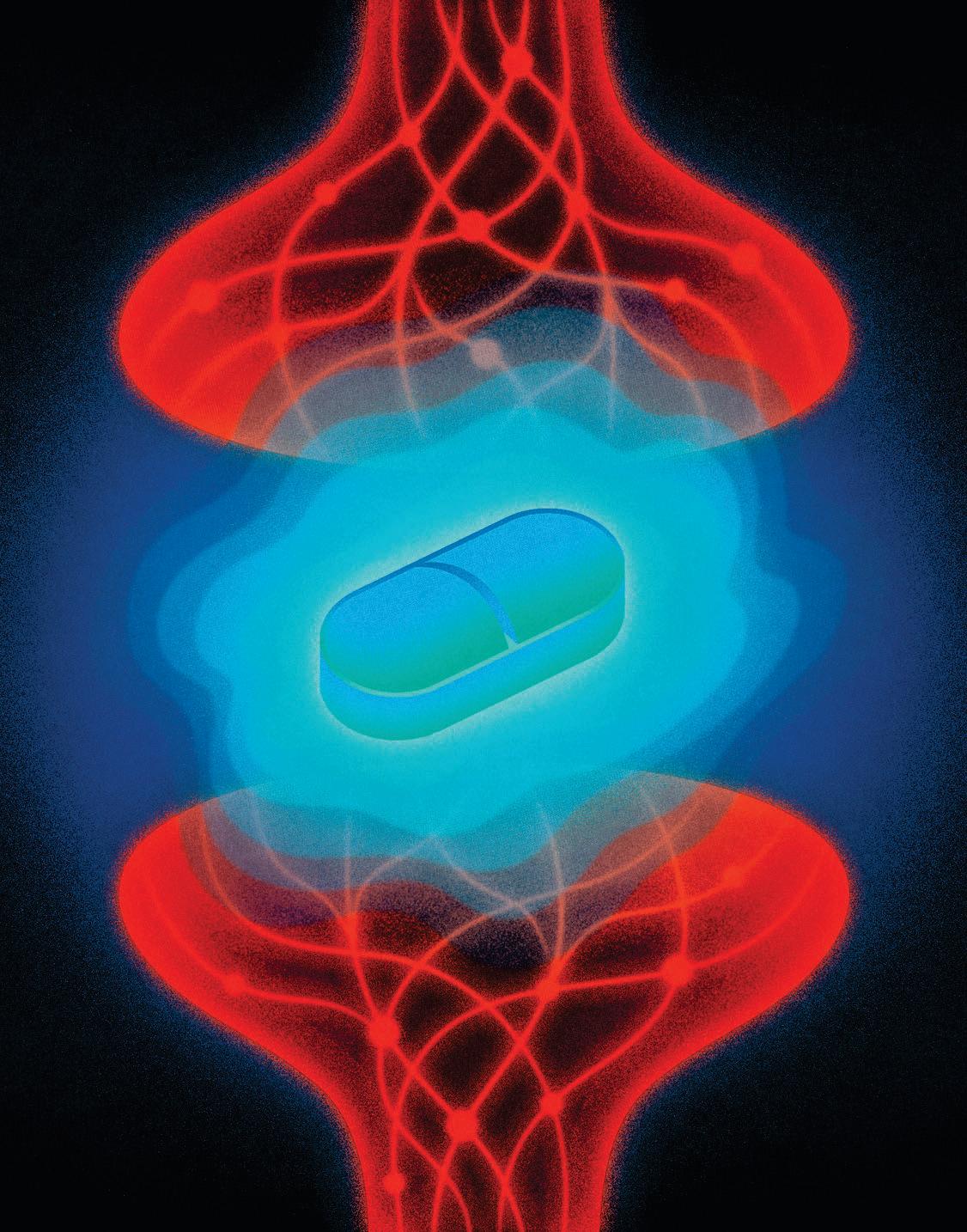
Pain might flicker, flash, prickle, drill, lancinate, pinch, cramp, tug, scald, sear, or itch. It might be blinding, or gruelling, or annoying, and it might, additionally, radiate, squeeze, or tear with an intensity that is mild, distressing, or excruciating. Yet understanding someone else's pain is like understanding another person's dream. The dreamer searches out the right words to communicate it; the words are always insufficient and imprecise. In 1971, the psychologist Ronald Melzack developed a vocabulary for pain, to make communication less cloudy. His McGill Pain Questionnaire, versions of which are still in use today, comprises seventy-eight words, divided into twenty groups, with an additional five words to describe intensity and nine to describe pain's relationship to time, from transient to intermittent to constant. Not included in the M.P.Q. is the language that Friedrich Nietzsche used in describing the migraines that afflicted him: “I have given a name to my pain and call it ‘dog.’ It is just as faithful, just as obtrusive and shameless, just as entertaining, just as clever as any other dog.”

Dit verhaal komt uit de June 02, 2025-editie van The New Yorker.
Abonneer u op Magzter GOLD voor toegang tot duizenden zorgvuldig samengestelde premiumverhalen en meer dan 9000 tijdschriften en kranten.
Bent u al abonnee? Aanmelden
MEER VERHALEN VAN The New Yorker
The New Yorker
CONTRIBUTORS
Eliza Griswold (\"Young Americans,\" p. 12) is a contributing writer.

1 mins
June 29, 2026

The New Yorker
THE READERS
Early in my treatment, we decided that you wouldn't read my work.
24 mins
June 29, 2026

The New Yorker
URBAN LEGEND
Closing out a crime trilogy about a changing New York, Colson Whitehead excavates his own foundations.
33 mins
June 29, 2026
The New Yorker
ABOUT TOWN
POST-ROCK | Last year, the Chicago instrumental post-rock band Tortoise returned with \"Touch,\" its first album in nearly a decade, the further explorations of an inquisitive nature.
3 mins
June 29, 2026
The New Yorker
GOINGS ON JUNE 24-30, 2026
What we're watching, listening to, and doing this week.
1 min
June 29, 2026
The New Yorker
LONGING FOR ITHACA
There’s a reason Homer’s homecoming epic has long defeated the directors.
16 mins
June 29, 2026

The New Yorker
HOT PURSUIT
The repo man coming for your ride.
35 mins
June 29, 2026
The New Yorker
WILD THINGS
Why do animals have sex, anyway?
14 mins
June 29, 2026

The New Yorker
PRICKLY PAIRS - “The Invite.”
“The Invite” begins with an aphorism: “One should always be in love.
6 mins
June 29, 2026
The New Yorker
BRAVE NEW WORLD DEPT.INSTANCING
Wednesday evenings at Hex&Co., board-game café and bar in Morningside Heights, are dedicated to \"RPG Encounters,\" in which fans of role-playing games gather to create collaborative stories over espresso drinks.
3 mins
June 29, 2026
Listen
Translate
Change font size