Poging GOUD - Vrij
BY THE BOOK
The New Yorker
|July 07 - 14, 2025 (Double Issue)
What we learn from reading the fiction touted in our début issue.
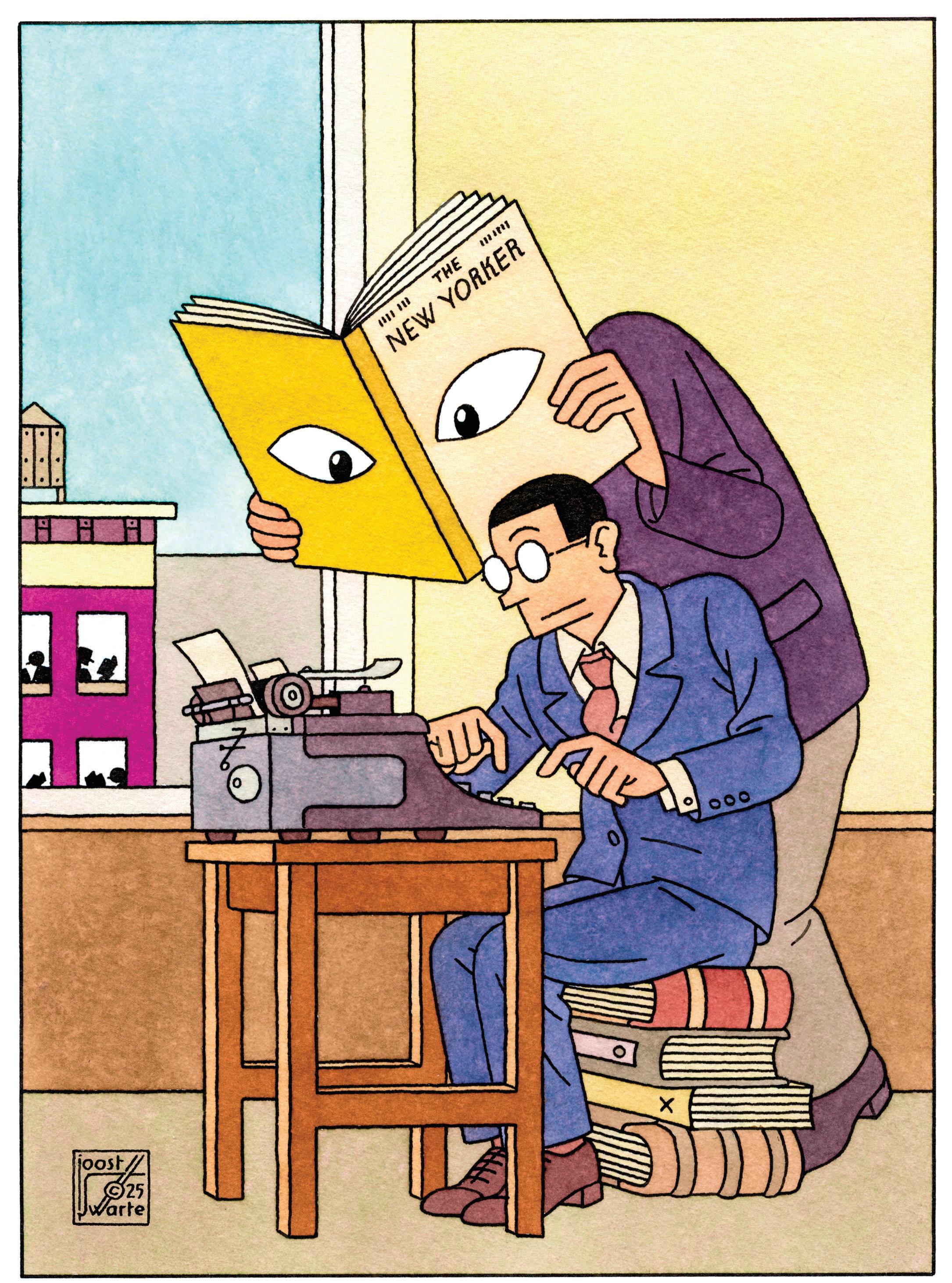
Several months before the first issue of The New Yorker appeared, Harold Ross's fundraising prospectus promised, along with much else, that “Judgment will be passed upon new books of consequence.” The publication's literary coverage would take a while to settle down into the distinct critical sensibilities of Dorothy Parker and Clifton Fadiman, and at the start “books of consequence” were something noticed haphazardly. “The Great Gatsby,” for example, received more attention for its theatrical adaptation in 1926—“a play of shrewd, hard humor, of self-respecting sentiment”—than for its appearance as a novel, a year earlier.
Much of the magazine's earliest book reviewing was written under the byline Touchstone, who was actually a man named Harry Este Dounce. It's hard now for a reader to perceive Touchstone's own touchstones, to discern a critical standard beyond his own struggle to figure out who this new publication's readers might or ought to be. In the first issue, of February 21, 1925, he sort of recommends “Those Barren Leaves,” by Aldous Huxley—if, that is, “you like your novels professionally clever and intellectual.” Late in November, reviewing John Dos Passos’s “Manhattan Transfer,” Dounce felt compelled to note that the author’s Manhattan “is not the hypothetical typical New Yorker reader's,” though he did find it to be “very much like the real, complete thing—which is to say, like a hell of chaotic futility.”
The New Yorker’s inaugural number has Touchstone critiquing eight books in two columns of type. On the opposite page, the magazine offered a list called “Tell Me a Book to Read.” As if determined to prove brevity the soul of crit, the column outdoes Touchstone’s terseness by recommending eight novels, two collections of short stories, and several “Biographies and Things” all in a single column, with little more than a noun phrase to characterize each.
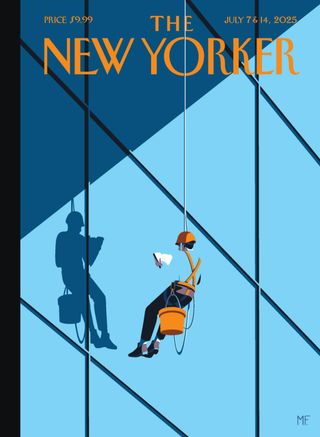

Dit verhaal komt uit de July 07 - 14, 2025 (Double Issue)-editie van The New Yorker.
Abonneer u op Magzter GOLD voor toegang tot duizenden zorgvuldig samengestelde premiumverhalen en meer dan 9000 tijdschriften en kranten.
Bent u al abonnee? Aanmelden
MEER VERHALEN VAN The New Yorker
The New Yorker
VISITING HOURS
In Harriet Clark's début novel, a prisoner's daughter must find her way.

10 mins
May 11, 2026

The New Yorker
REVAMPS
Two new musicals on Broadway, \"Schmigadoon!\" and \"The Lost Boys.\"
7 mins
May 11, 2026

The New Yorker
RESOLVED
High-school debate, our real national pastime.
4 mins
May 11, 2026

The New Yorker
THE BIG PICTURE
Frederic Church turned landscape into a vision of national virtue.
17 mins
May 11, 2026

The New Yorker
COUTURE SHOCK
\"The Devil Wears Prada 2.\"
6 mins
May 11, 2026
The New Yorker
THE SHOT HEARD ROUND THE WORLD?
The American Revolution was just one front in a vast global war. Which went rather well for the Brits.
16 mins
May 11, 2026

The New Yorker
CROSSROADS
The inventor of “intersectionality” looks back—and ahead.
16 mins
May 11, 2026
The New Yorker
WHAT WE HOLD
The writing and meaning of the Declaration of Independence.
19 mins
May 11, 2026
The New Yorker
STANDINGS
My given name, Jeon-Gi, with a hard “G,” was one that some of the kids in my apartment complex enjoyed deforming.
33 mins
May 11, 2026

The New Yorker
AMERICAN TWEEN
In some ways, the world is cooked. But being a twelve-year-old still kind of eats.
33 mins
May 11, 2026
Listen
Translate
Change font size