Poging GOUD - Vrij
NO WAY BACK
History of War
|Issue 148
Millions from around the world were plunged into a war without limit, while their commanders clung to woefully inadequate plans
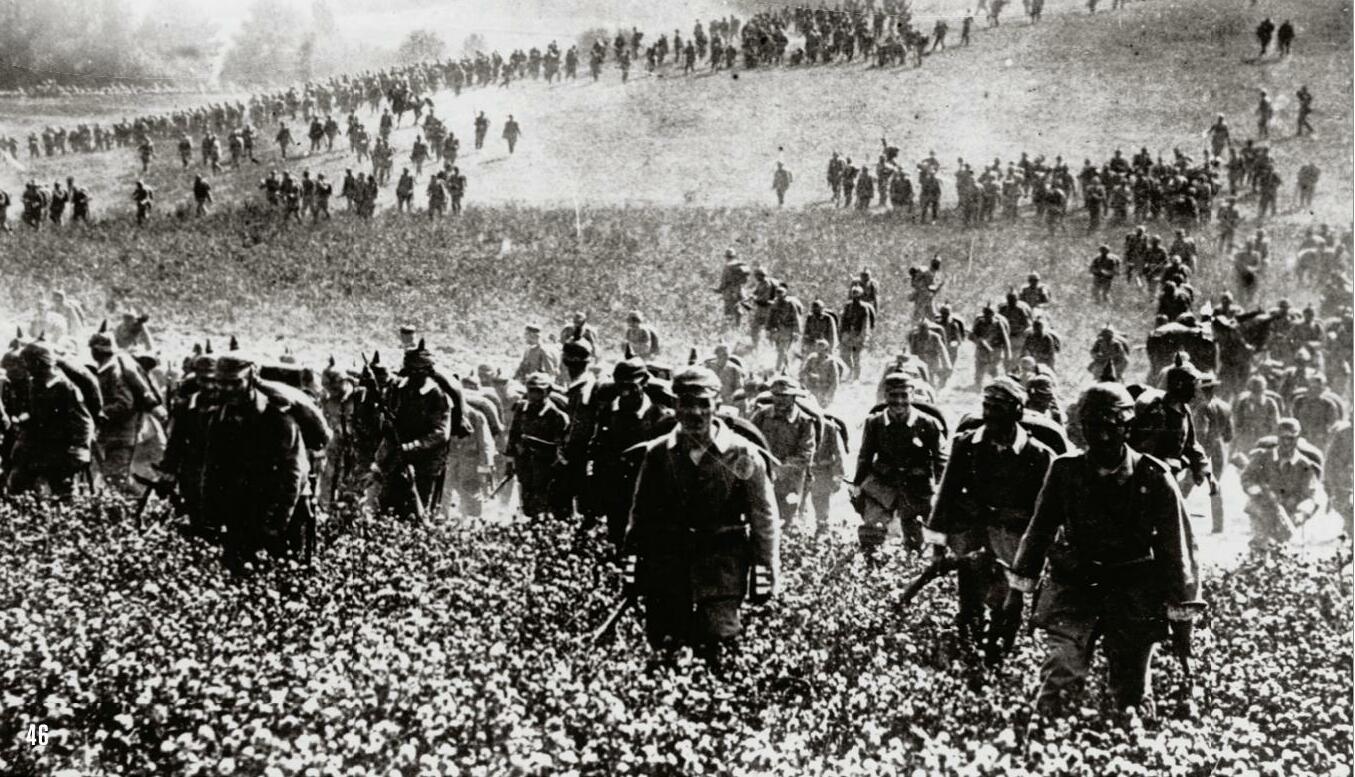
" The little wooden blocks which you manoeuvre as you would chessmen, these are in reality men like you," reads the epigraph of Ring of Fire: A New Global History of the Outbreak of the First World War. This quotation, borrowed from the British Army Major Arthur Corbett-Smith, is the credo for the First World War historians Alex Churchill and Nicolai Eberholst's first collaboration.
Ring of Fire tells the story of the summer of 1914 through the devastating, terrifying and frequently relatable testimonies of those pulled into the Great War's destruction. It is a uniquely global account of the First World War, covering the conflict's implications in Europe, Africa, Asia, North America and Australasia. The pair draw from an enormous quantity of fresh material from around the world translated from over a dozen languages.
Churchill and Eberholst spoke with History of War about the coming of war in Europe, the upending of civilians' lives and how each power fared in the opening eight weeks of the conflict. They also reflect on the importance of writing history that focuses on the experiences of ordinary people.
How enthusiastic were people about the war at its onset?
AC: There was no single emotion. One person out celebrating one day might have been petrified and crying their eyes out about going to war the following day.
NE: We wanted to express that the 'Spirit of 1914' was not a myth, but it's only a part of the story. Many of the people who were positive about it were young people who were looking for adventure. Reservists had already been soldiers [as conscripts] and were being called back, but now they were parents and had real jobs. Those people were not thrilled about going because what was going to happen with their business or farm at home? This was happening in July and August, when the harvest was approaching, and now their wives had to deal with it.

Dit verhaal komt uit de Issue 148-editie van History of War.
Abonneer u op Magzter GOLD voor toegang tot duizenden zorgvuldig samengestelde premiumverhalen en meer dan 9000 tijdschriften en kranten.
Bent u al abonnee? Aanmelden
MEER VERHALEN VAN History of War
History of War
VENICE AND THE MONGOLS
FOR THOSE INTERESTED IN MEDIEVAL TRADE AND HOW IT CHANGED EUROPE, THIS BOOK IS INDISPENSABLE

1 mins
Issue 160

History of War
GLAMORGAN HISTORY WALKS
Graham Loveluck-Edwards limbers up for more of his award-winning walking tours
1 min
Issue 160
History of War
THE VISIONARIES
A PANORAMIC EXPOSÉ OF AMERICA'S SECRET PREPARATIONS FOR WAR AND PEACE TOLD THROUGH THE EYES OF ROOSEVELT AND TRUMAN
1 mins
Issue 160
History of War
ZHUKOV PREPARES FOR THE WORST
How Russia’s foremost soldier planned offensive and defensive operations in a doomed attempt to counter the Nazi threat
7 mins
Issue 160
History of War
CHURCHILL'S PIRATES
HOW A RAG-TAG NAVY SAILED TO WAR IN A FLEET OF CONVERTED FISHING BOATS AND PLEASURE CRAFT
1 mins
Issue 160
History of War
ALBATROS D.VA
The last, but perhaps least successful, of Germany's line of Albatros fighters during the First World War
3 mins
Issue 160
History of War
WAR IN FOCUS
PAGEANT QUEEN 18 June 1949
1 min
Issue 160

History of War
OPERATION BOOTS: INSIDE BRITAIN'S IRANIAN COUP
When Tehran's parliament nationalised its oil industry, the British launched a series of diplomatic and covert actions, to undermine and ultimately topple the government
3 mins
Issue 160
History of War
PURGED TO THE BONE
Robbed of many of its finest officers by Stalin’s paranoia, a weakened Red Army faced the prospect of destruction in 1941
8 mins
Issue 160
History of War
HEROES OF THE VICTORIA CROSS ANTHONY CECIL CAPEL MIERS
Maintaining position in enemy-patrolled waters for 17 hours, this submarine commander coolly waited for dawn before despatching two merchant vessels with torpedoes and making his escape
6 mins
Issue 160
Listen
Translate
Change font size