Poging GOUD - Vrij
OVERTHROWING THE MONGOLS
All About History UK
|Issue 146
How a Buddhist rebellion toppled the mighty empire and began the rise of the Ming dynasty Written

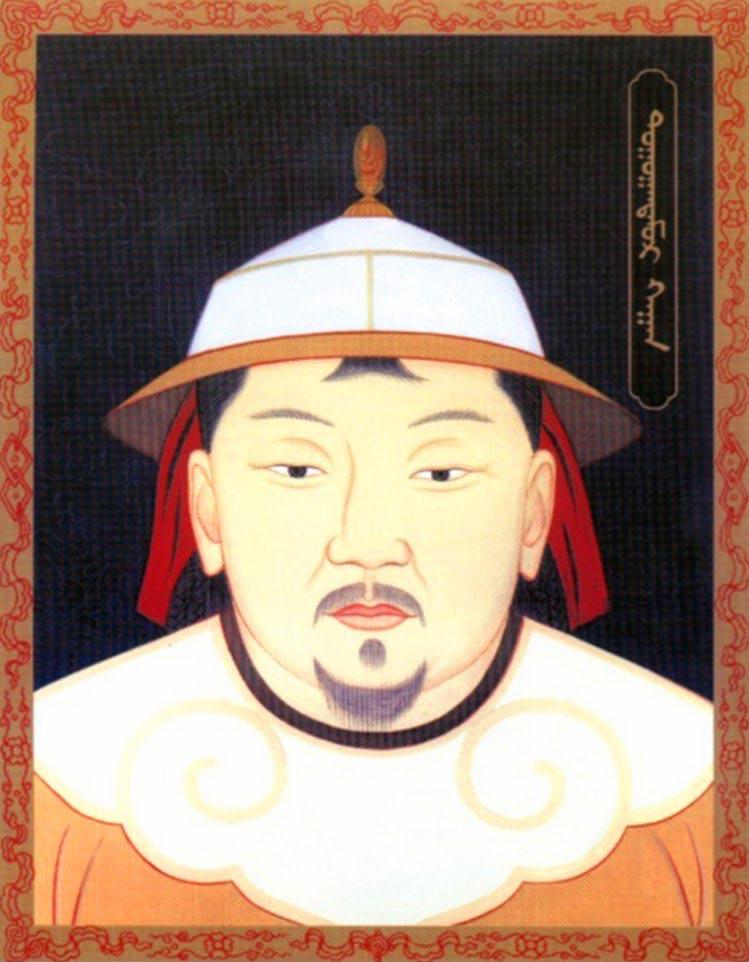
Floods, famine, pestilence. For the hard-pressed peasants of Yuan China, ruled over by the domineering descendants of the Mongol conquerors who had established themselves as overlords of the land, the series of natural calamities indicated one thing: their Mongol rulers had lost the Mandate of Heaven. With the Mandate of Heaven withdrawn, rebellion became not just possible but legitimate: Heaven itself asked of them to remove their unjust emperor and replace him with a new ruler.
But the Yuan dynasty, descended through Kublai Khan from Genghis Khan himself, was not about to simply shuffle back to Mongolia. There would be 17 years of conflict before a new emperor was able to found a lasting dynasty.
The conditions for this long transition had been laid earlier in the political weakness and infighting of the last Yuan emperors and the range of natural disasters that afflicted China in the 1340s and 1350s. The first phase of natural disasters culminated in the 1344 flood of the Yellow River. The river itself, sometimes called ‘China’s Sorrow’ for the devastation inflicted by its floods, is an essential part of China’s wealth, its waters providing irrigation for vast areas of agriculture. But because it carries huge amounts of silt, the river lays down deposits on its river bed wherever the stream runs slowly, raising the underlying level and, roughly every 100 years, causing the Yellow River to break through the levees and seek a new path to the sea. But the flatness of the North China Plain, while ideal for agriculture, means that these new channels can be hundreds of kilometres apart: in historical times, the Yellow River has flowed into the sea both north and south of the Shandong Peninsula. The 1344 flood moved the river’s mouth to south of the peninsula, where it remained until the middle of the 19th century.

Dit verhaal komt uit de Issue 146-editie van All About History UK.
Abonneer u op Magzter GOLD voor toegang tot duizenden zorgvuldig samengestelde premiumverhalen en meer dan 9000 tijdschriften en kranten.
Bent u al abonnee? Aanmelden
MEER VERHALEN VAN All About History UK

All About History UK
SOUTHERN FRIED CHICKEN
UNITED STATES, 18-19TH CENTURY

2 mins
Issue 168
All About History UK
16 CRUEL & UNUSUAL PUNISHMENTS
SOME OF HISTORY'S MOST BARBARIC AND TWISTED WAYS TO HAND OUT 'JUSTICE'
7 mins
Issue 168

All About History UK
NUCLEAR WEAPONS AN INTERNATIONAL HISTORY
Explore the role and impact of this deadly technology during the Cold War
1 mins
Issue 168

All About History UK
WHAT IF...HITLER HAD NOT KILLED HIMSELF?
The Nazi leader decides to look his enemies in the eye in defence of his beloved Fatherland
8 mins
Issue 168

All About History UK
LIVING WITH THE DEAD
A new publication explores the history of funerary sites and traditions
2 mins
Issue 168
All About History UK
THE MODERNISING OF JAPAN
How the Meiji Restoration rapidly changed the nation from a feudal state into a regional power
12 mins
Issue 168

All About History UK
HOW TO FLY A SPITFIRE
A joyous breakdown of Britain's groundbreaking fighter aircraft
1 min
Issue 168

All About History UK
BOUDICA
Why does this biopic of a legendary queen veer off so far into myth
1 min
Issue 168

All About History UK
The Real Colonel Sanders Kentucky Fried Legend
At the age of 65 an unknown entrepreneur defied the odds and established a global fast food empire
11 mins
Issue 168
All About History UK
Betrayal, Romance & Power ELIZABETH'S COURT
Uncover the shadow politics and throne-flattering that held sway over Tudor England
15 mins
Issue 168
Listen
Translate
Change font size