
Ga onbeperkt met Magzter GOLD
Krijg onbeperkte toegang tot meer dan 9000 tijdschriften, kranten en Premium-verhalen voor slechts
Poging GOUD - Vrij
73 EASTING
All About History UK
|Issue163
SOUTHEASTERN IRAQ 26-27 FEBRUARY 1991
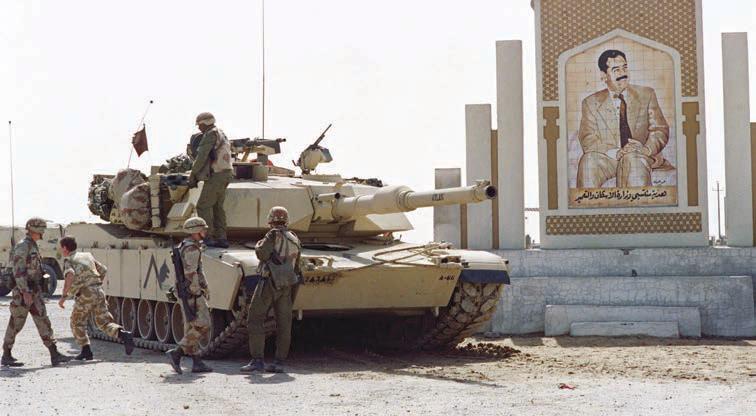
On 2 August 1990, Saddam Hussein ordered his army to invade neighbouring Kuwait. The unprovoked attack and brutal Iraqi occupation sparked outrage, international condemnation and a demand from the United Nations that Iraq withdraw immediately. Three days after the invasion, US President George HW Bush declared: "This will not stand, this Iraqi aggression against Kuwait."
During the subsequent Operation Desert Shield, the United States led a coalition of 35 nations in a buildup of overwhelming military capability on land, sea and air in preparation for the forcible ejection of the Iraqi Army from Kuwait. Within five months, the coalition had assembled more than 950,000 troops, 3,000 tanks, 1,800 aircraft and 2,200 artillery pieces - along with considerable naval fire-support capability - to oppose the Iraqi forces, which numbered over one million troops, 5,500 tanks and 700 aircraft. On 17 January 1991, the coalition unleashed a torrent of cruise missiles launched from submarines and warships, along with a sustained aerial bombing campaign designed to degrade the Iraqi combat effectiveness prior to the initiation of ground operations.
Thirty-eight days later, on 24 February 1991, coalition ground forces commenced operations against the Iraqi military, intent on driving the aggressors from Kuwait and destroying their fighting capability, particularly that of the elite Republican Guard divisions - well-trained and equipped troops, some of whom were veterans of the Iran-Iraq War of 1980-88.


Dit verhaal komt uit de Issue163-editie van All About History UK.
Abonneer u op Magzter GOLD voor toegang tot duizenden zorgvuldig samengestelde premiumverhalen en meer dan 9000 tijdschriften en kranten.
Bent u al abonnee? Aanmelden
MEER VERHALEN VAN All About History UK

All About History UK
HOT FUDGE SUNDAE
USA, 19-20TH CENTURY

1 mins
Issue 169

All About History UK
HISTORY OF THE WORLD CUP
Football writer Jonathan Wilson explains why the tournament has always been a reflection of its time
10 mins
Issue 169

All About History UK
THE MAKING OF THE MIDDLE AGES AN ATLAS OF EUROPE
Explore the medieval world with this guide
1 min
Issue 169
All About History UK
PROPHECIES OMENS, AUGURIES, DIVINATION, ORACLES, DREAMS, APOCALYPSE
How humanity tries to predict the future
1 min
Issue 169

All About History UK
MICHAEL JACKSON: AN AMERICAN TRAGEDY
A by-the-book examination of the rise and fall of the King of Pop
2 mins
Issue 169
All About History UK
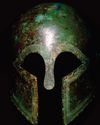
LECHAEUM
In 391 BCE (or 390 BCE, sources differ) during the Corinthian War (395-387 BCE), a force of lightly armed and armoured peltasts under the command of the Athenian Iphicrates faced almost 600 Spartan hoplites at Lechaeum, near Corinth.
11 mins
Issue 169

All About History UK
AGE of ALCHEMY
How occult ritual and a thirst for gold paved the way for modern chemistry
12 mins
Issue 169

All About History UK
THE QUEEN'S CLOTHES
An exhibition at Buckingham Palace explores Elizabeth II's life in fashion
2 mins
Issue 169

All About History UK
WHAT IF...9/11 HAD BEEN FOILED?
It was a day that shook the world. But what would preventing the attack mean for the 'War on Terror'?
6 mins
Issue 169

All About History UK
CURIOUS CATS AND FANTASTICAL FELINES
An entertaining jaunt through furry folklore
2 mins
Issue 169
Listen
Translate
Change font size