Poging GOUD - Vrij
LEVELUPYOUR WRITING(LIFE)
Writer’s Digest
|July/August 2025
Tips for Effectively Researching Any Writing Project (Part II)
In my last column, I covered tools for researching creative writing projects as well as how to wield them effectively and productively.
But even after a writer becomes comfortable with their research toolkit, questions remain: how to best weave the results of research into a project? And how to best use research techniques to enhance one's writing life?
First, let's start with what not to do when weaving the great results of your research into your novel, story, memoir, essay, or other prose:
1. DO NOT USE IDIOT DIALOGUE.
"As you know, Sue, the Volstead Act-or formally the National Prohibition Act was enacted in October 1919 to define just what 'intoxicating liquors' meant in the Eighteenth Amendment, and was put into force at midnight January 17, 1920, and promptly violated in Chicago nine minutes later."
2. AVOID STOPPING ACTION FOR A LONG NARRATIVE.
Sue contemplated the bourbon and whiskey options on the liquor store shelf: Writers' Tears, Angel's Envy, Maker's Mark... The choices seemed endless. She chuckled to herself, wondering if the authors of the Volstead Act--formally the National Prohibition Act-which was enacted in October 1919, and which was put into force midnight January 17, 1920-would be amazed, horrified, or amused by how popular alcohol was in the 2020s.
3. RESIST THE TEMPTATION TO USE ALL YOUR RESEARCH.
It can feel disheartening to realize that you will not be able to use all of the fascinating nuggets you unearthed. Yet, you probably know more about your characters than you'll be able to use on the page.
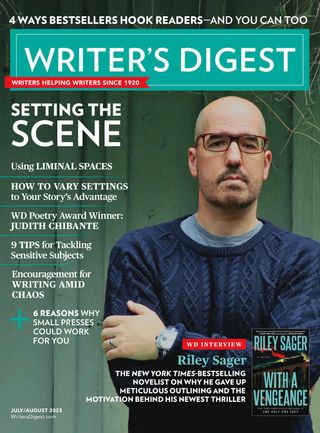

Dit verhaal komt uit de July/August 2025-editie van Writer’s Digest.
Abonneer u op Magzter GOLD voor toegang tot duizenden zorgvuldig samengestelde premiumverhalen en meer dan 9000 tijdschriften en kranten.
Bent u al abonnee? Aanmelden
MEER VERHALEN VAN Writer’s Digest

Writer’s Digest
Lauren Groff
The three-time National Book Award finalist discusses her new short story collection, Brawler, and the necessity of failure in writing.

14 mins
March / April 2026

Writer’s Digest
Seven
THE CHALLENGE: Write a short story of 650 words or fewer based on the photo below.
2 mins
March / April 2026

Writer’s Digest
Pacing in Nonfiction
It's all about story.
5 mins
March / April 2026
Writer’s Digest
If You're Bored, They're Bored
Five Zero-Draft tricks to ensure tight pacing.
8 mins
March / April 2026

Writer’s Digest
Deities
Gods and goddesses have had power over our imaginations stretching through the ages—whether ancient Norse, Chinese, Mesoamerican, or Greco-Roman, we have a fascination with cosmic beings.
5 mins
March / April 2026
Writer’s Digest
Merging Memory With Imagination
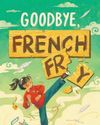
Author Rin-rin Yu's debut middle-grade novel, Goodbye, French Fry, represents a combination of her true childhood experiences and the universal experience of growing into yourself.
5 mins
March / April 2026

Writer’s Digest
Put Yourself in Charge of Your Own Story
Julie Ann Sipos, grand-prize winner of the 33rd annual WD Self-Published Book Awards, on how her career in Hollywood influences her writing style and her business strategy as an indie author.
4 mins
March / April 2026

Writer’s Digest
The Pause Is the Point
How to use stillness to create momentum in your fiction.
10 mins
March / April 2026

Writer’s Digest
Ericka Tiffany Phillips
Ericka Tiffany Phillips is a literary agent at the Stephanie Tade Agency, representing nonfiction authors whose “work have the power to shape culture and catalyze collective transformation,” she says.
2 mins
March / April 2026

Writer’s Digest
Short-Story Dispensers Bring Literature to the Masses
Life is often a wait, whether it's for a commuter train, an appointment with a doctor, or the start of a class.
5 mins
March / April 2026
Listen
Translate
Change font size