Poging GOUD - Vrij
The Plastics Problem
Outlook Business
|July 2025
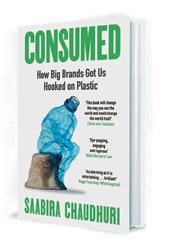
Over the years, consumer-goods makers have harnessed single-use plastic to turbocharge profits. The book investigates how plastic makers used disposability as a business model, convincing brand owners to pivot away from reusables
-
In 1990, the average Indian consumed 0.7 kilograms of plastic a year. That compared with 100kg in the US and a world average of 12kg.
Despite the lack of formal recycling programs, the culture in India had long been to reuse or recycle things. Every household that got newspapers kept them in neat piles to sell to raddiwalas—scrap collectors - who in turn sold them on for recycling. Used clothes were mended or traded in for stainless steel kitchenware, while old saris were turned into curtains and cushion covers. Ghee tins were used to store spices, while old calendars were used to wrap textbooks. Cooking oil was used more than once, fruit peels were turned into face masks, bones and scraps were fed to pets, livestock or neighbourhood strays, and shoes were handed down.
Outside the home, tea was dispensed in tiny clay pots, freshly fried snacks were served on pieces of newspaper, and rice and lentils were sold in jute bags. Fast-food restaurants selling dosas and idlis used washable steel plates. In villages, farmers wore sandals fashioned out of used cart tyres.
Door-to-door pushcart vendors sold fresh, unwrapped vegetables every day. Weddings served thousands of guests on banana leaves. Soft drinks came in returnable glass bottles — people milled about to drink them outside shops before handing back the containers. Office workers ate home-cooked meals from steel tiffin boxes—an elaborate network of dabbawalas collected and returned the containers to people’s homes so that white-collar workers didn't need to tote the multi-compartment dabbas to and from work.
But by the late 1980s India’s culture was quickly changing.

Dit verhaal komt uit de July 2025-editie van Outlook Business.
Abonneer u op Magzter GOLD voor toegang tot duizenden zorgvuldig samengestelde premiumverhalen en meer dan 9000 tijdschriften en kranten.
Bent u al abonnee? Aanmelden
MEER VERHALEN VAN Outlook Business

Outlook Business
The Long Game
Karnataka's IT supremacy once again helps it secure pole position among states. But it is not resting easy on its laurels, but making a push for the future by focussing on hardware

3 mins
February 2026
Outlook Business
India Can't Copy China EV Script
For decades, economic historians have lamented that India 'missed the bus' of the Third Industrial Revolution.
3 mins
February 2026

Outlook Business
Build Capital For AI
India needs a sovereign wealth fund (SWF) to invest in artificial intelligence (AI) and deep tech globally, and we need it now.
4 mins
February 2026

Outlook Business
An Area of Darkness
Ignored by VCs, start-ups in Tier-Il and III cities aren't finding the growth capital and talent to scale up into large businesses. And that is a cause for concern
5 mins
February 2026

Outlook Business
India's Al Story
India does not have an artificial intelligence (AI) talent problem. It has a go-to-market problem. Over the past two years, there has been a visible rise in Indian founders building serious AI products across application layers, infrastructure and open source.
3 mins
February 2026

Outlook Business
A Quiet Revolution
The farther the destination, the deeper the delight of the trek, however difficult, wrote freedom fighter and Urdu poet Bismil Azimabadi about revolutions.
4 mins
February 2026

Outlook Business
Business Cycle Mutual Funds - Navigating Global and Domestic Cycles
It's a globalized world. Indian businesses today operate in environments where global factors like trade flows, geopolitical developments, cross-border regulations and international capital movements influence their costs, competitiveness, and growth prospects.
2 mins
February 2026

Outlook Business
Capital Wears the Crown
Delhi emerges as India's leading start-up city with a quieter, less-crowded ecosystem compared to high-decibel Bengaluru
3 mins
February 2026

Outlook Business
The Rise of Consumer AI
Artificial intelligence (AI) has become a significant part of consumer reality.
3 mins
February 2026

Outlook Business
IPO is a milestone, not an exit or the finish line
Ashutosh Sharma, head of India Ecosystem at Prosus, which has invested over $9bn in unicorns like Swiggy and Meesho, talks to Deepsekhar Choudhury about why India remains central to the firm's long-term strategy. Edited excerpts
3 mins
February 2026
Listen
Translate
Change font size