
Ga onbeperkt met Magzter GOLD
Krijg onbeperkte toegang tot meer dan 9000 tijdschriften, kranten en Premium-verhalen voor slechts
The future of the Karoo
Farmer's Weekly
|November 17, 2023
Roelof Bezuidenhout spoke to Prof William Beinart about his fascinating book, The Rise of Conservation in South Africa, Settlers, Livestock, and the Environment 1770-1950, and the current state of the Karoo.

From where does your interest in the Karoo and idea for the book stem?
Although my career as a historian has been in the UK, I was brought up in Cape Town in the 1950s and 1960s. As a child I travelled through the Karoo every year, by train to Pretoria. The landscape was foreboding but its starkness was appealing.
My research interest in the environmental history of the Karoo came by an unusual route. Trying to understand more about the history and experience of African people was a central project. I did my doctoral research in Mpondoland in 1976-7 when the government policy of betterment or rehabilitation was still an important issue. Government planned to move rural African people from their scattered settlements into villages to demarcate selected areas for agriculture and to fence the vacated pasture lands.
INTERVENTIONS
The plan was to cull cattle through enforced sales. These were the major interventions in African rural life. The motivation for this largely unpopular policy was officials believed that the Bantustans were overstocked, causing soil erosion that would destroy agriculture. They were determined to introduce a system of rotational grazing and to end the kraaling of livestock. For this they had to clear the scattered settlements, empty out the communal grazing lands and fence them into camps.
The origins of these ideas led me to the Karoo, a different world of large, privately-owned farms, of drought, sheep and jackals. The Drought Commission of 1923, chaired by HSD du Toit, a South African War hero and senior agricultural official, inquired into environmental degradation and soil erosion, which it saw as a national disaster, especially in the Karoo.


Dit verhaal komt uit de November 17, 2023-editie van Farmer's Weekly.
Abonneer u op Magzter GOLD voor toegang tot duizenden zorgvuldig samengestelde premiumverhalen en meer dan 9000 tijdschriften en kranten.
Bent u al abonnee? Aanmelden
MEER VERHALEN VAN Farmer's Weekly

Farmer's Weekly
Christmas books to charm and delight
During the holiday season, one usually takes a well-earned break from the daily rutt, and there is no better time to catch up on some reading. Patricia McCracken has selected a wide spectrum of titles to tuck into.

4 mins
December 19-26, 2025

Farmer's Weekly
From chance to choice: a women's rise to farming success
Many raisin producers assume that retiring without a son to take over the farm means the end of the family business. Alcois Blaauw, this year's winner of the Raisins SA Female Producer Award, proves that assumption to be wrong. Glenneis Kriel reports.
4 mins
December 19-26, 2025

Farmer's Weekly
Grandparents below, and kids upstairs!
Dear Jonno,My wife and I want to escape to the countryside.
1 min
December 19-26, 2025
Farmer's Weekly
The Unseen Protector
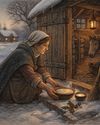
The belief in the Unseen Protector or Unseen Shepherd endured for around 600 years, from the 13th century up until the 19th century. The farmer or his wife would provide a bowl of fresh cream and gruel to appease a spirit, whose blessing was imperative for a good summer harvest and animal health and fertility.
2 mins
December 19-26, 2025
Farmer's Weekly
THE HITCHING POST
I am a 67-year-old farmer residing on a farm near Harding in KwaZulu-Natal.
1 mins
December 19-26, 2025
Farmer's Weekly
Pet-friendly family accommodation in the Waterberg
With travel time of only a little over three hours from Johannesburg and 30 minutes from Vaalwater, guests will find Waterberg Cottages in Limpopo. Guests can plan a family-friendly holiday or weekend with plenty of activities to keep everyone occupied on this peaceful 2 500ha private game reserve.
4 mins
December 19-26, 2025
Farmer's Weekly
The Shuman legacy continues under the watchful eye of a fifth-generation farmer
Ken Shuman, co-owner of Hilson Shuman Farming, is committed to carrying on his father's towering legacy through innovation and adaptation.
9 mins
December 19-26, 2025

Farmer's Weekly
History's most famous musket
The Brown Bess musket was the standard issue firearm for British forces from 1722 to 1838. As Mike Burgess writes, this much-loved weapon contributed significantly to the consolidation of the British Empire that by 1922 was in control of a quarter of the earth's surface.
4 mins
December 19-26, 2025

Farmer's Weekly
Muddy soil can cause lameness due to footrot
It is important to clean legs and hooves and check for lameness in horses on a daily basis, especially when there is heavy rain
2 mins
December 19-26, 2025

Farmer's Weekly
The role of family farmers in sub- Saharan Africa
As part of the United Nations' recognition of family farming as a vital component of the global agricultural landscape, the decade between 2019 to 1928 was declared the Decade for Family Farming globally. Annelie Coleman compiled this report.
6 mins
December 19-26, 2025
Translate
Change font size