
Ga onbeperkt met Magzter GOLD
Krijg onbeperkte toegang tot meer dan 9000 tijdschriften, kranten en Premium-verhalen voor slechts
Poging GOUD - Vrij
Small-scale farmers and post-harvest losses
Farmer's Weekly
|Farmer's Weekly 5 August 2022
With the relentless growth in population, countries can no longer afford to waste food. Manoshi Mothapo, a researcher at the Agricultural Research Council’s Natural Resources and Engineering division, examines how post-harvest losses affect smallholder farmers, and how they can be reduced with correct handling and storage.

FAST FACTS
Post-harvest loss (PHL) is defined as the volume of fresh produce that fails to reach the consumer due to a deterioration in quality.
The biggest PHLs reported are those of fruit, root vegetables and tubers.
Cold storage and transportation are crucial for preventing PHL.
Food is a delicate commodity. About one-third (1,3 billion tons) of that produced around the world for human consumption is lost or wasted every year.
Post-harvest loss (PHL) can be described as the fruit and vegetables produced that do not reach consumers due to degradation in quality and quantity. Effectively, it includes the loss of the food itself and the inputs required to produce and distribute it. It is a loss that has long concerned both farmers and sellers.
The world’s population is expected to reach 9,7 billion by 2050, and this will require an increase in global food production of about 60% from current levels, as well as more equitable access to food. As it stands, over 815 million people around the world are chronically undernourished, especially in parts of subSaharan Africa and South Asia, where 22,8% and 14,7% of people respectively are undernourished. The greatest PHLs reported in the fresh produce sector are of fruit, root vegetables and tubers. Regional data for fruit and vegetable losses show that all regions across the globe lose at least 20% of their fresh produce, with extreme losses of 45% and 50% recorded in Africa and Asia respectively.


Dit verhaal komt uit de Farmer's Weekly 5 August 2022-editie van Farmer's Weekly.
Abonneer u op Magzter GOLD voor toegang tot duizenden zorgvuldig samengestelde premiumverhalen en meer dan 9000 tijdschriften en kranten.
Bent u al abonnee? Aanmelden
MEER VERHALEN VAN Farmer's Weekly

Farmer's Weekly
Tropical avo smoothie
Escape to the tropics with this luxurious, creamy, and vibrant smoothie! Blending rich avocado and sweet mango with zesty lime, fragrant mint, and a punch of tangy granadilla, this recipe transforms into a nutrient-packed and silky-smooth treat.

1 min
January 16-23, 2026
Farmer's Weekly
THE HITCHING POST
I am a 60-year-old white woman who loves camping, animals, the outdoors and watching sport.
2 mins
January 16-23, 2026

Farmer's Weekly
The enduring legacy of Tiyo Soga
In the 1850s, Tiyo Soga, a Xhosa man, became the first ordained black South African minister. But as Mike Burgess writes, his legacy would also be determined by his all-round intellectual abilities honed by a solid Scottish education.
4 mins
January 16-23, 2026

Farmer's Weekly
Isuzu D-Max shows single cabs can be comfortable companions
Bakkie manufacturers don't give single cabs to the media due to them generally being regarded as workhorses without the bells and whistles from fancier double cabs. The Citizen's Charl Bosch was gobsmacked when a single cab arrived for a three-month stay.
2 mins
January 16-23, 2026
Farmer's Weekly
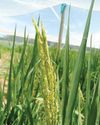
South Africa eyes home-grown rice as ARC expands research efforts
South Africa is taking bold steps toward reducing its dependence on rice imports by exploring the viability of home-grown upland rice. Through a major research drive led by the Agricultural Research Council's Small Grain division, scientists and industry partners are testing rice varieties capable of thriving in South Africa's diverse soils and increasingly water-scarce climate. Anelisa Gusha reports.
3 mins
January 16-23, 2026

Farmer's Weekly
Spanish tortilla
Bring the authentic flavours of Spain to your table with this robust and satisfying Spanish tortilla.
1 min
January 16-23, 2026

Farmer's Weekly
New year brings marvellous new titles
Patricia McCracken, like many of us, has settled back into the grind of the new year and picked up a diverse selection of books ranging from travel, to fiction, to non-fiction and a delightful local children's adventure.
2 mins
January 16-23, 2026
Farmer's Weekly
Nitrogen 'switch' unlocks greener crops
A ground-breaking discovery by molecular biology professors Kasper Røjkjær Andersen and Simona Radutoiu at Aarhus University in Denmark offers a significant step toward developing self-fertilising grain crops, potentially revolutionising agriculture to be greener and more climate-friendly.
1 min
January 16-23, 2026
Farmer's Weekly
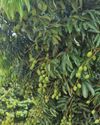
Sweet prospects: the current state of litchi production in South Africa
Bram Snijder, agricultural consultant and chairperson of the South African Litchi Growers' Association, spoke to Octavia Avesca Spandiel about the litchi industry embracing new opportunities, tackling challenges, implementing innovation, and reaching markets both locally and internationally.
6 mins
January 16-23, 2026
Farmer's Weekly
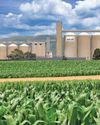
How AFGRI uses technology to unlock farm finance from asset to market
As modern farming becomes more capital-intensive and digitally driven, AFGRI is reinventing agricultural finance by linking technology directly to lending decisions.
5 mins
January 16-23, 2026
Translate
Change font size