Poging GOUD - Vrij
"ADCS have already become a mainstay treatment option across a variety of both hematologic and solid cancers"
BioSpectrum Asia
|BioSpectrum Asia April 2025
The resurgence of antibody-drug conjugates (ADCs) in cancer therapy signifies a shift towards targeted, highly effective treatments, leveraging the power of monoclonal antibodies to deliver potent cytotoxic payloads directly to cancer cells, minimising harm to healthy tissues.

Dr Rafael G. Amado, President and Head, Global Research and Development, Zai Lab, USA
In an interaction with BioSpectrum, Dr Rafael G. Amado, President and Head of Global Research and Development at Zai Lab, discusses the resurgence of ADCs in cancer therapy and explains how ADCs differ from traditional treatments like chemotherapy and biologics. He also highlights the promising ADC candidates in development at Zai Lab and what distinguishes them from other ADCs. Edited excerpts;
Can you provide an overview of the primary components of ADCs and how they work in general?
Antibody-drug conjugates (ADCs), combine monoclonal antibodies specifically targeted to antigens on the surface of tumour cells with powerful anti-cancer molecules joined by a chemical linker. With the perspective of someone who has worked in cancer research for more than 25 years and helped develop 15 oncology-specific drugs, I view ADCs as a very valuable class of therapeutics. By delivering higher concentrations of cytotoxic agents and reducing off-target side effects, they have potential to deliver a higher benefit to patients than chemotherapy alone with a more limited toxicity profile.
What differentiates ADCs from other categories of cancer therapies such as chemotherapy or biologics? Why would a physician use an ADC vs one of these other categories of therapies?
ADCs deliver chemotherapy in a targeted fashion: the toxic payload is liberated largely in the tumour cell and microenvironment (rather than elsewhere in the body) by taking advantage of a trafficking molecule, generally an antibody, that binds to a tumour-associated antigen.
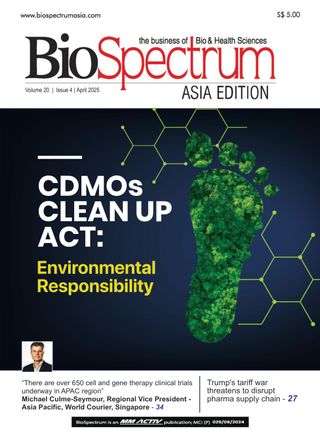

Dit verhaal komt uit de BioSpectrum Asia April 2025-editie van BioSpectrum Asia.
Abonneer u op Magzter GOLD voor toegang tot duizenden zorgvuldig samengestelde premiumverhalen en meer dan 9000 tijdschriften en kranten.
Bent u al abonnee? Aanmelden
MEER VERHALEN VAN BioSpectrum Asia

BioSpectrum Asia
India Health Fund supports D-Nome to bolster molecular TB screening in India
India Health Fund (IHF), a Tata Trusts initiative, is poised to transform tuberculosis (TB) screening at scale by enabling the development of the world's most affordable molecular screening tool for TB.

1 min
BioSpectrum Asia May 2026

BioSpectrum Asia
BioOra and Octane Biotech sign LoI to expand cell therapy manufacturing using Cocoon Platform
BioOra, a commercialstage cell therapy company advancing CAR-T therapies for cancer patients, & Canadabased Octane Biotech Inc., an Octane Medical Group Company, has announced the signing of a Letter of Intent (LOI) to collaborate on the co-development & deployment of advanced cell therapies using the Cocoon automated cell therapy manufacturing platform.
1 min
BioSpectrum Asia May 2026

BioSpectrum Asia
NTU and NHG Health partner to advance healthcare education in Singapore
NHG Health's inaugural E3 (Educate, Elevate, Evolve) conference, held recently, was marked by a new partnership with Nanyang Technological University (NTU) Singapore, signalling a significant step in advancing healthcare education through interdisciplinary collaboration.
1 min
BioSpectrum Asia May 2026
BioSpectrum Asia
Gene Solutions introduces non-invasive prenatal screening technology triSure in Taiwan
Singapore-based startup Gene Solutions has introduced triSure, a revolutionary non-invasive prenatal screening technology.
1 min
BioSpectrum Asia May 2026
BioSpectrum Asia
How FemTech Spurt in APAC is Redefining Healthcare
Despite representing half the global population, women's health has historically received only a fraction of healthcare innovation and investment.
4 mins
BioSpectrum Asia May 2026
BioSpectrum Asia
China's Colossal Ageing Population and Low Birth Rate Challenge
China's recent policy initiatives pertaining to long-term care insurance, maternity insurance expansion, and primary healthcare reform reflect a coordinated attempt to address deep structural demographic challenges—most notably 'rapid population ageing' and declining birth rates.
2 mins
BioSpectrum Asia May 2026
BioSpectrum Asia
"We need to prioritise research as several common AYA cancers are significantly under-studied in Asian populations"
At the SingHealth Presidents' Scientific and Partners in Social-care (SPSOC) Conference, Assistant Professor Eileen Poon, Senior Consultant in Medical Oncology at the National Cancer Centre Singapore (NCCS) delivered an enlightening presentation.
7 mins
BioSpectrum Asia May 2026
BioSpectrum Asia
Shimadzu Scientific Instruments opens laboratory in San Francisco Bay Area
Shimadzu Scientific Instruments (SSI) has opened its new research and development (R&D) facility in South San Francisco, California, US.
1 min
BioSpectrum Asia May 2026
BioSpectrum Asia
"Building a lean team with deep operational expertise increases likelihood of success in rare disease drug development"
More than 300 million people worldwide are impacted by over 10,000 rare diseases, i.e. more than cancer and AIDS combined.
5 mins
BioSpectrum Asia May 2026

BioSpectrum Asia
Qiagen expands into bloodstream infection syndromic testing with new rapid QIAstat-Dx panel
Qiagen N.V. has announced its expansion into syndromic testing for bloodstream infections with the launch of the CE-IVDR-certified QIAstat-Dx BCID GPF Plus AMR Panel.
1 min
BioSpectrum Asia May 2026
Listen
Translate
Change font size