Poging GOUD - Vrij
Does anything live at the top of Mount Everest?
BBC Wildlife
|April 2025
TERRESTRIAL HABITATS DON'T GET ANY higher than the summits of Himalayan peaks. And Himalayan peaks don't get any taller than Everest.
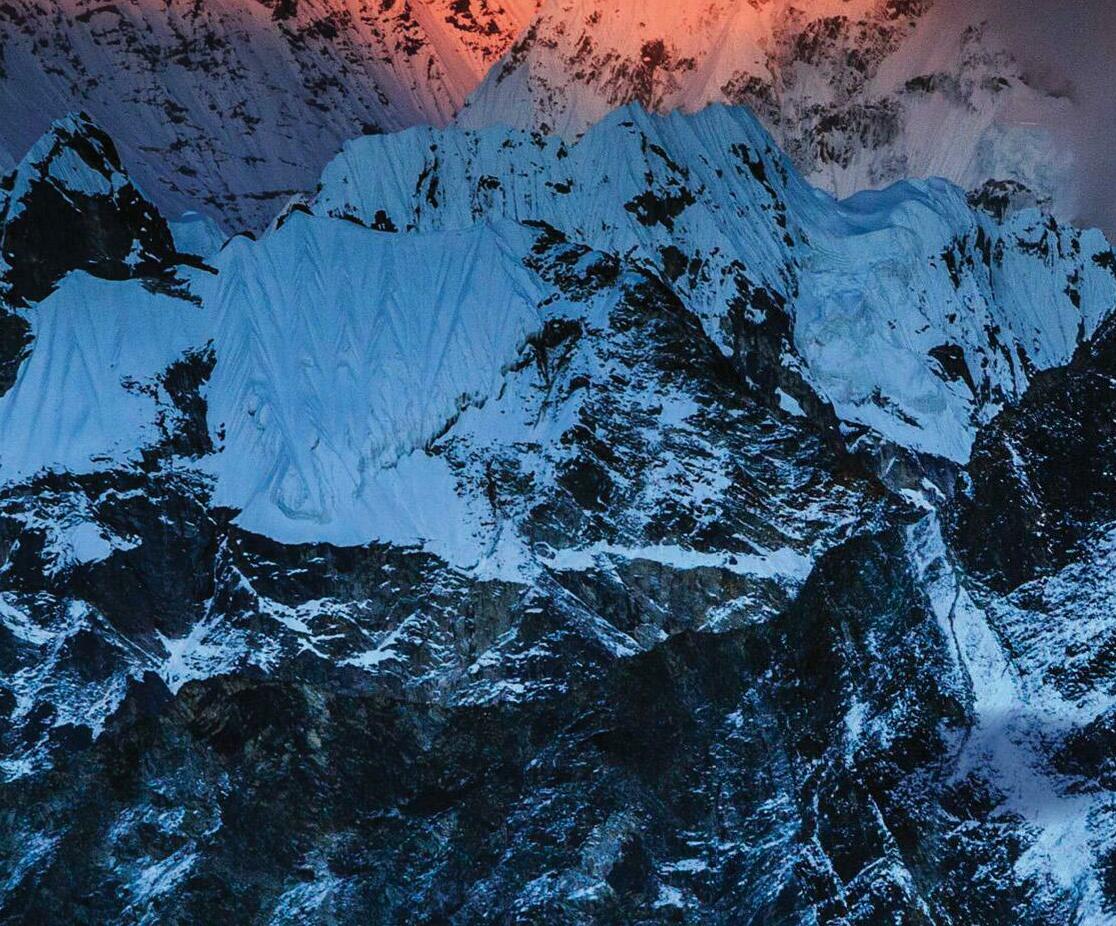
At 8,849m above sea level, the summit is exposed to extremes of wind, cold and oxygen-deprivation. Life is sparse at such heights.
Humans are almost certainly the only mammals to have set foot up there and, even then, only with technological assistance, and we don't tend to hang around for long. The only other mammal that gets close is the large-eared pika, a relative of rabbits, which reaches 6,400m in the Himalayas (though yellow-rumped leaf-eared mice have been recorded on the 6,739m-high summit of Llullaillaco in the South American Andes).
It might be that no life-forms bigger than a single cell can eke out a living on the roof of the world. Mosses aren't found higher than about 6,500m, for example. Among invertebrates, a single species of jumping spider ventures up to 6,000m, where it probably feeds on hapless insects blown in from elsewhere. Birds are mobile enough to drop by occasionally, though. Yellow-billed choughs have been spotted at 7,900m, and mountaineers have reported bar-headed geese flying over the summits of Everest and nearby Makalu.
 Why does New Zealand have so few mammals?
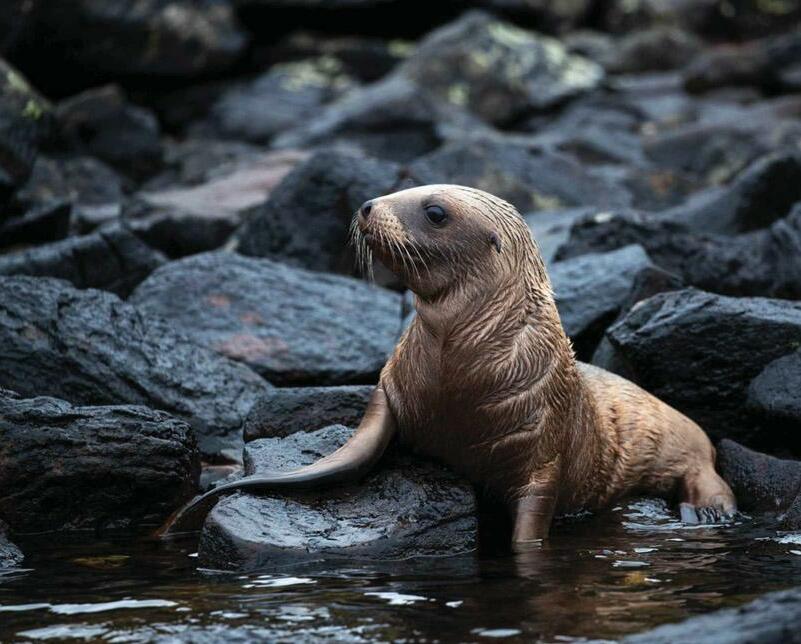
EVOLUTION HAS GREAT FUN ON ISLANDS. Their isolation means it has the luxury of working its magic for long periods away from mainland gene pools. The Galápagos, Hawaii, Madagascar, Mauritius all teem with species that are found nowhere else. And sitting all on its own in the south-west Pacific, 2,000km from the nearest landmass, New Zealand is no exception. More than half of its native species are endemic, including ancient and unique lineages of reptiles and plants and a spectacular variety of strange flightless birds. And yet something is missing.

Dit verhaal komt uit de April 2025-editie van BBC Wildlife.
Abonneer u op Magzter GOLD voor toegang tot duizenden zorgvuldig samengestelde premiumverhalen en meer dan 9000 tijdschriften en kranten.
Bent u al abonnee? Aanmelden
MEER VERHALEN VAN BBC Wildlife
BBC Wildlife
"I was terrified the elephant would ram us"
African elephant in Kenya

2 mins
January 2026
BBC Wildlife
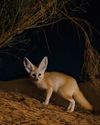
ALL YOU EVER NEEDED TO KNOW ABOUT THE Fennec fox
THE FENNEC FOX IS THE SMALLEST fox in the world, with a body length that can be as little as 24cm.
3 mins
January 2026
BBC Wildlife
INTO THE PLASTISPHERE
A unique synthetic ecosystem is evolving in our oceans – welcome to the plastisphere
7 mins
January 2026
BBC Wildlife
“More than half of all animal life exists in a parasitic relationship, and all life lives in symbiosis”
Our survival depends on species evolving to live together - but some relationships take dark turns
7 mins
January 2026
BBC Wildlife
Are animals able to dream?
SLEEP IS A MYSTERIOUS THING. FOR A long time, we weren't sure why we do it.
1 mins
January 2026
BBC Wildlife
Does a cuckoo know it's a cuckoo?
ABSURD LITTLE BIRDS ACROSS THE world lay their eggs in the nests of other species, leaving the hapless parents to raise a changeling at the expense of their own offspring.
2 mins
January 2026
BBC Wildlife
Orcas killing young sharks
Juvenile great whites are easy prey for orca pod
1 mins
January 2026
BBC Wildlife
Ocean goes on tour
Acclaimed film touring the UK, backed by live orchestra and choir
1 min
January 2026
BBC Wildlife
Feisty bats hunt like lions
Winged mammals use a 'hang and wait' strategy to take down large prey
1 mins
January 2026

BBC Wildlife
SNAP-CHAT
Richard Birchett on magical merlins, wily coyotes and charging deer
2 mins
January 2026
Listen
Translate
Change font size