Poging GOUD - Vrij
HOT HISTORY
Gourmet Traveller
|July 2022
Across continents and cuisines, there are few places untouched by chilli's lovely heat. NADIA BAILEY delves into its origins.

Serrano. Guajillo. Manzano. For every palate, a chilli: from the mild crunch of a banana pepper to the peppery kick of the cayenne, from the sweetness of friggitelli to the prickling heat of the birdseye. Across almost every country and culture, chilli proliferates – by some estimates, there are more than 50,000 Capsicum cultivars grown worldwide. It inspires devotion, obsession and for some, a never-ending quest for an ever-hotter fix. But where did it all begin?
In what’s now known as Bolivia and Mexico, the Indigenous people first foraged chillies where they grew in the wild. As early as 4000 BC, they were cultivated for culinary use. Aztec plant growers developed dozens of annuum species; from there, they passed to other Mesoamerican and Native American cultures, then to those in the Caribbean. Of about 25 species of the genus Capsicum that existed, five became domesticated across different areas: annuum in Mexico, chinense in Amazonia, frutescens in southern Central America, baccatum in Bolivia, Ecuador, Peru and Chile, and pubescens in the Andes. In gardens, on trade routes, in ritual practices and folklore, the chilli flourished.
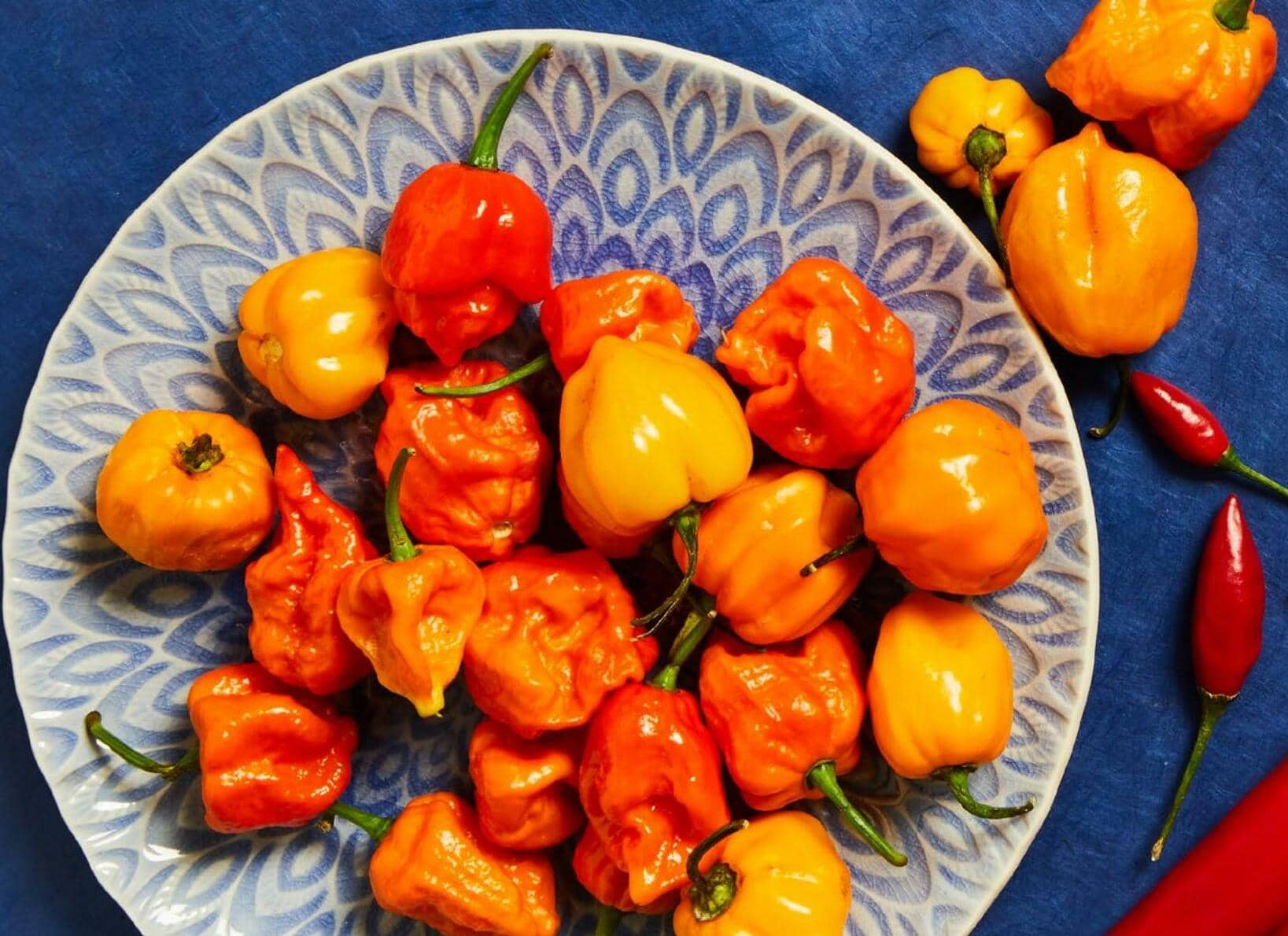
The cultivation of chilli in the rest of the world has, by comparison, a fairly short history – barely more than 500 years. The plant was unknown outside of the Americas until Christopher Columbus brought them to Iberia in the early 1500s – when chillies (along with tomatoes, potatoes, cocoa and more) first reached foreign palates. Following Columbus, Portuguese traders carried chillies to settlements and colonies in West Africa, in India and across East Asia.

Dit verhaal komt uit de July 2022-editie van Gourmet Traveller.
Abonneer u op Magzter GOLD voor toegang tot duizenden zorgvuldig samengestelde premiumverhalen en meer dan 9000 tijdschriften en kranten.
Bent u al abonnee? Aanmelden
MEER VERHALEN VAN Gourmet Traveller

Gourmet Traveller
Hot in the city
There's no need to deliberate between beach and metropolis, Just do both.

4 mins
January 2026

Gourmet Traveller
Daphne
Review by MICHAEL HARDEN.
2 mins
January 2026
Gourmet Traveller
Everyday
Easy entertaining, simple weeknight dinners and suppers to share.
11 mins
January 2026
Gourmet Traveller
Viewing the world like a sailor
When you travel by sea, you never look at a destination the same way again
3 mins
January 2026

Gourmet Traveller
Postcards from Lisbon
The food in Portugal's hilly coastal capital is definitely something to write home about
4 mins
January 2026

Gourmet Traveller
Brand Americano
Melbourne's glamorous steakhouse brings its elevated style to Sydney,
2 mins
January 2026

Gourmet Traveller
Jess Coulson
This month we catch up with the co-owner of Ruffle Farm, which grows and supplies gourmet mushrooms in Sydney's inner west.
2 mins
January 2026

Gourmet Traveller
Worth your salt
Its reputation has ebbed and flowed but as IVY CARRUTH discovers, seasoning from the sea is back in fashion.
4 mins
January 2026

Gourmet Traveller
TWILIGHT ZONE
Iceland's midnight sun, geothermal wonders and rugged terrain make for a summer drive unlike any other
5 mins
January 2026

Gourmet Traveller
The new nostalgia
Overwhelmed by modern life? The simple pleasures of an old-school holiday might just be the perfect antidote
3 mins
January 2026
Translate
Change font size