
Ga onbeperkt met Magzter GOLD
Krijg onbeperkte toegang tot meer dan 9000 tijdschriften, kranten en Premium-verhalen voor slechts
Poging GOUD - Vrij
Aquaponics: A System For Food Security
Scientific India
|March-April 2017
By 2050, the world population will reach nearly 9.5 billion, which effectively means that we have to produce 70% more food for over two billion additional mouths.
-

Hence, the food and agriculture systems need to adapt fast to the changing climate and become more resilient, productive and sustainable. This would require judicious use of natural resources. A plant consumes more water to produce food compared to us to survive in a day. As a matter of fact 15,000 litres of water is needed to produce one kilo of meat. This is why, with a growing population increasingly changing its diet towards 'waterhungry' products, all efforts must be made to improve the way we use water in agriculture to make the best out of the limited water resources. Aquaculture is one of the important source of protein production and accounts for almost onehalf of the fish eaten globally. Aquaculture has the potential to decrease the pressure on the world's fisheries and to significantly reduce the footprint of less sustainable terrestrial animal farming systems in supplying humans with animal protein. However, two aspects of aquaculture may be addressed to improve the sustainability of this agricultural technique. One major problem for the sustainability of aquaculture is the treatment of nutrient-rich wastewater, which is a by-product of all the aquaculture methods mentioned above. Depending on the environmental regulations set by each country, farmers must either treat or dispose of the effluent, which can be both expensive and environmentally harmful. Without treatment, the release of nutrient-rich water can lead to eutrophication and hypoxia in the watershed and localized coastal areas, as well as macroalgae overgrowth of coral reefs and other ecological and economical disturbances. Growing plants within the effluent stream is one method of preventing its release into the environment and of obtaining additional economic benefits from crops growing with costless by-products through irrigation, artificial wetlands, and other techniques. Therefore, as a catalyst of crisis and food insecurity; an aquaponics system will serve the purpose of p

Dit verhaal komt uit de March-April 2017-editie van Scientific India.
Abonneer u op Magzter GOLD voor toegang tot duizenden zorgvuldig samengestelde premiumverhalen en meer dan 9000 tijdschriften en kranten.
Bent u al abonnee? Aanmelden
MEER VERHALEN VAN Scientific India
Scientific India
Japanese physicists were the first to measure the most tolerant entanglement state, the W state
There are many unusual things that happen in the world of quantum physics.

3 mins
September - October 2025

Scientific India
The Fifth Force: Could It Unlock the Secret of Dark Matter?
What if the universe is powered by a force we've never seen before? For centuries, science has explained nature with four fundamental forces.
3 mins
September - October 2025

Scientific India
A flu test you can chew
As flu season nears in the northern hemisphere, scientists are exploring a surprising new way to detect infection: through taste.
1 mins
September - October 2025
Scientific India
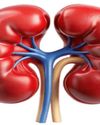
Lab-Grown Kidney Brings Artificial Organ Dream Closer to Reality
In a major leap toward bioengineered organ replacement, scientists have successfully grown human kidney 'assembloids' in the laboratory that mimic key structural and functional features of natural kidneys.
1 min
September - October 2025

Scientific India
Your pumpkin might be hiding a toxic secret
Pumpkins, squash, zucchini, and other members of the gourd family have a surprising trait: they can take up pollutants from the soil and store them in their edible parts.
1 mins
September - October 2025

Scientific India
2025 Nobel Prize in Physics Reveals Quantum Secrets in Superconducting Circuits
The 2025 Nobel Prize in Physics has been awarded to John Clarke, Michel H. Devoret, and John M. Martinis for their pioneering experiments that brought quantum mechanics from the invisible atomic world to the macroscopic scale a system large enough to hold in your hand.
1 mins
September - October 2025
Scientific India
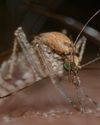
Genomic Evidence Redefines the Evolutionary Age of Mosquitoes
A new genetic analysis has shaken up what we thought we knew about one of humanity's most notorious pests the mosquito.
1 min
September - October 2025

Scientific India
Nobel Prize in Chemistry 2025: Building Molecular Architectures with Room to Breathe
In a scientific breakthrough that bridges molecular design with planetary-scale problems, the 2025 Nobel Prize in Chemistry has been awarded to Susumu Kitagawa, Richard Robson, and Omar Yaghi.
1 mins
September - October 2025

Scientific India
Guardians of Immunity: Nobel Prize 2025 Honors Discoveries that Keep the Immune System in Check
The 2025 Nobel Prize in Physiology or Medicine has been awarded to Mary E. Brunkow, Fred Ramsdell, and Shimon Sakaguchi for their groundbreaking discoveries in the field of peripheral immune tolerance a crucial mechanism that prevents the body's immune system from turning against itself.
1 mins
September - October 2025
Scientific India
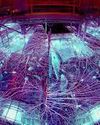
'Is cold nuclear fusion feasible?
In early May 1989, two chemists from the University of Utah, Pons and Fleischmann, arrived in Washington, U.S.A. The aim is to present their findings to members of the US Congress.
3 mins
September - October 2025
Translate
Change font size