
Ga onbeperkt met Magzter GOLD
Krijg onbeperkte toegang tot meer dan 9000 tijdschriften, kranten en Premium-verhalen voor slechts
RISING MERCURY IS MAKING NEPAL GLACIERS VULNERABLE
Down To Earth
|January 16, 2022
Changing nature of glaciers and glacial lakes make the Himalayas one of the most climate vulnerable regions on the planet. RIJAN BHAKTA KAYASTHA, a glaciologist at the Himalayan Cryosphere, Climate and Disaster Research Center, Kathmandu University in Nepal, speaks to AKSHIT SANGOMLA about glaciers in Nepal and the impact of climate change on them

The glaciers in Nepal are morphologically different from the glaciers elsewhere. How?
Nepal has summer accumulation-type glaciers because the country receives more than 80 per cent of its precipitation during the summer. Another characteristic of the glaciers is that the ice is covered with layers of debris such as soil, sand, rocks, pebbles and even big boulders. If the thickness of the debris is more than 1 m then the melting rate of the ice is slow. If the debris is thin, 2-3 cm, then the rate of melting becomes high. The debris absorb more solar radiation as they are black or brown in colour. The energy budget on the glacier surface would be different with a little debris on the ice. These are the unique characteristics of the Himalayan glaciers in Nepal.
Has the snowfall pattern in the Nepal Himalayas changed recently?
We do not have data on snowfall for the Nepal Himalayas. What we do have is satellite data but it shows the snow cover and not the depth of the snow. We know the snow cover area is decreasing on a decadal scale. In terms of rainfall, no noticeable trend is visible. But variations are visible in terms of temperature rise. The country’s maximum temperature increased by a significant 0.0560C per year between 1971 and 2014. The minimum temperature also increased, but the rate is lower at 0.0020C per year. The rising temperature makes the Nepal Himalayas vulnerable.
In the context of increasing temperatures, another important aspect is the settling of black carbon on the glaciers which increases the rate of melting. Is it impacting glaciers in Nepal?
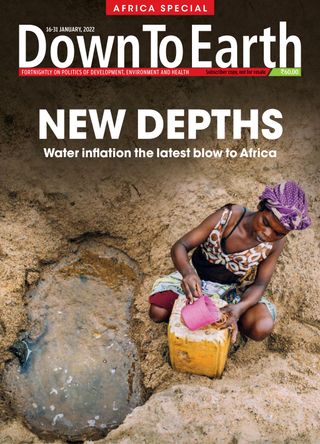

Dit verhaal komt uit de January 16, 2022-editie van Down To Earth.
Abonneer u op Magzter GOLD voor toegang tot duizenden zorgvuldig samengestelde premiumverhalen en meer dan 9000 tijdschriften en kranten.
Bent u al abonnee? Aanmelden
MEER VERHALEN VAN Down To Earth
Down To Earth
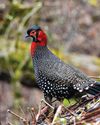
KING OF BIRDS
Revered for centuries, western tragopan now needs protection as its forests shrink, human pressures mount

3 mins
December 16, 2025
Down To Earth
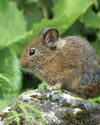
WHISKERS ALL AQUIVER
Climate change threatens creatures that have weathered extreme environments for thousands of years
2 mins
December 16, 2025
Down To Earth
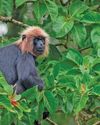
GOLDEN SPIRIT
Survival of the shy primate is closely tied to the health of Western Ghats
3 mins
December 16, 2025

Down To Earth
RINGED EYES IN THE CANOPY
Rapid habitat destruction forces arboreal langur to alter habits
2 mins
December 16, 2025
Down To Earth
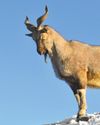
HANGING BY THE CLIFF
The Himalaya's rarest wild goat is on the brink of local extinction
2 mins
December 16, 2025
Down To Earth
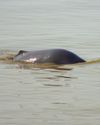
ANGEL OF THE BEAS
Conservation reserves, citizen science, and habitat protection give the Indus River dolphin a fighting chance in India
2 mins
December 16, 2025
Down To Earth
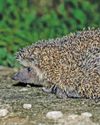
UNDER MOONLIT SCRUB
Survival of this hidden guardian tells us whether our scrublands still breathe
2 mins
December 16, 2025
Down To Earth
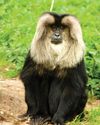
SYMBOL OF SILENT VALLEY
Lion-tailed macaque remains vulnerable despite past victories
2 mins
December 16, 2025
Down To Earth
THE APE IN OUR STORIES
India's only non-human ape species is a cultural icon threatened by forest fragmentation
2 mins
December 16, 2025
Down To Earth
SENTINEL OF THE HIGH COLD DESERT
The bird's evocative call may not continue to roll across the cold desert valley for long
3 mins
December 16, 2025
Translate
Change font size