
Ga onbeperkt met Magzter GOLD
Krijg onbeperkte toegang tot meer dan 9000 tijdschriften, kranten en Premium-verhalen voor slechts
Poging GOUD - Vrij
COPY AND EVOLVE
Down To Earth
|February 01, 2021
BUILDING UPON THE IDEAS OF PREVIOUS GENERATIONS MADE CIVILISATION AND THE ECONOMY POSSIBLE, WRITES TIM HARFORD

IN 1981, in Nampula, Mozambique, a young Swedish doctor named Hans Rosling was puzzled. More and more people were coming to his clinic suffering from paralysis in their legs. Could it be an outbreak of polio? No. The symptoms were not in any textbook. His puzzlement turned to alarm. With Mozambique slipping into a civil war, might it be chemical weapons? He packwed his wife and young children off to safety and continued his investigations.
The resolution of the mystery sheds light not just on paralysis of the legs, but on one of the biggest economic questions—why do humans have an economy at all?
Let’s return to Mozambique in due course. First, an outback adventure. In 1860, Robert Burke and William Wills led the first European expedition across the interior of Australia. Burke, Wills and their companion John King ran out of food on the return journey. They became stranded at a stream called Cooper’s Creek, unable to carry enough water to cross a stretch of desert to the nearest colonial outpost at the unpromisingly named ‘Mount Hopeless’.
William Wills wrote, ‘We have been unable to leave the creek. Both camels are dead and our provisions are done. We are trying to live the best way we can, like the Blacks, but find it hard work.’
By ‘the Blacks’, Wills meant the local Yandruwandha people, who seemed to thrive despite conditions that were proving too tough for Burke, Wills and King. The Yandruwandha gave the explorers cakes made from the crushed seed pods of a clover-like fern called nardoo—but later Burke fell out with them and, unwisely, drove them away by firing his pistol.

Dit verhaal komt uit de February 01, 2021-editie van Down To Earth.
Abonneer u op Magzter GOLD voor toegang tot duizenden zorgvuldig samengestelde premiumverhalen en meer dan 9000 tijdschriften en kranten.
Bent u al abonnee? Aanmelden
MEER VERHALEN VAN Down To Earth
Down To Earth
THINK TWICE BEFORE FELLING SAL TREES
Many trees considered to be affected by sal borer in the 1990s are still alive today

1 mins
February 16, 2026
Down To Earth
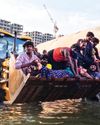
EDGE OF SURVIVAL
Caste divides deny marginalised communities land, resources and essential aid, leaving them more vulnerable to climate disasters
6 mins
February 16, 2026
Down To Earth
A WISH LIST?
Union Budget for 2026-27 conveys the impression of a roll-call of intentions and ambitious proposals, with little detail on their formulation
6 mins
February 16, 2026
Down To Earth
Break down the gender wall
THE RULING National Democratic Alliance (NDA) government has been heavily invested in the goal to make India a developed economy by 2047.
2 mins
February 16, 2026

Down To Earth
MENSTRUAL HEALTH, NOW A FUNDAMENTAL RIGHT
In a landmark judgement, the Supreme Court has recognised menstrual health and hygiene as a fundamental right under Article 21 of the Constitution of India, which guarantees the right to life and dignity.
8 mins
February 16, 2026

Down To Earth
Of devolution and new disasters
The 16th Finance Commission pushes for changes in view of new fiscal and climatic conditions
11 mins
February 16, 2026
Down To Earth
Rising risks of plastics
NEGATIVE IMPACTS on human health due to emissions linked to the plastic lifecycle could double by 2040, according to a study published in The Lancet Planetary Health in January.
1 min
February 16, 2026
Down To Earth
GAP BETWEEN EPIDEMICS NARROWING
A watershed-based and landscape-level approach is needed to address forest degradation
2 mins
February 16, 2026
Down To Earth
WAITING TO STRIKE
Sal heartwood borer is considered the biggest threat to forestry in India, especially to the sal tree, where it lives and breeds.
11 mins
February 16, 2026
Down To Earth
A SPRING DELIGHT
Mustard flowers are not meant only for the eyes. Invite them to your plate once in a while
3 mins
February 16, 2026
Translate
Change font size