
Ga onbeperkt met Magzter GOLD
Krijg onbeperkte toegang tot meer dan 9000 tijdschriften, kranten en Premium-verhalen voor slechts
Poging GOUD - Vrij
`Bioregionalism Could Become a Global Movement'
Down To Earth
|April 16, 2017
French architect DIDIER PROST is an advocate of bioregionalism, which calls for a renewed focus on local people and knowledge to innovate for greener solutions. He speaks to RAJAT GHAI on how bioregional approaches can be adopted to solve India's environmental problems.

What is bioregionalism?
Bioregionalism is a movement that was born in Italy in the early 1970s. It is a revolutionary way to reimagine our surroundings. The concept assumes significance as we are increasingly facing environmental and social problems the world over. Hence, we need to cultivate newer approaches about how we intend to plan and develop our surroundings. For that, we have to connect people with their land, nature and institutions. In short, we have to build a new model of development based on what is known as a “bioregion”. We have to build new borders—not administrative and political ones, but ecological and cultural ones. We have to build what we call “a consciousness of the place” by analysing a particular area, its history and the “global archaeology” of that history. This can be done by eliciting the participation of people from all spheres of society—academia, polity, grassroot communities, non-profits and workers. Using their inputs, we need to develop a plan for that area that will be different from other regular economic development process. Our current development process sucks all the resources and reserves from an area and then dumps the waste in the environment. Bioregionalism, on the other hand, integrated local ecologies in the economy.
Did bioregionalism come about as a response to globalisation?
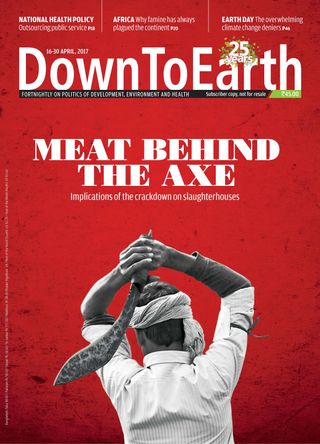

Dit verhaal komt uit de April 16, 2017-editie van Down To Earth.
Abonneer u op Magzter GOLD voor toegang tot duizenden zorgvuldig samengestelde premiumverhalen en meer dan 9000 tijdschriften en kranten.
Bent u al abonnee? Aanmelden
MEER VERHALEN VAN Down To Earth

Down To Earth
Bitter pill
THE WEB SERIES PHARMA EXPOSES HARSH TRUTHS OF THE PHARMACEUTICAL INDUSTRY, WHERE PROFIT OFTEN BECOMES MORE IMPORTANT THAN HUMAN HEALTH

3 mins
January 16, 2026
Down To Earth
CHAOS IN-DEFINITION
The Aravallis are perhaps India's most litigated hill range. More than 4,000 court cases have failed to arrest their destruction. The latest dispute concerns a narrow legal definition of this geological antiquity, much of which has been obliterated by mining and urban sprawl. While the Supreme Court has stayed its own judgement accepting that definition, it must see the underlying reality and help reconcile development and national security with conservation.
19 mins
January 16, 2026
Down To Earth
BITS: INDIA
Indore has recorded 16 deaths and more than 1,600 hospitalisations between December 24 and January 6.
1 min
January 16, 2026
Down To Earth
GUARANTEE EXPIRES
India's rural employment guarantee law is replaced with a centrally controlled, budget-capped scheme. Is this an attack on the right to work?
3 mins
January 16, 2026
Down To Earth
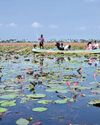
BLOOM OR BANE
Surge of vibrant pink water lilies in Kuttanad, Kerala, provides socio-economic benefits, but the plant's ecological impacts must be understood
4 mins
January 16, 2026
Down To Earth
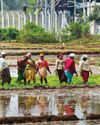
INVISIBLE EMPLOYER
Field and academic evidence shows sharp falls in casual agricultural employment at places where groundwater access declines
3 mins
January 16, 2026

Down To Earth
Schemed for erasure
Does the VB-G RAMG Act address structural weaknesses long observed in MGNREGA's implementation?
10 mins
January 16, 2026

Down To Earth
School of change
An open school in Panagar, Madhya Pradesh, aims to protect children of tribal settlements from falling into the trap of addiction
2 mins
January 16, 2026

Down To Earth
PULSE OF RESILIENCE
As a climate-ready crop, cowpea shows potential for widespread use in India
3 mins
January 16, 2026
Down To Earth
BITS GLOBAL
Britain recorded its hottest and sunniest year ever in 2025, the country's meteorological office said on January 2.
1 min
January 16, 2026
Translate
Change font size