
Ga onbeperkt met Magzter GOLD
Krijg onbeperkte toegang tot meer dan 9000 tijdschriften, kranten en Premium-verhalen voor slechts
What's it like to be a PROFESSIONAL ASTRONOMER?
BBC Sky at Night Magazine
|June 2022
Understanding the cosmos takes the work of thousands of people. Ezzy Pearson spoke to astronomers across the world to look at the many different roles that go into observing our Universe

Back in the days of Galileo and Newton, an astronomer B was a lone figure at a telescope eyepiece they had created themselves. They would go through the stars and planets one by one, taking handwritten notes and creating sketches, to build up a wealth of information over nights, years, and decades.
As time moved on, bigger telescopes were built in prime locations on remote mountaintops and deserts. Astronomers would travel to use them, bringing specialist instruments and newly invented photographic equipment. This enabled them to capture the light of dozens of distant objects that were too faint to be seen with the naked eye. They could then carry these photographic plates home to analyze the objects. With so much data to look at, astronomers began employing mathematicians, known as computers, to do the work for them, while they pondered the meaning of what they saw.
Today, astronomy has grown into a collaborative process, with teams of specialists involved at every stage. Engineers craft new instruments while consortiums work on building huge telescopes. These observatories are often so out of the way, and so complex, that astronomers often don't use them themselves. Instead they put in requests for observations that are then made by dedicated operators. Once they've received their data, science teams then write papers, sharing their work with the community. The discoveries will then drive the push for new instruments and telescopes, beginning the cycle again.
We spoke to astronomy professionals from around the world to find out what goes in to every stage of understanding the Universe...
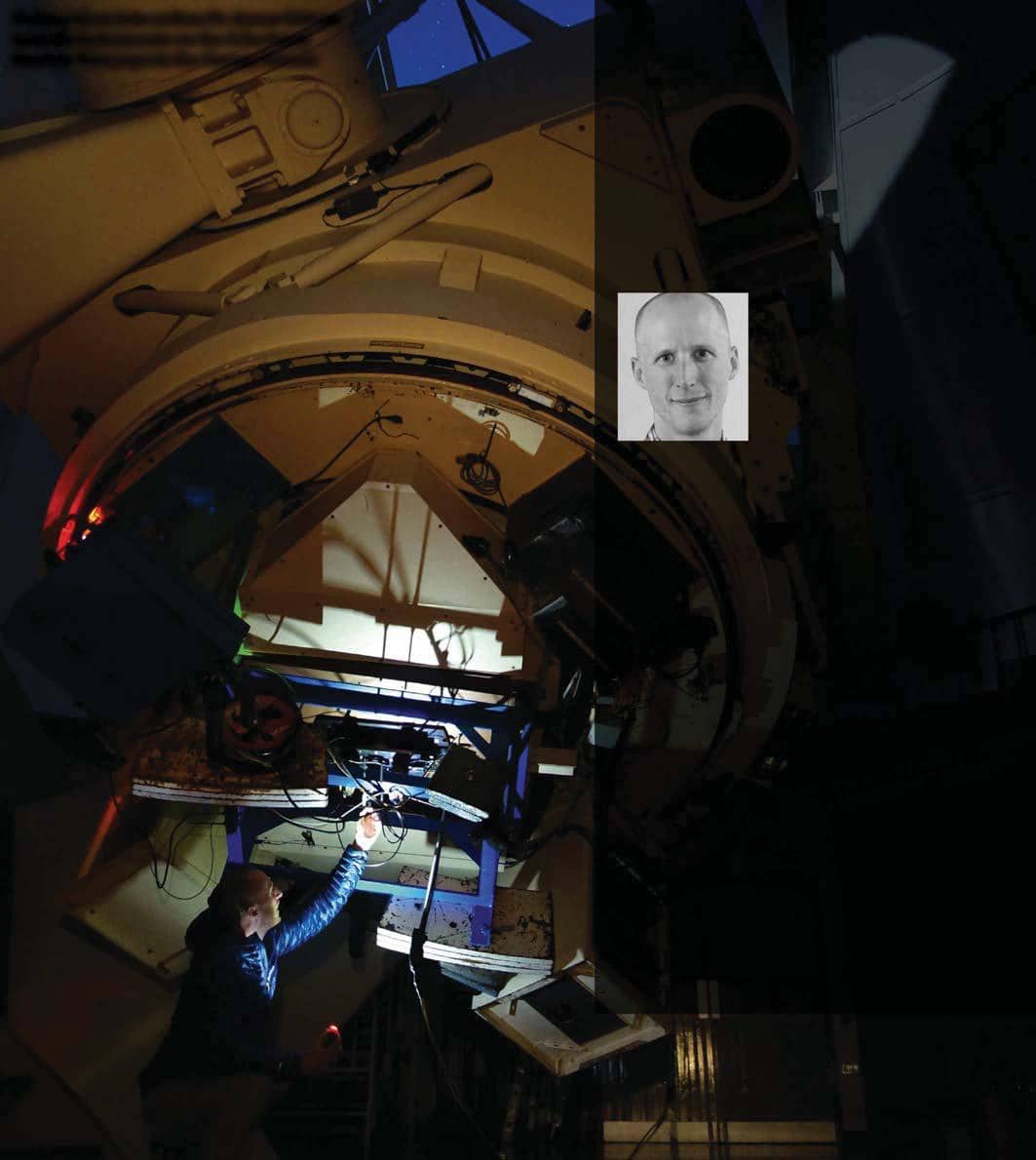
Instrument builder
Dr James Osborn, Durham University


Dit verhaal komt uit de June 2022-editie van BBC Sky at Night Magazine.
Abonneer u op Magzter GOLD voor toegang tot duizenden zorgvuldig samengestelde premiumverhalen en meer dan 9000 tijdschriften en kranten.
Bent u al abonnee? Aanmelden
MEER VERHALEN VAN BBC Sky at Night Magazine
BBC Sky at Night Magazine
MOONWATCH
January's top lunar feature to observe

2 mins
January 2026
BBC Sky at Night Magazine
Speed up your processing workflow
How to use Photoshop's Actions tool to drastically cut your processing time
3 mins
January 2026
BBC Sky at Night Magazine
Chasing Canada's polar lights
With solar maximum peaking and a new Moon promising dark skies, Jamie Carter travels to Churchill, Manitoba to hunt the Northern Lights - and dodge polar bears – in Canada's far north
7 mins
January 2026
BBC Sky at Night Magazine
Beyond Pluto: The search for the hidden planets
Could one – or even two - undiscovered planets lurk at the edges of our Solar System? Nicky Jenner explores how close we are to finding the elusive 'Planet 9'
6 mins
January 2026
BBC Sky at Night Magazine
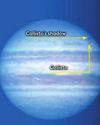
Jupiter moon events
Jupiter is a magnificent planet to observe.
2 mins
January 2026

BBC Sky at Night Magazine
What samples from space have taught us
Alastair Gunn explains what scientists have learnt in the 20 years since the first unmanned mission brought materials back from alien worlds
3 mins
January 2026
BBC Sky at Night Magazine
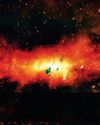
The Milky Way as you've never seen it before
This is the largest low-frequency radio colour image of our Galaxy ever assembled
1 min
January 2026
BBC Sky at Night Magazine
Merger of ‘impossibly' massive black holes explained
Scientists discover how enormous, fast-spinning black holes can exist after all
1 mins
January 2026
BBC Sky at Night Magazine
Lunar occultation of the Pleiades
BEST TIME TO SEE: 27 January from 20:30 UT
1 min
January 2026
BBC Sky at Night Magazine
The Universe's expansion may be slowing down
New study suggests current theories of dark energy could be wrong
1 mins
January 2026
Translate
Change font size