
Ga onbeperkt met Magzter GOLD
Krijg onbeperkte toegang tot meer dan 9000 tijdschriften, kranten en Premium-verhalen voor slechts
Celestron StarSense Explorer DX 130AZ 5.1-inch Newtonian reflector
BBC Sky at Night Magazine
|July 2022
A manual telescope that can be easily aligned via an adaptor and free smartphone app

Sometimes, computerised Go-To telescopes aren't all they're cracked up to be. Yes, they can automatically slew to an object in the night sky that otherwise a beginner would struggle to find, but such motorised scopes still need to be aligned with bright stars. For beginners, whose only way of navigating the night sky is by using a smartphone app, that can be tricky. So why not just use that app to align the telescope? That's the thinking behind Celestron's StarSense technology, which provides a free app and a carefully designed adaptor to fuse old and new techniques and create a novel way of exploring the night sky.
The DX 130AZ is a 5.1-inch (130mm) Newtonian reflector telescope that has a focal length of 650mm, giving a focal ratio of f/5, while the tube is 630mm long. It's mounted on a manual altaz 'Push-To' black aluminium tripod that proves this telescope's weak point. It's steady enough for the job once the spreader accessory tray is in place, but only just, and we did experience some vibrations after each movement. Since there's no motorised tracking mount, astrophotography is out of the question, save for a spot of afocal photography through the eyepiece. That, of course, requires a smartphone, which isn't going to be possible if you use this telescope as the maker intended you to (unless you have a spare phone). Although it's not essential to make the telescope usable, Celestron's StarSense Explorer app is at the core of how this combination works.
Upgrades
Also included with the DX 130AZ are two 1.25-inch eyepieces, 25mm and 10mm, which give 26x and 65x power, respectively. The supplied low-power eyepieces are nothing special and could easily be upgraded (a Barlow lens being the most obvious candidate), but they'll serve beginners well. A red dot finder is also provided if you want to ignore the app and aim the DX 130AZ completely manually.

Dit verhaal komt uit de July 2022-editie van BBC Sky at Night Magazine.
Abonneer u op Magzter GOLD voor toegang tot duizenden zorgvuldig samengestelde premiumverhalen en meer dan 9000 tijdschriften en kranten.
Bent u al abonnee? Aanmelden
MEER VERHALEN VAN BBC Sky at Night Magazine
BBC Sky at Night Magazine
MOONWATCH
January's top lunar feature to observe

2 mins
January 2026
BBC Sky at Night Magazine
Speed up your processing workflow
How to use Photoshop's Actions tool to drastically cut your processing time
3 mins
January 2026

BBC Sky at Night Magazine
Chasing Canada's polar lights
With solar maximum peaking and a new Moon promising dark skies, Jamie Carter travels to Churchill, Manitoba to hunt the Northern Lights - and dodge polar bears – in Canada's far north
7 mins
January 2026

BBC Sky at Night Magazine
Beyond Pluto: The search for the hidden planets
Could one – or even two - undiscovered planets lurk at the edges of our Solar System? Nicky Jenner explores how close we are to finding the elusive 'Planet 9'
6 mins
January 2026
BBC Sky at Night Magazine
Jupiter moon events
Jupiter is a magnificent planet to observe.
2 mins
January 2026

BBC Sky at Night Magazine
What samples from space have taught us
Alastair Gunn explains what scientists have learnt in the 20 years since the first unmanned mission brought materials back from alien worlds
3 mins
January 2026
BBC Sky at Night Magazine
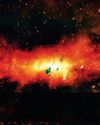
The Milky Way as you've never seen it before
This is the largest low-frequency radio colour image of our Galaxy ever assembled
1 min
January 2026

BBC Sky at Night Magazine
Merger of ‘impossibly' massive black holes explained
Scientists discover how enormous, fast-spinning black holes can exist after all
1 mins
January 2026
BBC Sky at Night Magazine
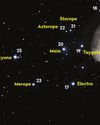
Lunar occultation of the Pleiades
BEST TIME TO SEE: 27 January from 20:30 UT
1 min
January 2026
BBC Sky at Night Magazine
The Universe's expansion may be slowing down
New study suggests current theories of dark energy could be wrong
1 mins
January 2026
Translate
Change font size