Poging GOUD - Vrij
The Light Fantastic
BBC Science Focus
|January 2022
As new telescopes around the world power up, they could answer an ancient mystery: what’s powering the most energetic explosions in the Universe?

Thirty light-years away, a star explodes. For several months, it shines 10,000 times brighter than the full Moon. It’s so bright that, during the day, it looks as if the Sun has been joined by another sun, pumping out a hundredth as much heat and light.
The good news is that you can sleep easy tonight, because this scenario would not happen. Life on Earth is safe from such an event. Superluminous supernovae – up to 100 times as powerful as any stellar explosion previously known – are not only very rare, but appear to detonate in galaxies quite a bit different from our own.
In 1931, Fritz Zwicky and Walter Baade, working at the California Institute of Technology in Pasadena, made an astonishing claim about exploding stars, or ‘novae’. Their work built on a discovery made eight years earlier by Edwin Hubble, who had used what was then the biggest telescope in the world (the 2.5m Hooker Telescope on Mount Wilson, which overlooks Caltech) to show that the mysterious spiral nebulae were in fact galaxies – great islands of stars separate from the Milky Way and millions of light-years away.

Zwicky and Baade noticed that sometimes such galaxies hosted stellar explosions, capable of outshining 100 billion normal stars. Knowing that such explosions were enormously further away than ones in our Galaxy, the two astronomers concluded that they belonged to a new class they called ‘supernovae’, around 10 million times more luminous than standard novae.
TWINKLE, TWINKLE, DYING STAR

Dit verhaal komt uit de January 2022-editie van BBC Science Focus.
Abonneer u op Magzter GOLD voor toegang tot duizenden zorgvuldig samengestelde premiumverhalen en meer dan 9000 tijdschriften en kranten.
Bent u al abonnee? Aanmelden
MEER VERHALEN VAN BBC Science Focus

BBC Science Focus
DOES MY DOG HAVE ADHD?
Officially, Attention-Deficit Hyperactivity Disorder (ADHD) is a human condition. People are diagnosed with it. Dogs are not. Yet many of its core features, including hyperactivity, impulsivity and distractibility, can be found in dogs.

1 min
March 2026

BBC Science Focus
DOES MY BRAIN LIVE A LITTLE IN THE PAST?
Yes, your brain does live a little in the past. It can't help it. The information it receives via your senses is always a little out of date. Whether it's light entering the retinas in your eyes, or sounds vibrating the hairs in your ears, it not only takes time for the data to arrive, but your brain then has to process it.
2 mins
March 2026
BBC Science Focus
ASTRONOMY FOR BEGINNERS
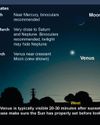
RETURN OF THE EVENING STAR (VENUS)
1 mins
March 2026

BBC Science Focus
CAN YOU STOP YOUR SENSE OF TASTE DULLING AS YOU AGE?
Sometimes I hear people say that food just doesn't taste the same as they get older. It's tempting to blame this on age, but there are other factors at play, too.
1 mins
March 2026

BBC Science Focus
MICROBIOMES OF THE SUPERAGERS
BY STUDYING THE INCREASING NUMBER OF PEOPLE WHO ARE LIVING BEYOND THEIR 100TH BIRTHDAYS, SCIENTISTS ARE DISCOVERING THAT THE SECRET TO REACHING A RIPE OLD AGE IN RUDE HEALTH MIGHT LIE IN OUR GUTS
8 mins
March 2026

BBC Science Focus
HOW BIG WERE MEDIEVAL WAR HORSES?
You might picture knights charging into battle on towering steeds, but medieval horses were typically no bigger than modern-day ponies.
1 min
March 2026

BBC Science Focus
FORCES OF HABIT
Could new research on setting up healthy habits resuscitate those stuttering New Year resolutions?
3 mins
March 2026

BBC Science Focus
5 DANGERS HIDING IN YOUR PROCESSED FOOD
We all know that ultra-processed foods are bad for us, but what ingredients should we particularly try to avoid? And what are they doing to our bodies?
9 mins
March 2026
BBC Science Focus
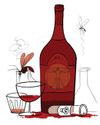
Mosquitoes are becoming thirstier for human blood
Habitat loss may be pushing mosquitoes towards human hosts with deadly consequences
1 mins
March 2026

BBC Science Focus
HOW CAN I GET OVER MY EX?
Relationship breakups can be brutal, just look at the popularity of songs like 'Someone Like You' by Adele, or all the covers of 'Cry Me a River' by Julie London.
1 mins
March 2026
Translate
Change font size