Poging GOUD - Vrij
A VACCINE FOR CANCER
BBC Science Focus
|New Year 2022
The pandemic derailed a lot of medical research. But the effort that was suddenly redirected towards developing a vaccine for COVID-19 may have helped us make important progress on at least one breakthrough: preventing cancer

In December 2019, Dr Vinod Balachandran and his team had just recruited the first patients for an exciting clinical trial that was happening in New York. It was to test a new type of vaccine for pancreatic cancer. The vaccine, made from a molecule called messenger ribonucleic acid (mRNA), was designed to prime the patients’ immune systems to attack their cancer cells, but before the trial could get into full swing, disaster struck. A novel virus, discovered in China, was silently spreading around the globe. Three months later, New York was in lockdown.
With a lot of routine cancer treatment paused, trial participants were understandably nervous. “Patients didn’t want to travel to New York,” says Balachandran, who is based in the city’s Memorial Sloan Kettering Cancer Center. Then there were logistical issues. Biopsy samples taken from the participants had to be sent to a biotech company in Germany for analysis, and the vaccine, which was then tailor-made for each patient, had to be promptly sent back. With many routine flights grounded, it seemed like a tall order, but perhaps the biggest hurdle facing the trial was the fact that the German biotech company they were working with, BioNTech, now found itself embroiled in a race to produce the world’s first vaccine for COVID-19.
In the year that followed, BioNTech collaborated with another company, Pfizer, to produce more than 20 candidate COVID-19 vaccines, all made from mRNA, including the one that went on to be given to hundreds of millions of people. It’s fair to say that 2020 was a busy year for BioNTech, so you’d be forgiven for presuming that the trial for the cancer vaccines fell by the wayside, but that wasn’t the case.

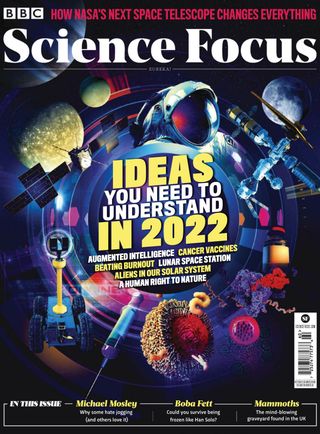

Dit verhaal komt uit de New Year 2022-editie van BBC Science Focus.
Abonneer u op Magzter GOLD voor toegang tot duizenden zorgvuldig samengestelde premiumverhalen en meer dan 9000 tijdschriften en kranten.
Bent u al abonnee? Aanmelden
MEER VERHALEN VAN BBC Science Focus

BBC Science Focus
World's biggest cobweb is home to 100,000 spiders
Spiders don't normally create such large colonies, so there's no need to worry about finding one in your basement

1 min
February 2026
BBC Science Focus
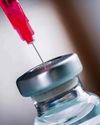
A dementia vaccine could be gamechanging – and available already
Getting vaccinated against shingles could protect you from getting dementia, or slow the progression of the disease
1 mins
February 2026

BBC Science Focus
DATA IN SPACE
An unusual spacecraft reached orbit in November 2025, one that might herald the dawn of a new era.
7 mins
February 2026
BBC Science Focus
Climate change is already shrinking your salary
No matter where you live, a new study has found warmer temperatures are picking your pocket
4 mins
February 2026

BBC Science Focus
A MENTAL HEALTH GLOW-UP
Forget fine lines. Could Botox give you an unexpected mental health tweakment?
3 mins
February 2026
BBC Science Focus
Most people with high cholesterol gene don't know they have it
Standard testing struggles to detect the condition
1 mins
February 2026

BBC Science Focus
HOW CAN I BOOST MY IQ?
If you're serious about getting smarter, it's time to ditch the brain-training apps
4 mins
February 2026

BBC Science Focus
Humans are absolutely terrible at reading dogs' emotions
Think you can tell how our furry friends are feeling? Think again
1 mins
February 2026

BBC Science Focus
HOW TO TEACH AI RIGHT FROM WRONG
If we want to get good responses from AI, we may need to see what it does when we ask it to be evil
3 mins
February 2026

BBC Science Focus
What Australia's social media ban could really mean for under-16s
Many people think social media is bad for our kids. Australia is trying to prove it
5 mins
February 2026
Translate
Change font size