Poging GOUD - Vrij
THE SEASONS OF YOU
BBC Focus - Science & Technology
|January 2021
THE CALENDAR YEAR FOLLOWS THE PATTERN OF SPRING, SUMMER, AUTUMN, WINTER. BUT PERHAPS IT SHOULDN’T…

Ancient Egyptians identified three seasons based on cycles of the Nile River: inundation, emergence and harvest. In tropical countries, it’s the rain that tends to divide the year in two: a wet and a dry season. Elsewhere the calendar demarcates four seasons: autumn, winter, spring and summer.
But now, researchers at Stanford University have found that human biology, rather than rivers, rainfall or calendars, could be used to determine the seasons. In their study, published in the journal Nature Communications in October 2020, the Stanford researchers discovered our bodies seem to set their own rhythm, splitting the year into two seasonal time periods. Or at least that’s the case if you live in California, where the study was carried out. Since every geographical location has unique environmental conditions, their approach may be used the count the seasons in other parts of the world too.
“People say there are four seasons of three months each. But why four? There could be 15 or could be 2. Why don’t we let biology tell us?” asks Prof Michael Snyder, principal investigator of the study.
To determine the human seasons, Snyder’s team profiled the biology of 105 volunteers in the San Francisco Bay area over a period of four years. They regularly sampled and measured tens of thousands of molecules and microbes from the participants’ blood, noses and guts. This type of study is called ‘deep longitudinal multiomics profiling’.
On sample days, the researchers also collected meteorological data (such as air temperature and solar radiation) and airborne pollen counts.

Dit verhaal komt uit de January 2021-editie van BBC Focus - Science & Technology.
Abonneer u op Magzter GOLD voor toegang tot duizenden zorgvuldig samengestelde premiumverhalen en meer dan 9000 tijdschriften en kranten.
Bent u al abonnee? Aanmelden
MEER VERHALEN VAN BBC Focus - Science & Technology

BBC Science Focus
DOES MY DOG HAVE ADHD?
Officially, Attention-Deficit Hyperactivity Disorder (ADHD) is a human condition. People are diagnosed with it. Dogs are not. Yet many of its core features, including hyperactivity, impulsivity and distractibility, can be found in dogs.

1 min
March 2026
BBC Science Focus
DOES MY BRAIN LIVE A LITTLE IN THE PAST?
Yes, your brain does live a little in the past. It can't help it. The information it receives via your senses is always a little out of date. Whether it's light entering the retinas in your eyes, or sounds vibrating the hairs in your ears, it not only takes time for the data to arrive, but your brain then has to process it.
2 mins
March 2026
BBC Science Focus
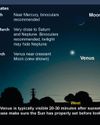
ASTRONOMY FOR BEGINNERS
RETURN OF THE EVENING STAR (VENUS)
1 mins
March 2026

BBC Science Focus
CAN YOU STOP YOUR SENSE OF TASTE DULLING AS YOU AGE?
Sometimes I hear people say that food just doesn't taste the same as they get older. It's tempting to blame this on age, but there are other factors at play, too.
1 mins
March 2026
BBC Science Focus
MICROBIOMES OF THE SUPERAGERS
BY STUDYING THE INCREASING NUMBER OF PEOPLE WHO ARE LIVING BEYOND THEIR 100TH BIRTHDAYS, SCIENTISTS ARE DISCOVERING THAT THE SECRET TO REACHING A RIPE OLD AGE IN RUDE HEALTH MIGHT LIE IN OUR GUTS
8 mins
March 2026

BBC Science Focus
HOW BIG WERE MEDIEVAL WAR HORSES?
You might picture knights charging into battle on towering steeds, but medieval horses were typically no bigger than modern-day ponies.
1 min
March 2026

BBC Science Focus
FORCES OF HABIT
Could new research on setting up healthy habits resuscitate those stuttering New Year resolutions?
3 mins
March 2026

BBC Science Focus
5 DANGERS HIDING IN YOUR PROCESSED FOOD
We all know that ultra-processed foods are bad for us, but what ingredients should we particularly try to avoid? And what are they doing to our bodies?
9 mins
March 2026
BBC Science Focus
Mosquitoes are becoming thirstier for human blood
Habitat loss may be pushing mosquitoes towards human hosts with deadly consequences
1 mins
March 2026

BBC Science Focus
HOW CAN I GET OVER MY EX?
Relationship breakups can be brutal, just look at the popularity of songs like 'Someone Like You' by Adele, or all the covers of 'Cry Me a River' by Julie London.
1 mins
March 2026
Translate
Change font size