
Ga onbeperkt met Magzter GOLD
Krijg onbeperkte toegang tot meer dan 9000 tijdschriften, kranten en Premium-verhalen voor slechts
Poging GOUD - Vrij
BMI: IT'S FLAWED, SO WHY DO WE USE IT?
BBC Focus - Science & Technology
|June 2021
A report published by the Women and Equalities Committee says that the use of the Body Mass Index should be scrapped. Is there a better way to calculate if you’re a healthy weight?

Barely a day goes by without a news piece or television documentary breathlessly reporting on the current pandemic of obesity. Nearly 60 per cent of us in the UK and US are either overweight or living with obesity. Where does this ominous 60 per cent figure originate from? Well, it has emerged from population-wide BMI statistics.
BMI, or Body Mass Index, is the ratio of body weight in kilograms divided by the square of one’s height in meters, and hence is represented as kg/m2. A ‘normal’ BMI is 20-25kg/m2. Anything below a BMI of 18 would be considered underweight, a BMI of 25-30kg/m2 is considered overweight, and if you have a BMI north of 30kg/m2, you would be classed as living with obesity. The reputation of BMI however, has in recent years been tarnished. At best, it’s considered a poor proxy for fat mass and health; at its worst, it can and often is used as a cudgel to ‘fat-shame the larger among us in society. But what has BMI done to deserve this, and should it be replaced with anything else?
The problem is that BMI as a measure of ‘fatness’ is flawed because it is derived using purely your weight and your height. Thus it cannot, for instance, differentiate between a rugby player and a Joe Public of similar height and weight, but carrying substantially more fat. So why not just measure the amount of fat instead?

Dit verhaal komt uit de June 2021-editie van BBC Focus - Science & Technology.
Abonneer u op Magzter GOLD voor toegang tot duizenden zorgvuldig samengestelde premiumverhalen en meer dan 9000 tijdschriften en kranten.
Bent u al abonnee? Aanmelden
MEER VERHALEN VAN BBC Focus - Science & Technology
BBC Science Focus
HOW FISH COULD SAVE MILLIONS OF PEOPLE'S SIGHT
There's nowhere near enough donors to meet the demand for corneal transplants. A pioneering treatment that relies on fish scales could change that

3 mins
May 2026
BBC Science Focus
Your Wi-Fi is lying to you
Wi-Fi 7's giant speed claims might look impressive, but the realities of our homes – and the laws of physics – mean that real-world performance will never get close
6 mins
May 2026
BBC Science Focus
WHICH ANIMAL IS MOST LIKELY TO ESCAPE FROM THE ZOO?
Have you heard the one about the monkey and the Yorkshire pudding?
2 mins
May 2026
BBC Science Focus
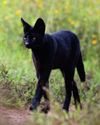
THE BLACK SERVAL
The black serval (Leptailurus serval) is an unusual, melanistic version of the African serval, a medium-sized wild cat that's native to Africa.
2 mins
May 2026
BBC Science Focus
Cryosleep vs hibernation: What's the difference?
When hibernating animals, such as hedgehogs and dormice, disappear for winter, they don't freeze like the Siberian salamander.
1 mins
May 2026
BBC Science Focus
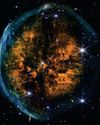
Space brain
The greatest names in science are often said to be 'big-brained', but this cosmic wonder puts them all to shame. Nebula PMR 1 - otherwise known as the 'Exposed Cranium' nebula for its distinctive shape - measures around 3.2 light-years across.
1 min
May 2026
BBC Science Focus
Your most draining relationships are taking years off your life, study suggests
Difficult people don't just zap your energy - they may also accelerate your biological ageing
4 mins
May 2026
BBC Science Focus
DOES EARTH HAVE A HEARTBEAT?
Move over, Ringo Starr.
1 mins
May 2026
BBC Science Focus
WEIGHT-LOSS DRUGS FOR ALL?
The obesity crisis is ruining lives and costing governments trillions. But some healthcare experts think there's now a radical solution: roll out GLP-1 jabs to everyone who needs them for free. Could it work?
9 mins
May 2026
BBC Science Focus
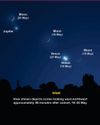
HOW TO SEE VENUS ON APPROACH TO JUPITER
Venus has been slowly moving away from the Sun's glare over the past few weeks, heading into the evening twilight after sunset.
1 mins
May 2026
Translate
Change font size