
Ga onbeperkt met Magzter GOLD
Krijg onbeperkte toegang tot meer dan 9000 tijdschriften, kranten en Premium-verhalen voor slechts
Can Bollywood Survive Modi?
The Atlantic
|July - August 2021
Its films have always celebrated a pluralistic India, making the industry—and its Muslim elite—a target of Hindu nationalists.

The Bandra- Worli Sea Link connects central Mumbai with neighborhoods to the north. If you’re driving from downtown, the bridge brings you into the orbit of Bollywood, the Hindi- language segment of India’s vast movie industry. Actors, makeup artists, special-effects people—they cluster in a handful of seaside neighborhoods. The superstars live in great bungalows, with devoted crowds stationed outside.
Bollywood has been central to the creation of India’s national myth. Its movies are full of dance and song, but their genius lies in their ability to weave serious issues—social justice, women’s rights, gay rights, inter-religious marriage—into entertainment. Bollywood films are at once commercial and political. They epitomize the pluralism of India.
And in today’s political climate, that makes them a target. In ways reminiscent of the old Hollywood blacklist, the government of Prime Minister Narendra Modi and his Hindu-nationalist Bharatiya Janata Party (BJP) is using powerful tools to curtail the creative freedom of Bollywood— in particular the influence of Muslims, who have an outsize presence in the industry. The measures pushed by the Modi government include indiscriminate tax investigations, trumped-up accusations against actors and directors, intimidation and harassment in response to certain movies and TV shows, and the chilling rap of law enforcement at the door. Fearing worse to come, Bolly wood has remained mostly silent in the face of the government’s catastrophic response to the coronavirus pandemic.
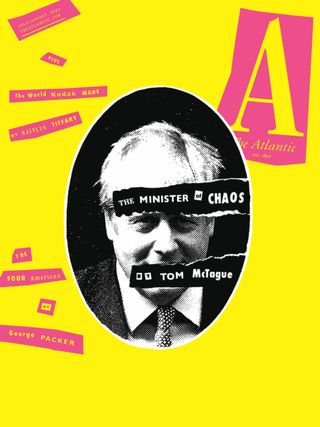

Dit verhaal komt uit de July - August 2021-editie van The Atlantic.
Abonneer u op Magzter GOLD voor toegang tot duizenden zorgvuldig samengestelde premiumverhalen en meer dan 9000 tijdschriften en kranten.
Bent u al abonnee? Aanmelden
MEER VERHALEN VAN The Atlantic
The Atlantic
You Had to Be There
An emerging field of history asks if we can ever really understand how our forebears experienced love, anger, fear, and sorrow.

23 mins
January 2026

The Atlantic
By the Horns
The week before the biggest bullfight of her career, in Cádiz, Spain, this past July, 24-year-old Miriam Cabas posted a carefully produced video on Instagram.
1 mins
January 2026

The Atlantic
The New German War Machine
After World War II, Germany embraced pacifism as a form of atonement. Now the country is arming itself again.
18 mins
January 2026
The Atlantic
The Eloquence
The prime minister was watching a disaster movie when we found him.
4 mins
January 2026

The Atlantic
What's for Dinner, Mom?
The women who want to change the way America eats
12 mins
January 2026

The Atlantic
How Terror Works
A 1947 German novel explores the sometimes corrosive, sometimes energizing nature of fear.
8 mins
January 2026

The Atlantic
Yesterday's Idea of a Modern Man
Sam Shepard, a self-made cowboy, was also a poet of masculine angst.
7 mins
January 2026

The Atlantic
ACCOMMODATION NATION
America's colleges have an extra-time-on-tests problem.
11 mins
January 2026

The Atlantic
Respect the Drummer
A new history of rock, told through its overlooked heroes
5 mins
January 2026

The Atlantic
THE MOST POWERFUL MAN IN SCIENCE
WHY IS ROBERT F. KENNEDY JR. SO CONVINCED HE'S RIGHT?
42 mins
January 2026
Translate
Change font size