Poging GOUD - Vrij
India's Space Sector Achievements Are Worth Emulating
Geopolitics
|April 2017
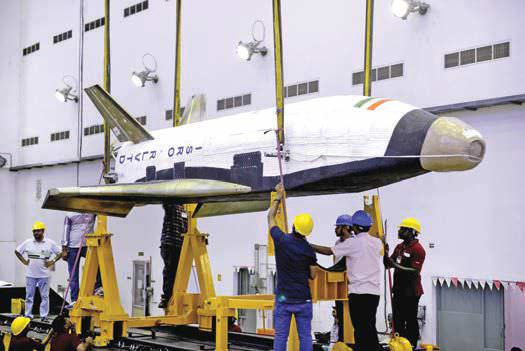
The ISRO saga is a story of achievements. From its humble origins – when rocket parts were carried on bicycles and bullock carts – the organization has come a long way. Today, India can hold her head high among space research nations because of the spectacular feats by ISRO. ISRO is not just a space research institution, but it is much more than that.
-

India's most visible scientific and engineering achievements have come from the space sector. Indian Space Research Organisation (ISRO) is a model today for every other sector that has a large scientific research and development requirement. It is not uncommon in India to speak of emulating the ISRO when it comes to achieving scientific successes in the technology sectors.
No wonder, India's greatest scientist and the most loved President is from the space sector background, originally. Dr. A P J Abdul Kalam was originally a space engineer from ISRO, who shifted to defence research and development. He later went on to occupy the highest constitutional post in India is now a matter of pride for all Indians.
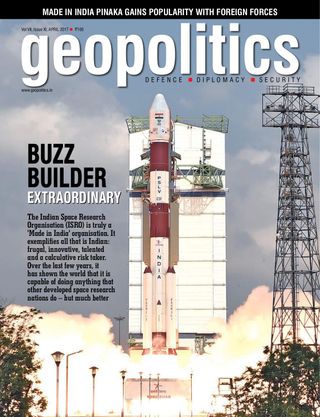
It is but natural that we will trace the achievements of ISRO, and in its preceding avatars, over the last six decades at a time it has scripted history in February 2017 by launching successfully 104 satellites in one go using the workhorse of ISRO's space launches, the Polar Satellite Launch Vehicle (PSLV). The launch was achieved from Sriharikota in southern Andhra Pradesh, from where India has launched most of its satellites over the years.
Among these 104 satellites were 88 from the San Francisco-based Plant Labs, as well as others built by companies and universities in Israel, Kazakhstan, Switzerland and the United Arab Emirates. This is a record that is going to be difficult to match for years to come. These satellites will be used to map the Earth, track ships to monitor illegal fishing and piracy, as well as conduct microgravity experiments without making an expensive trip out to the International Space Station. The heaviest of them, India's Cartosat 2D, weighs 714 kg. The lightest, the Nayif, weighs just 1.1 kg.

Dit verhaal komt uit de April 2017-editie van Geopolitics.
Abonneer u op Magzter GOLD voor toegang tot duizenden zorgvuldig samengestelde premiumverhalen en meer dan 9000 tijdschriften en kranten.
Bent u al abonnee? Aanmelden
MEER VERHALEN VAN Geopolitics
Geopolitics
Navy Flags Critical Engine Dependency Gap
Despite significant advances in indigenous warship construction, India's continued reliance on foreign marine propulsion systems remains a critical vulnerability in its defence framework.

1 mins
April 2026

Geopolitics
GTRE Advances Engine Testing With Su-30
India's aero-engine development programme is set to accelerate as GTRE proceeds to convert two Su-30 MKI fighters into dedicated flying testbeds, enabling real-time validation of indigenous propulsion technologies.
1 mins
April 2026
Geopolitics
Indigenous Anti-Tank Missile Nears Production Clearance
India's indigenous man-portable anti-tank guided missile is approaching final clearance for mass production following successful validation trials against moving targets.
1 min
April 2026
Geopolitics
A RE-LOOK AT INDIAN MILITARY LOGISTICS & THEATRE COMMANDS
JOSEPH P CHACKO explains why logistics systems must be integrated to be capable of seamlessly supporting modern warfare operations, which necessitate rapid, coordinated responses across multiple domains
14 mins
April 2026
Geopolitics
Defence Spending Drives Acquisition Surge
India's defence modernisation programme has entered a phase of rapid implementation, with FY 2025-26 seeing full utilisation of capital expenditure and a clear focus on addressing critical capability gaps across the armed forces.
3 mins
April 2026

Geopolitics
K9 Vajra Hits mega Indigenisation
India's India's flagship tracked artillery programme has reached a crucial turning point, with the K9 Vajra-T now achieving over 82 per cent indigenous content at the work package level, marking a fundamental shift in domestic defence manufacturing capability.
1 min
April 2026

Geopolitics
NUCLEAR SHARKS OF STEEL!
India’s third Arihant-class submarine, INS Aridhaman, was commissioned into the Indian Navy on April 3, 2026, at Visakhapatnam by Defence Minister Rajnath Singh.
2 mins
April 2026

Geopolitics
Army Eyes Tank-Launched Drone Strikes
The Indian Army is advancing a new concept to equip its main battle tanks with indigenous loitering munitions that can be deployed directly from existing 81mm smoke grenade launchers.
1 min
April 2026

Geopolitics
THE ANATOMY OF A POLARISED FRONTIER
West Bengal has changed from a longtime “Red Bastion” to one of the most hotly contested states in Indian politics.
2 mins
April 2026

Geopolitics
Navy Advances Drone-Ready Amphibious Carriers
India's next-generation amphibious warfare programme has entered a crucial -phase as the Navy advances its evaluation of four large-deck platforms designed to revolutionise expeditionary operations.
1 mins
April 2026
Translate
Change font size