
Ga onbeperkt met Magzter GOLD
Krijg onbeperkte toegang tot meer dan 9000 tijdschriften, kranten en Premium-verhalen voor slechts
Poging GOUD - Vrij
Robert Nozick's Metaverse Machine
Philosophy Now
|April/May 2022
Lorenzo Buscicchi asks, would you plug into Mark Zuckerberg’s virtual world? He finds that the question has been considered by philosophers for decades.

A comparatively recent contribution to the debate was the ‘experience machine’ thought experiment advanced by Robert Nozick in 1974 in his book Anarchy, State and Utopia (though it’s probably based on a short story called ‘The Happiness Machine’ published by Ray Bradbury in 1957). In this thought experiment, Nozick asks you to imagine a machine that can simulate every experience you would like to have until the end of your life. Once you programmed this machine and plugged yourself into it, you would not be aware that the blissful experiences you are having are simulated, and you would live out your fantasies until the end of your life.
Nozick asks: would you plug in? He thinks that the majority of readers would reply ‘no’, and advances a series of reasons for this. First, he says, we want to have a genuine relationship with reality, not live a fictional life that only feels real. The second reason has to do with personal identity/authenticity. According to him, we want to be certain kinds of people, and connecting to the experience machine would make us merely an ‘undeterminate blob’. Finally, the fact that the virtual world of the experience machine is artificial is taken by Nozick to be in itself bad. He believes the experience machine would prevent us from grasping any deeper reality.
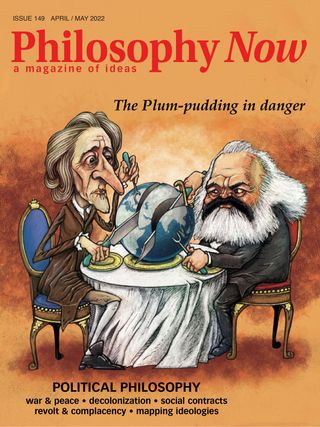

Dit verhaal komt uit de April/May 2022-editie van Philosophy Now.
Abonneer u op Magzter GOLD voor toegang tot duizenden zorgvuldig samengestelde premiumverhalen en meer dan 9000 tijdschriften en kranten.
Bent u al abonnee? Aanmelden
MEER VERHALEN VAN Philosophy Now

Philosophy Now
Nosferatu
Stefan Bolea considers two very different artistic approaches to love and death.

6 mins
April/May 2025

Philosophy Now
Heidegger's Ghost
Raymond Tallis wonders where Heidegger's body went when he was philosophising.
7 mins
April/May 2025

Philosophy Now
Is Comedy Good For Us?
Damaris Stock has a laugh with Plato and friends.
10 mins
April/May 2025
Philosophy Now
In Defense of Idleness
Wendell O'Brien says, 'Just Don't Do It'.
10 mins
April/May 2025

Philosophy Now
Leaving Nothing to Chance by Carl Knight
LEAVING NOTHING TO Chance (2025) by Carl Knight, is an informed, proficient and lucid defence of luck egalitarianism.
3 mins
April/May 2025

Philosophy Now
Star Maker by Olaf Stapledon
THE 1937 SCIENCE FICTION novel Star Maker was written by philosophy professor Olaf Stapledon in the dark days as Europe awaited the onslaught of Nazi Germany. This casts a shadow over the whole book.
6 mins
April/May 2025

Philosophy Now
Love & Emptiness in the Sufi Tradition
Medha Ninad Tambe meditates on Rumi, love and self-negation.
7 mins
April/May 2025

Philosophy Now
The Hedgehog's Dilemma: A Metaphor About the Challenges of Human Intimacy
Krishna Chaubey explains Arthur Schopenhauer's poignant thought experiment.
4 mins
April/May 2025

Philosophy Now
The Mirror & the Flame
Rebwar Fatah imagines Attar's & Hegel's shared path.
4 mins
April/May 2025
Philosophy Now
Free and Equal by Daniel Chandler
DANIEL CHANDLER, AN economist and philosopher based at the London School of Economics, begins Free and Equal: What Would a Fair Society Look Like? (2023) by asking an intriguing question. How is it, he wonders, that the most influential political philosopher of the last century has had almost no practical impact on politics or policy? The philosopher in question is John Rawls, whose magnum opus was A Theory of Justice (1971).
5 mins
April/May 2025
Translate
Change font size