
Ga onbeperkt met Magzter GOLD
Krijg onbeperkte toegang tot meer dan 9000 tijdschriften, kranten en Premium-verhalen voor slechts
Poging GOUD - Vrij
Wee three kings
Country Life UK
|November 18, 2020
We are all familiar with the diminutive wren, yet its tiny fellow kinglets the goldcrest and firecrest are, perhaps understandably, often overlooked. Ian Morton studies our smallest birds

THE tiny goldcrest has accrued several names over time. Unable to comprehend that such a small bird could cross the North Sea unaided when migrating from Scandinavia and northern Europe, medieval ornithologists supposed that it hitched a lift on the backs of sturdier flyers and dubbed it the ‘woodcock pilot’. To East Anglian fishermen, in whose rigging it often paused for a rest before continuing, it was the ‘herring spink’ or ‘lot-o’erseas’. Folk along the east coast have found the arriving goldcrest too exhausted to be afraid of people. There have been instances of the little bird actually settling on them.
It is our smallest bird, yet, in the general public perception, this distinction has been usurped by the wren (‘I am wren, hear me roar’, February 28, 2018). There isn’t much in it, but, at the bottom of the scale, a little means a lot. The goldcrest weighs 5g–6g (about 0.2oz), the wren 7g–12g (0.2oz–0.4oz). The goldcrest’s length is 9cm (3.5in), the wren’s 8cm–12cm (3in–5in)—the measurements, as you can see, almost too small to convert meaningfully into Imperial. The wren, at its largest in Scotland, where it faces harsher winters, is certainly the commonest and most vociferous for its size and its song scores heavily over the goldcrest, the utterances of which are so slight and high-pitched that many human ears can’t pick them up. The goldcrest is not only our smallest bird, but possibly our quietest.

Dit verhaal komt uit de November 18, 2020-editie van Country Life UK.
Abonneer u op Magzter GOLD voor toegang tot duizenden zorgvuldig samengestelde premiumverhalen en meer dan 9000 tijdschriften en kranten.
Bent u al abonnee? Aanmelden
MEER VERHALEN VAN Country Life UK
Country Life UK
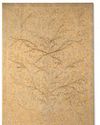
Opposites can attract
As a big bookcase designed by Peter Waals proves large pieces of furniture can do well, a notable collection shows harmony can be born from difference

3 mins
June 03, 2026
Country Life UK
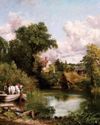
His green and pleasant land
Few artists travelled as little as John Constable, but his deep knowledge of the parts of England he loved gave him insights that others missed. Susan Owens explores the places that delighted him
6 mins
June 03, 2026
Country Life UK
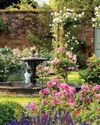
Dreaming of roses
A thousand English roses now bloom in the restored walled garden that forms the heart of this 27-acre estate, writes Charles Quest-Ritson
4 mins
June 03, 2026
Country Life UK
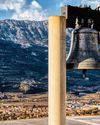
Ring for peace
A COPIOUS quantity of apple strudel became the unintended consequence of a winter walking holiday in the Austrian Tyrol.
2 mins
June 03, 2026
Country Life UK
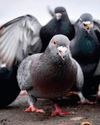
Best of the pests
Pity the feral pigeon: long campaigned against as an urban nuisance, it is the descendant of birds lured into human service, some of which distinguished themselves in wartime
3 mins
June 03, 2026
Country Life UK
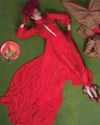
Red alert
The time is ripe for tomatoes in every form. We are days into British Tomato Fortnight (June 1–14) and weeks from Royal Ascot (June 16–20), where Bright Tomato has been declared the inaugural Colour of the Year by Ascot creative director Daniel Fletcher.
1 mins
June 03, 2026
Country Life UK
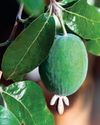
Totally tropical
I FIRST grew pineapple guava, also called feijoa (Acca or Feijoa sellowiana) almost a quarter of a century ago, when there were few nurseries stocking them.
3 mins
June 03, 2026
Country Life UK
Brewed awakening: where London learnt to talk
Rupert Clague explores how caffeine-fuelled conversation in Hanoverian London’s ‘penny universities’ helped shape the modern world—and where that same spirit still lingers today
5 mins
June 03, 2026
Country Life UK
The legacy Percy Shaw and cat's eyes
BEHIND the retina in a cat’s eyes lurks the tapetum lucidum, a layer of tissue that acts as a mirror, or a retroreflector, and allows the animal to see in the dark.
1 mins
June 03, 2026
Country Life UK
Britain is told to spill the beans
HOME-GROWN legumes have a vital role to play in strengthening national food security and reducing the UK's increasing reliance on imported food, the audience heard at last month's UK Legume Research Community Conference, held at the James Hutton Institute in Invergowrie, Perthshire.
2 mins
June 03, 2026
Translate
Change font size