Poging GOUD - Vrij
How does a trout catch a fly?
The Field
|May 2020
Understanding how a trout recognises a fly and then intercepts it is key to your choice of fly – and success

Before guiding anglers on South Devon rivers I am often asked, “What fly should I use?” I advise them to start with a fly they have confidence in. This short answer avoids a long explanation but, if pressed, the following is my rationale.
I turn the angler’s question on its head to focus on the trout rather than the fly. Let’s explore how a trout recognises and intercepts a fly drifting towards it on the surface of the river. The answer may give an insight into how to design effective trout flies and why our artificial flies are sometimes ignored by feeding trout.
Traditionally, angling writers have talked in terms of deceiving a trout into taking an artificial fly. I put a slightly different slant on the angler’s task. I want to work with the trout rather than trying to deceive it. After all, fish want to eat. If we understand how a fish first recognises and then catches an insect we can select and present an artificial fly so that it can be caught easily by trout.
How does a trout catch a fly? It’s a deceptively simple question about something many of us take for granted. But catching a fly moving quickly downstream is no simple feat, especially for trout lying beside popply water near the head of a pool. The trout’s problem is similar to ours when we try to catch a cricket ball. It looks easy until you try to do it. Outfielders are expected to make a catch but it’s clearly more difficult for infielders in the slips who – like trout at the head of a pool – must react quickly.
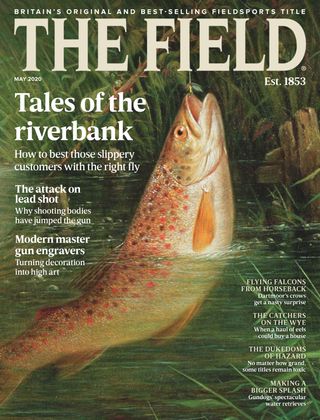

Dit verhaal komt uit de May 2020-editie van The Field.
Abonneer u op Magzter GOLD voor toegang tot duizenden zorgvuldig samengestelde premiumverhalen en meer dan 9000 tijdschriften en kranten.
Bent u al abonnee? Aanmelden
MEER VERHALEN VAN The Field

The Field
The Holland & Holland Edition by Overfinch
This exquisitely detailed bespoke Range Rover is built for the field and showcases the best in fine British craftsmanship

3 mins
January 2026

The Field
Digging into terrier breeds
From the Jack Russell to the Australian to the Czesky, every one of the 27 recognised terrier types is either native British or has British ancestry
3 mins
January 2026
The Field
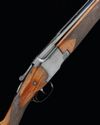
100 O years of The Browning B25 Superposed
Often imitated but rarely bettered, Browning's B25 Superposed is among the most influential and enduring shotgun designs in gunmaking history
8 mins
January 2026
The Field
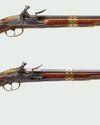
A princely pair
Probably built for the Prince of Lobkowicz and dating to 1727, these handsome flintlocks boast both Spanish and Austrian influence
3 mins
January 2026
The Field
Adventure in a bottle
From lively, zingy Sauvignon Blanc to cassis-laden Cabernet Sauvignon, Chilean wine opens the door to a world of incredible value and diversity
3 mins
January 2026

The Field
Patrick Grant
The Great British Sewing Bee judge, former Savile Row tailor and founder of Community Clothing talks to Amanda Morison about nature, scything and sustainable fashion
4 mins
January 2026

The Field
The ultimate winter warmer
An exhilarating day following the Ross Harriers across picture-perfect Herefordshire countryside proves an ideal way to banish the January blues
7 mins
January 2026

The Field
An impact that can only grow
As a landmark report reveals the impressive environmental, social, economic and health benefits of gardening, Ursula Buchan hopes policymakers are taking note
3 mins
January 2026

The Field
'Karamojo Bell'
The last of his kind, elephant hunter Captain Walter Dalrymple Maitland Bell left an indelible mark on African hunting history, says Sir Johnny Scott
4 mins
January 2026

The Field
Deer manager shortage fears
Plans to make deerstalking training mandatory in Scotland risk leaving the country short of deer managers, rural groups have warned.
1 min
January 2026
Translate
Change font size