
Ga onbeperkt met Magzter GOLD
Krijg onbeperkte toegang tot meer dan 9000 tijdschriften, kranten en Premium-verhalen voor slechts
Poging GOUD - Vrij
THE FIGHT TO THE END... AND BEYOND
BBC History Magazine
|June 2020
As Britons celebrated VE Day, German troops were engaged in pitiless clashes on the Dutch island of texel against rebel fighters-from Georgia, Eric Lee tells the story of the final battle of Europe's second World War

In late April 1945, a squad of German troops encircled a farm on the Dutch island of Texel, briefly stopped to catch their breath, and then set about their gruesome work. First they set fire to the farmhouse, and then they waited for their quarry to emerge. They shot those who made the break for safety, and when others took refuge in a nearby pig shed, they set that ablaze too.
However, two men did manage to elude the Germans, taking temporary shelter in the farm’s cellar, and later slipping away under cover of darkness. Exhausted, they hid in a nearby ditch. The following morning, a farmer found them asleep and alerted the marauding troops. They quickly arrived on the scene and put the fugitives to death. It was a grisly scene. And it was made all the more darkly bizarre by the fact that both the victims and those doing the shooting, were wearing German uniforms.
So why would Wehrmacht troops inflict such brutalities on so-called ‘comrades’? And why were they doing so during the death throes of the Third Reich – at a time when, across Europe, thousands of their compatriots were laying down their arms and surrendering?
The answer lies in the identity of the men they hunted down and killed. These victims may have worn German uniforms but they had no loyalty to the Wehrmacht. They were, in fact, former prisoners of war – Red Army men from Soviet Georgia who had switched sides. And the rebellion they had launched against German forces on Texel would trigger the final battle of Europe’s Second World War.
A stark dilemma
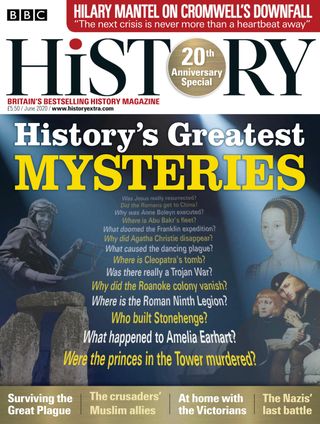

Dit verhaal komt uit de June 2020-editie van BBC History Magazine.
Abonneer u op Magzter GOLD voor toegang tot duizenden zorgvuldig samengestelde premiumverhalen en meer dan 9000 tijdschriften en kranten.
Bent u al abonnee? Aanmelden
MEER VERHALEN VAN BBC History Magazine

History Extra
Drawn to the past
JAMES OSBORNE offers the definitive word on a game that casts players in the role of illustrators creating fantastical images for medieval manuscripts

1 mins
July 2026
History Extra
Young (and old) guns
Well into the 16th century, guns were considered unmanly - the armament of cowards and ne'er-do-wells.
1 mins
July 2026

History Extra
The president and the comedian
Details were sketchy as HistoryExtra went to press, but the latest series from Higher Ground, the production company founded by Barack and Michelle Obama, looks like it could be a hoot.
1 min
July 2026

History Extra
Meet the Boleyns
The cultured charmer, the moneybags lord mayor, the powerful heiress, the scheming uncle. Anne's colourful family shaped the mind and character of the future queen of England, as Tracy Borman reveals
9 mins
July 2026

History Extra
Kyoto in five places
Japan’s imperial capital for 11 centuries remains its most enchanting city. LESLEY DOWNER suggests the most enticing and historic temples, gardens and palaces to visit
3 mins
July 2026
History Extra
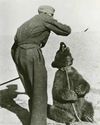
Did a bear once serve in the Polish army?
In 1942, Polish troops making their way through Iran to join the Allied effort in Europe came across a young boy carrying a Syrian brown bear cub, whose mother had been shot by hunters.
1 min
July 2026
History Extra
Voices from the past
What did those who lived through the American Revolutionary War 250 years ago make of the conflict as it unfolded?
1 min
July 2026
History Extra
Is it true that Arthur Conan Doyle helped to solve real-life crime cases?
Inevitably, as the creator of Sherlock Holmes, Conan Doyle was inundated with requests to solve mysteries, often of a criminal nature.
1 mins
July 2026

History Extra
Fight the patriarchy!
The work of modernist novelist Virginia Woolf isn't renowned for delivering laughs.
1 min
July 2026

History Extra
National hero
In 1828, following a distinguished career in European politics and diplomacy, Ioannis Kapodistrias (1776–1831) became the first governor of Greece.
1 min
July 2026
Translate
Change font size