
Ga onbeperkt met Magzter GOLD
Krijg onbeperkte toegang tot meer dan 9000 tijdschriften, kranten en Premium-verhalen voor slechts
Poging GOUD - Vrij
WET PROCESSING - ENVIRONMENTAL PROBLEMS AND POSSIBLE SOLUTIONS
Textile Value Chain
|December 2020
The textile industry is being considered as the highest polluting industry. We deal with dyes, chemicals to get beautiful colours on the fabric, finishes for functional properties like UV protection, anti-sweat, anti-static, inspect repellant, bacterial repellant and many more, we end up using materials that are harmful to nature. Many a times natural colours are not that easily available and they do not have the characteristics to retain the colours for many years. As a result of limitations to eco-friendly processing, the industry is opting for manmade chemicals.

It is a colourful world, the variations of colour shades around us are what makes everything more mesmerizing; in an era of so many possibilities of colour variants. A simple white itself has enormous shades to offer from snow white to rusk white. Then, we also have the effect created by the different fibre textures. With all these beautiful colors around, it becomes difficult to keep our garments plain and unprocessed. Colours cannot be kept away from textiles.
Moreover, we all know that today clothes are no longer just a fashion statement but has grown much beyond. It is the garment, that notthe one that feels good to the skin; is comfortable, breathable and smells good as well. Such high demands from a simple fabric need a lot of processing from aesthetic, comfort and functional properties.
The textile industry is being considered as the highest polluting industry. We deal with dyes, chemicals to get beautiful colours on the fabric, finishes for functional properties like UV protection, antisweat, anti-static, inspect repellant, bacterial repellant and many more, we end up using materials that are harmful to nature. Many a times natural colours are not that easily available and they do not have the characteristics to retain the colours for many years. As a result of limitations to eco-friendly processing, the industry is opting for manmade chemicals.
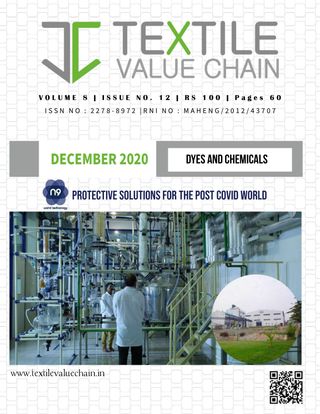

Dit verhaal komt uit de December 2020-editie van Textile Value Chain.
Abonneer u op Magzter GOLD voor toegang tot duizenden zorgvuldig samengestelde premiumverhalen en meer dan 9000 tijdschriften en kranten.
Bent u al abonnee? Aanmelden
MEER VERHALEN VAN Textile Value Chain

Textile Value Chain
The New Age of Men's Tailoring: From Bespoke to Hybrid Models
Part 1 of the Series: The Evolving World of Men's Tailored Wear

4 mins
January 2026

Textile Value Chain
The Textile Landscape of 2025: A Year of Transformation
Navigating Policy Reforms, Trade Agreements, and Global Events
5 mins
January 2026

Textile Value Chain
Recycled Fibres vs Virgin Fibres: The Real Cost, Footprint & Business Opportunity
For decades, the textile industry asked only one question when choosing raw material:
3 mins
January 2026

Textile Value Chain
2025 in Perspective: A Stronger, Cleaner, Smarter Future for Textiles
The year 2025 reminded the textile and apparel sector that resilience now matters more than pace.
5 mins
January 2026
Textile Value Chain
Heimtextil as a Working lab for Sutlej and its Customers
When the global home textiles industry gathers in Frankfurt this January, Sutlej Textiles is approaching Heimtextil with a clear intent: to treat the fair less as a product parade and more as a live development lab with its buyers and partners.
4 mins
January 2026

Textile Value Chain
Weaving Heritage into Future: A Conversation with Ms Roop Rashi Mahapatra
In an era where fast fashion dominates the global textile landscape, Khadi stands as a timeless symbol of India's heritage, sustainability, and self-reliance.
11 mins
January 2026

Textile Value Chain
Home Textiles: Ever-growing Market to Evergreen Product Source
Indian Home textiles have always enjoyed a special market position, and demand continues to increase, capturing a premium to the budgeted market across different markets, but with one constant hunger for extraordinary design, a super comfortable feel, and the appeal of sophistication, along with changing market dynamics.
4 mins
January 2026

Textile Value Chain
The Velvet Revolution: How This Timeless Fabric is Redefining Modern Textiles
When you run your hand across velvet, something happens.
3 mins
January 2026

Textile Value Chain
SPGPrints Achieves Landmark Success at ITMA ASIA 2025 With Transformative Textile Printing Technology and Key Order Closures
SPGPrints, the global leader in innovative textile printing solutions, announced an overwhelmingly successful participation in ITMA ASIA 2025 at the Singapore Expo.
2 mins
January 2026
Textile Value Chain
Development of Home Textile Products from Post-Consumer Textile Waste
With the growing concern over textile waste and its environmental impact, sustainable approaches for fabric reuse are urgently needed.
5 mins
January 2026
Translate
Change font size