Poging GOUD - Vrij
Stepping Stone
Indian Management
|September 2016
Education holds the key to India becoming an impregnable force in the R&D space. But is the education system geared for it?

The global system of education has evolved with wide-scale variances in the approach towards dissemination and transmission of knowledge from one generation to another. Its spatial pattern is not an isotropic plane, and gives an impression of a platykurtic one in terms of difficulty levels. The reasons behind this distinctiveness can be attributed to major thinkers whose inputs contributed towards learning and development in their influence zones. For example, Confucius and his followers emphasised the need for education and learning, as a tradition which can still be seen in China and many other neighbouring nations. as to the influence of Confucianism on education, its principle—those who excel in office should learn; those who excel in learning should take office has guided Chinese education.
Education can be imparted through two different methodologies—inductive and deductive. Aristotle, one of the greatest and most influential educational philosophers of all time explained these two methodologies by stating that knowledge starts with sense perception—we observe objects or events and from these build up in our mind a general principle by which to understand and explain these. This is the process of inductive reasoning, which moves from particular observations to general conclusions. This is of course the prime method of reasoning used in science in contrast to the deductive method of mathematics. Aristotle later concluded that not all reasoning is inductive. once we have established a general principle, we can deduce particular conclusions from it. For example, according to him, deductive logic comes from the premise all men are mortal and socrates is a man, we can deduce that socrates is mortal. This is known as syllogistic reasoning [a kind of logical argument that applies deductive reasoning to arrive at a conclusion based on two or more propositions that are asserted or assumed to be true.]
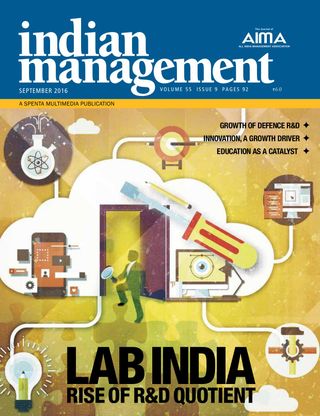

Dit verhaal komt uit de September 2016-editie van Indian Management.
Abonneer u op Magzter GOLD voor toegang tot duizenden zorgvuldig samengestelde premiumverhalen en meer dan 9000 tijdschriften en kranten.
Bent u al abonnee? Aanmelden
MEER VERHALEN VAN Indian Management

Indian Management
Humanity over automation
When leaders start acting like machines, machines start acting like leaders

5 mins
April 2026

Indian Management
The focus advantage
Startups fail for many reasons: teams break apart, funding runs out, markets shift.
5 mins
April 2026
Indian Management
Human-Centred Leadership in the Age of AI
Artificial Intelligence (AI) is rapidly redefining the operational and competitive landscape across industries.
3 mins
April 2026

Indian Management
Stories power CSR
Companies often use stories to communicate their corporate social responsibility (CSR) messages to consumers.
2 mins
April 2026

Indian Management
The science of passion
Many leaders think passion belongs to artists or athletes, not the corporate world.
4 mins
April 2026

Indian Management
Nurturing tomorrow's unicorns
India's startup ecosystem stands at a pivotal inflection point today.
4 mins
April 2026

Indian Management
Authority under pressure
Leadership, during conflict resolution, is strengthened not by avoiding tension, but by responding to it with clarity, composure, and consistency.
5 mins
March 2026

Indian Management
Lead with M.A.G.I.C.
Leadership of today begins with is sustained by courage, clarity, and human awareness.
5 mins
March 2026
Indian Management
Navigating Workplace Conflicts Without Losing Authority
When leaders take the time to reason through the issue from both sides, many conflicts resolve themselves without anyone feeling diminished.
2 mins
March 2026
Indian Management
Recommended reads
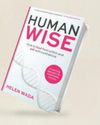
HUMAN-WISE: HOW TO LEAD FROM WITHIN AND SELL WITH CONFIDENCE
3 mins
March 2026
Translate
Change font size